Showing posts with label London. Show all posts

Sunday, May 12, 2019

Baker Street


Situated in the Marylebone District, Baker Street is in the City of Westminster, London.  In 1755 Henry William Berkeley Portman began developing the London Portman Estates.  He began to issue the first building leases, one of which was granted to William Baker.

William Baker of Audrey was an architect, surveyor and builder who worked in Shropshire and the adjacent counties in the mid 18th century.  William Baker laid out what became known as Baker Street on the leased land in 1794.

Lying in the postcode of the areas NW1/W1 and forming part of the A41 there, Baker Street is a busy thoroughfare.  The Portman Estate dates back to the sixteenth century.  Sir William Portman, who served as Lord Justice to King Henry VIII, leased 270 acres of the Manor of Lileston (Lisson).  He acquired the freehold in 1554 however most of the land remained as farmland until the building boom, following the Seven Year War involving the Great Powers of Europe at the time in 1763.

Madame Tussaud opened her first wax work museum in 1835, a permanent exhibition on the upper story of the Baker Street Bazaar in 1835.  Prior to this Madame Tussaud had toured Great Britain with her works for thirty three years.

The Baker Street Bazaar exhibited a huge range of items for sale, including such goods as horses, carriages, stoves, furnishing and ironmongery.  The Bazaar was opened by Samuel Godley, who had fought in the Napoleonic Wars.  Though Bazaars were common, the Baker Street Bazaar had some unique elements. Firstly it had Madame Tussaud’s waxworks including her popular Chamber of Horrors.  The Baker Street Bazaar was also the home of London’s first artificial ice rink, the Glaciarium.  The artificial rink was built in 1844 and the ice was made up of churned hogs lard, sulphurs and sulphate of copper.  The Glaciarium was 3000ft wide. Later the same year that it was built, due to the terrible smell it was emitting, it was closed down. 

In 1940 the Baker Street Bazaar, by then known as Druce’s, named after Thomas Charles Druce, burnt down.  The co-owner of an upholstery business Thomas Charles Druce had been embroiled in a legal case that ran from 1897 - 1908.  An allegation was made by a widow named Anna Maria Druce, that her father-in- law, who had died,  was living a double life and was infact the 5th Duke of Portland.  The widow went onto claim that the Duke had faked the death of his alter ego in 1864 to return to just living his aristocratic life.  Anna Maria Druce petitioned to get Thomas Charles Druce’s grave  in Highgate Cemetery opened, claiming it was full of cement blocks.  During the court case, Anna Maria was put in an asylum and the case was taken over by George Hollamby Druce.  Eventually it was agreed that the grave should be opened.  Druce’s body was indeed in the coffin.

In 1835  James Fillan, a Scottish sculptor, artist and poet came to live on Baker Street.  Formally trained in Paris, Fillan had a short but influential career and finally settled in London at 82 Baker Street.  At the Regent Street end of Baker Street stands an illustrious mansion block known as Chiltern Court which was home to famed novelists Arnold Bennett and H.G Wells. 

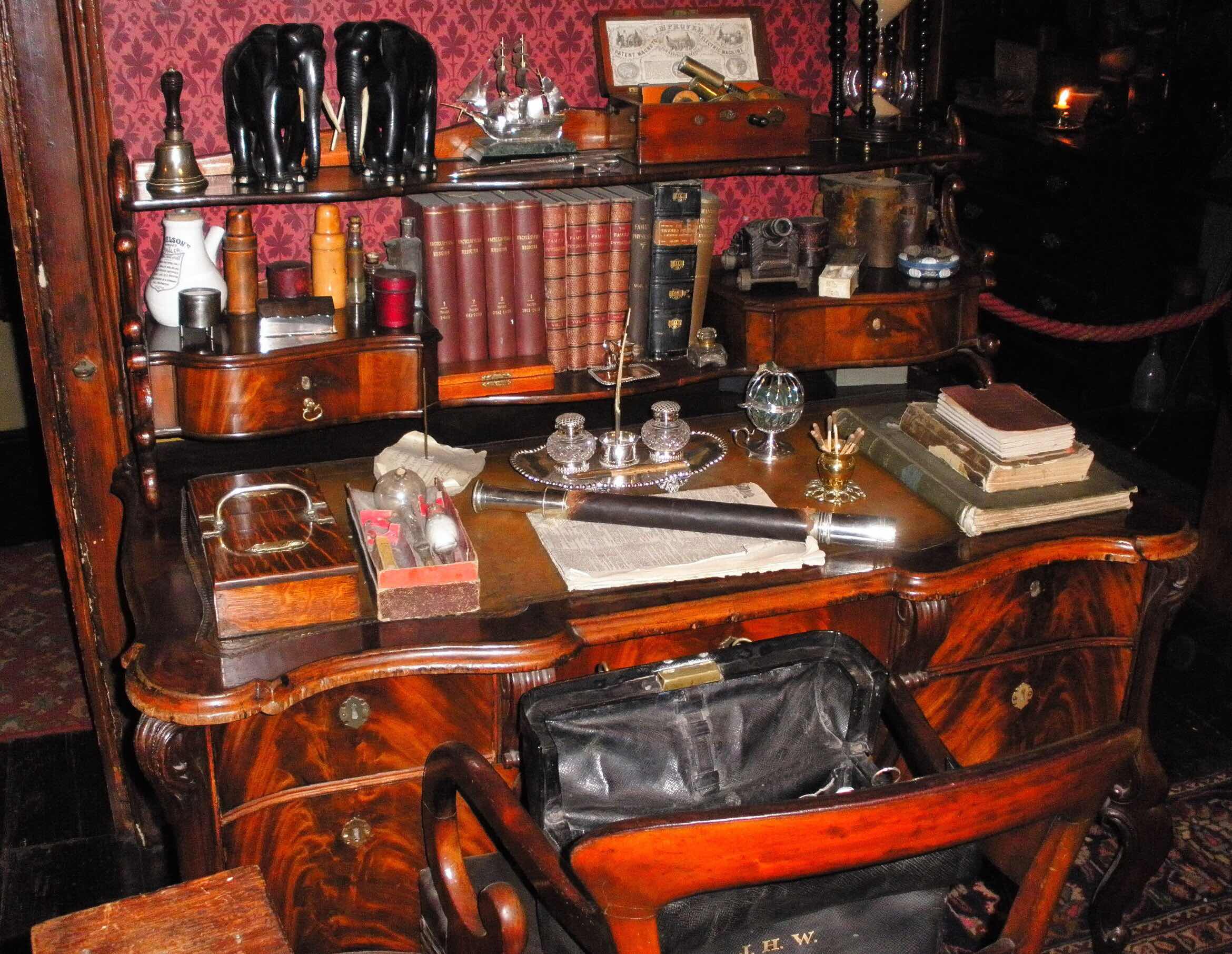
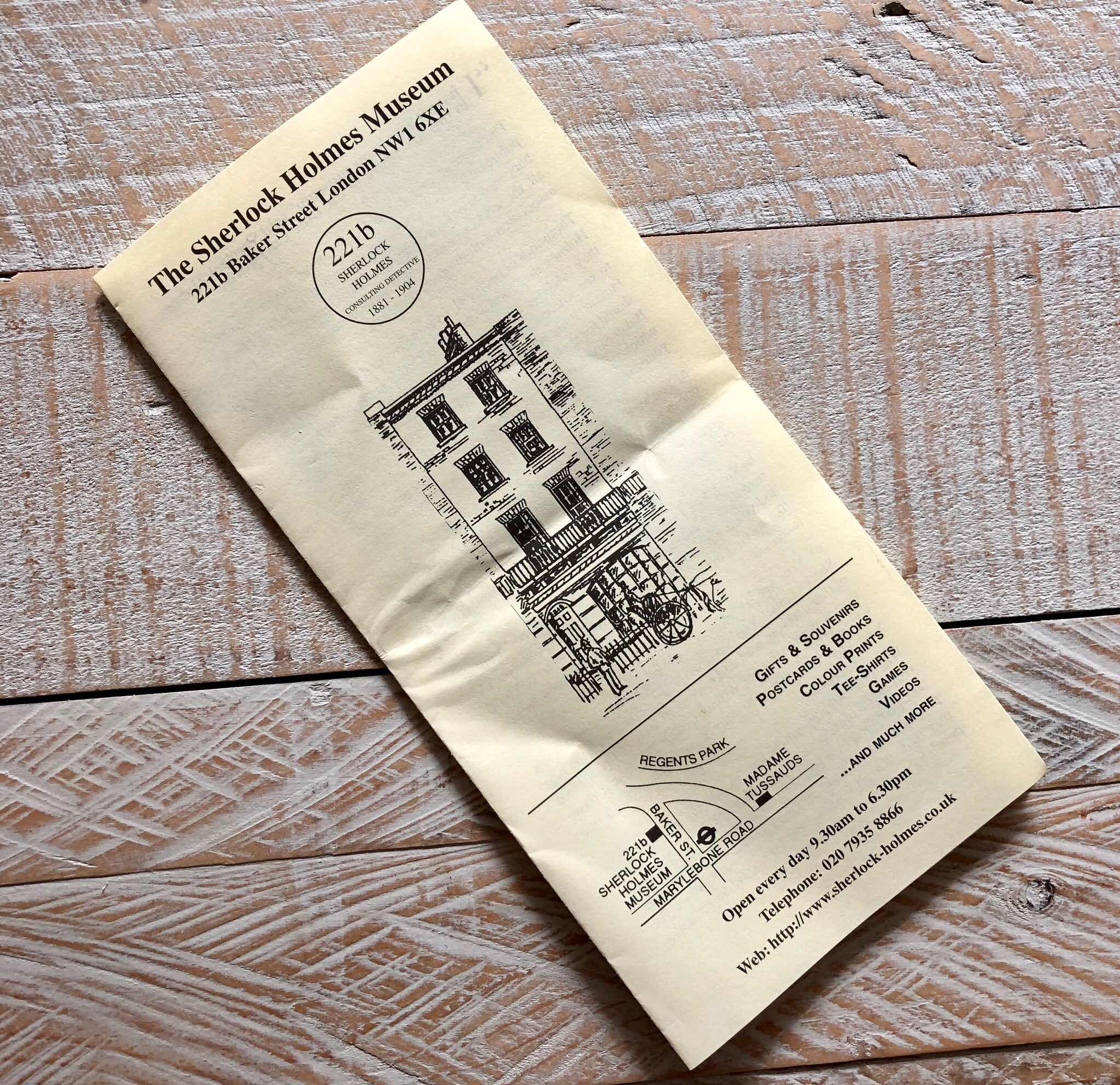
221B Baker Street is the London address for the fictional detective Sherlock Holmes, created by author, Sir Arthur Conan Doyle.  Originally a physician, Doyle published the first of the Sherlock Holmes and Watson detective novels in 1887.  At the time that the books were published Baker Street didn’t go as high as 221.  When street numbers were reallocated in the 1930s, the block of odd numbers from 215 - 229 were assigned to an art decor building known as Abbey House.  The building was constructed for the Abbey Road Building Society in 1932 and they occupied the building until 2002.  As soon as the building was opened they began to receive correspondence from Sherlock Holmes fans from all over the world.  The company was forced to hire a full-time secretary to deal with the huge volume of mail.  In 1990 a blue plaque was erected at the Sherlock Holmes Museum which was located between 237 and 241 Baker Street.  In 1999 Abbey National sponsored the creation of a bronze station of Sherlock Holmes that stands at the entrance to Baker Street Tube Station.  A fifteen year dispute then ensued between the Abbey National and the Holmes Museum for the right to receive mail addressed to 221B Baker Street.  Following the closure of Abbey House in 2005 the dispute over ownership was dropped.  

In 1940 the headquarters of the Special Operations Executive moved to offices at 64 Baker Street and they were colloquially known as the Baker Street Irregulars after Sherlock Holme’s gang of street urchins.  In 1941 two unexploded missiles were removed from the burnt wreckage of Druce’s.  by 1957 the site was redeveloped as Michael House, the UK headquarters of Marks and Spencers.  It was at this location until 2005.  The site now serves as part of the 55 Baker Street office complex.  

From 1967 - 68 the Beatles Apple Boutique was situated at 94 Baker Street.  In 1971 a significant bank robbery occurred at a branch of LLoyd’s Bank on Baker Street.  A plaque was placed at 120 Baker Street to mark the place that Prime Minister William Pitt the Younger lived from 1803-4. Welsh born,  eighteenth century English actress Sarah Siddons lived on Baker Street  In the 1960’s entertainer Dusty Springfield lived on Baker Street.  Singer Gerry Rafferty wrote a song titled Baker Street in 1978 and Jethro Tull wrote the song Baker Street Muse.  

With such a long and interesting history it is not in the least surprising that there have been allegations of paranormal phenomena in various places along  famous Baker Street. The ghost of the actress Sarah Siddons has apparently been seen passing through the walls on the first floor of an electrical sub-station that stands where her former home once was. Also along Baker Street is the old Kenwood House Hotel that allegedly has several ghosts.  A piece of furniture in the pub is said to have drawers that open and shut by themselves and a mirror researchers believe houses a poltergeist.  The hotel is also said to have a ghost that is a former cavalier and appears from time to time.  The Volunteer Pub on Baker Street is said to be haunted by a ghostly figure that lurks in the dark corners of the establishment.  The ghost is said to be that of Rupert Neville.  The pub was built where the Neville Mansion once stood.  The mansion burnt to the ground in 1654 but the original cellars remain under the pub.

 I would recommend a walk along Baker Street and a visit to the Sherlock Holmes Museum.  It’s a fascinating street with an amazing and interesting history.


Tuesday, September 12, 2017

Buckingham Palace

Serving as the London residence and administrative headquarters for the monarch of the United Kingdom, Buckingham Palace is located in the city of Westminster.  During the Middle Ages the site, which was marsh ground due to the Tyburn River, which still runs under the courtyard of Buckingham Palace, formed part of the Manor of Ebury.  Where the river was fordable the town of Eye Cross was established.  Changing hands many times over the years, the site was notably owned by Edward the Confessor and his consort Edith of Wessex.  After the Norman conquest, William the Conquerer aquired the site and in turn went on to gift it to Geoffrey de Mandeville, the Constable of London Tower.  The site was then bequeathed by de Mandeville to the monks of Westminster Abbey.  

In 1531, after acquiring ownership of the Hospital of St James, which would later become St James' Palace, HenryVIII, took the Manor of Ebury from Westminster Abbey in 1536.  This resulted in the site of Buckingham Palace being back in Royal hands after 500 years.  James I sold of part of the Crown freehold during his reign, establishing a four acre mulberry farm to facilitate silk production on 4 acres of the kept land.  In 1624 the first house was established on the site by Sir William Blake.  The next owner of the house, Lord Goring, was an English parliamentarian and soldier who extended the original house built by Blake.  He also established and developed much of what is still the garden area of the Buckingham Palace. Goring lost the lease of the house to George III who claimed that the contract to acquire the land had not been official because it lacked the Great Seal from Charles I.  

The mansion was then acquired by Henry Bennet, 1st Earl of Arlington, an English statesman.  The house burnt down in 1674 and the following year Arlington rebuilt the house, which still exists as the southern wing of today's Palace.  The lease was acquired in 1698 by John Buckingham, the Duke of Buckingham and Normandy.  Buckingham was an English poet and Tory politician who served as Lord Privy Seal and President of the Council, during the reign of the Stuart's. Architect William Winde was commissioned to build the house for the Duke, which now forms the architectural core of the  current palace.  
 
In 1761 King George III acquired the property for his wife Queen Charlotte.  A patrons of the arts and an amateur botanist, Queen Charlotte spent most of her time at the residence and it became known as The Queen's House.  In 1775 the property was settled for Queen Charlotte through an act of parliament, in exchange for her rights to Somerset House. 

King George IV continued working on the residence.  Following his death his brother, King William IV, commissioned British landscape and architectural artist, Edward Blore, to finish the work his brother had started.  In 1837 Buckingham Palace became the principal Royal Residence.  In 1840 after Queen Victoria had married Prince Albert, some design flaws, including ventilation issues were corrected.  The Palace was deemed too small in 1847 and Master Builder Thomas Cobitt was commissioned to enclose the central quadrangle of the Palace.  A ballroom and more state suites were designed and added by Sir James Pennethorne, a student of John Nash.  Before the death of Prince Albert,  Balls and musical concerts were often held at Buckingham Palace.  Mendelssohn and Strauss both performed at the Palace during this time.  In 1861, following the death of Albert, Queen Victoria left Buckingham Palace and lived in Windsor Castle, Balmoral Castle and Osborne House.  For many years Buckingham Palace was empty and neglected.

In 1901 following the accession of Edward VII new life was breathed into the Palace and the Victoria Monument was constructed.  George V and Mary, connoisseurs of the arts, restored and purchased new furnishings and art for the Palace.  Despite being bombed nine times Buckingham Palace was largely unscathed during WWII.  The Queen’s Gallery was built on the site and opened in 1962.

The Palace has 775 rooms.  There are 19 state rooms, 52 principal bedrooms, 188 staff bedrooms, 92 offices and 78 bathrooms.  Buckingham Palace has its own cinema, post office, swimming pool, doctors surgery and jewellery workshop.  Every year the Palace hosts 50000 people who are invited to garden parties, audiences, receptions and banquets.  The forecourt of the Palace is used for the changing of the Guards. 

Buckingham Palace is said to be haunted by Major John Gwynne, the personal secretary of King Edward VII.  Gwynne was divorced by his wife and subsequently shunned by society.  He is said to have retired to his office in the Palace and shot himself in the head.  Staff working in the vicinity of what was once Gwynne’s office have reported hearing the sound of a gunshot coming from the empty room.  The Palace is also said to be haunted by a monk who appears in chains wearing a brown cowl.  The monk is said to predate the construction of the Palace and is believed to have died in a punishment cell.  The ghost of the monk is said to appear annually on Christmas Day at the Palace.

I love Buckingham Palace but my favourite view of the beautiful building is from St James Park 


Monday, April 17, 2017

The Temple, London

Just off the Strand in central London, the Temple is an almost hidden district.  With an interesting mix of 17th-, 18th- and 19th-century architecture, the Temple also houses the historic Temple Church.  One of only two round churches in the United Kingdom, the Temple Church is modelled on the Temple in Jerusalem.  Originally known as 'Novum Templum', meaning 'New Temple', in the 12th Century, the Temple Church was built by the Knights Templar, serving as a stronghold for the Knights Templar who were moneylenders, warriors, and mystics.  

The Knights Templar, with their distinctive white mantles emblazoned with a red cross, was a military order that reported to the Catholic Church.  The order was recognised in the papal bull Omne Datum Optimum of the Holy See.  A public decree issued by the Pope, a papal bull is named after the leaden seal, or bulla, that is attached to the bottom of the decree to authenticate it.  The order of the Knights Templar was founded in 1119, and was active from around 1129 to 1312.  Wealthy and powerful, the order became a favourite charity throughout Christendom, adding to its membership and influence.  

With its increasing power, the crown heads of Europe started to perceive the Knights Templar as a threat.  The Knights Templar were associated with the Crusades and, when the Holy Land was lost, trust in the Order diminished.  King Philip IV of France, deeply in debt to the Knights Templar, took advantage of the situation and outlawed the Order, torturing and burning many members at the stake in order to get false confessions.  Under pressure from King Philip IV,  Pope Clement V dissolved the order in 1312.  The Temple was claimed by the Crown following the dissolution of the Knights Templar.  In 1324, the Knights Hospitallers claimed the Temple from their deposed rivals.  Edward II, however, bestowed the Temple on a favourite of his, Hugh Le Despencer, who was later hung, drawn and quartered.  Following Hugh's death, the Inner Temple was given to the Mayor of London and then, in 1333, to William de Langford, the King's Clerk, for a ten-year lease.  

In 1337, the Knights Hospitaller petitioned the King, now Edward III.  In response to this petition, the Inner Temple was divided between consecrated land to the East and unconsecrated land to the West.  The Eastern part was the Inner Temple, and the Western part became the Middle Temple.  Langford kept the Middle Temple, with his lease running out in 1346, while the Knights Hospitaller eventually leased the Inner and Middle Temples to lawyers, continuing a tradition which began in 1320.  Henry VIII dissolved the Knights Hospitaller in the Reformation, but he allowed the barristers to remain as tenants for the Crown.  The Outer Temple was given to the Bishop of Exeter and, eventually, was purchased by Robert Devereaux, an English nobleman and favourite of Elizabeth I.  

The location of the Temple was increased in size when the River Thames was embanked by Victoria Embankment.  After WWII, the Inner and Middle Temples had to be rebuilt.  With an area that is now bound by the River Thames to the south, Surrey Street to the West, The Strand and Fleet Street to the North and Carmelite Street and Whitefriars to the East, the Temple is the main legal district of London.

The Temple includes the Inner Temple which is one of the four Inns of Court.  All practitioners of law in England and Wales must belong to one of the four Inns of Court.  The Inns of Court originated as hostels and schools for student lawyers in the thirteenth century.  Each Inn has its own gardens, dining halls, libraries and administration buildings.  The Inner Temple was one of the two halls constructed by the Knights Templar, and still retains the buttery from its medieval heritage.  The Inner Temple serves as a professional association for Judges and Barristers.  The Middle Temple, also a remnant of the Knights Templar (though none of the original build remains), houses the Honorable Society of the Middle Temple.  New Court was built in 1676 by Nicholas Barbon.  The L-shaped Fountain Court was created in 1680, with the fountain being renovated in 1919.  Fountain Court served as inspiration for authors such as Charles Dickens.  The Temple Church is located between Fleet Street and the River Thames, and the Temple Bar was the principal ceremonial entrance to the City of London on its Western side from the City of Westminster.  At one time, part of the Temple housed The Devil's Tavern.  This establishment hosted the likes of Ben Johnson, English playwright, critic and poet, who hosted gatherings of the 'Tribe of Ben' in the Apollo Room.  William Shakespeare, Jonathan Swift, Alexander Pope, Dr Samuel Johnson, and Samuel Pepys were also known to frequent the Devil's Tavern.  The Tavern was demolished in 1787. 

From early on, there have been whispers of satanism and black magic performed in the Temple.  Many strange events and vicious murders have occurred within the precinct.  When electricity was installed in the Middle Temple, a skeleton in a box was discovered.  The perfectly-preserved skeleton was believed to be over 200 years old.

When a Miss Broderick took up residence in the Middle Temple at Brick Court, she is said to have arranged to meet her lover, a Mr Eddington.  When he arrived late without a satisfactory reason, she shot him dead.  

Sarah Malcolm, an educated, middle-class young woman, was hanged at twenty-two years of age for a triple murder in Tanfield Court in the Temple.  She was employed as a launderess for several chamber apartments in the Inns of Court.  One of her customers was a frail elderly woman called Lydia Duncomb.  Mrs Duncomb lived in an apartment in Tanfield Court where she was assisted by two live-in servants, sixty-year-old Elizabeth Harrison and seventeen-year-old Anne Price.  It's said that Anne Price had her throat cut, Elizabeth Harrison was strangled, and Lydia Duncomb was strangled or had died of fright.   Although Sarah Malcolm claimed she was part of a group robbing the home, she was the only one charged and executed for the crime. 

The Temple is famously haunted by Judge Henry Hawkins.  His full-bodied spirit has been seen with judicial wig and papers under his arms walking through the Temple precinct, even in daylight.  He is said to appear most often when only one person is present to see his spirit.  Henry Hawkins, 1st Baron Brampton, was an English Judge who served in high-profile cases as Judge of the High Court of Justice between 1876 and 1898. 

I love London, and the Temple is such a fascinating place to visit. 


Sunday, February 5, 2017

Westminster

The Palace of Westminster, located on the North Bank of the River Thames in central London, is the meeting place for the two Houses of Parliament.  Although officially the palace is owned by the monarch it is effectively managed and inhabitants by the House of Commons and the House of Lords. 

As early as the Middle Ages the site of the current Palace of Westminster was deemed strategically important, mostly because of its location on the River Thames.  Its is believed that the area, known then as Thorney Island, was used as a royal residence by Canute the Great during his reign from 1016 to 1035.  The King of Denmark and Norway, Canute the Great ruled England for nineteen years.  He was fundamental in protecting England from Viking raiders, many of which he was believed to have commanded, so England was able to prosper.  

At the same time that Westminster Abbey was constructed St Edward the Confessor, among the last Anglo Saxon Kings of England,  was said to have built a palace on Thorney Island. His reign lasted from 1042 to 1066.  None of the building constructed as part of St Edward the Confessors' palace remain.  The oldest surviving parts of Westminster Palace, in particular Westminster Hall, are from the reign of King William II. The Hall was built in 1097 and was completed in two years.  It was the largest Hall in England and was so large smaller halls were required for normal use.  Westminster Palace served as the principal residence for Monarchs throughout the late medieval era.  

An early form of parliament started to meet in Westminster Palace in 1265.  The Curia Regis or the Royal Court, headed by Simon de Montforts, consisted of representatives from all the larger towns of England.  This Parliament, held by the rebel baron, Simon de Montfort, who had seized power over England from Henry III only lasted three months.  In an attempt to gather supporters de Montforts had decided to not only invite barons and knights to discussions but also burgesses, a freeman.  Although de Montfort was killed at the Battle of Evesham, the idea of inviting burgesses to parliament became popular under the reign of Henry's son Edward I.  

In 1512, a fire destroyed the principal residence of the monarch at Westminster Palace.  In 1534 Henry VIII aquired York Palace from Thomas Wolsey and renamed it Palace of Whitehall, using it as his primary residence.  Despite remaining an official palace, Westminister Oalace was only used by the two Houses of Parliament as well as The Royal Courts of Justice.  As the Palace had no purpose built rooms, important ceremonies where held on what was known as the Painted Chamber, which had been King Henry III's bedchamber.  A modest medieval hall known as the Queen's Chamber served as the meeting place for the House of Lords.  Without a specified meeting place the House of Commons often had meetings in the Chapter House of Westminister Abbey.  Eventually the Palace in St Stephens Chapel became a regular meeting place for The House of Commons.  

A new facade for the palace was designed and built by John Vardy in the Palladian architectural style between 1755 and 1770. This construction, known as the Stone Building, was primarily constructed to provide committee rooms and space for document storage. In 1795 a new residence for the Speaker of The House of Commons was built near St Stephen's Chapel.  Between 1799 and 1801 the architect James Wyatt created a much derided neo-Gothic building called The Cotton Mill.  Sir John Sloane, a British architect and a leader in the revival of Greek Revival Architecture.  He demolished the medieval House of Lords Chamber.  The Chamber had famously been the target of the failed Gunpowder Plot of 1605.  The plot was a failed assassination attempt against King James I by provincial English Catholics led by Richard Catesby.  The plot was revealed and famously Guy Fawkes was caught guarding 36 barrels of gunpowder.  In place of the demolished chamber Sloane created a new Royal Gallery.

Over the next three centuries many renovations would take place.  In the late 17th century, architect Christopher Wren undertook a major project completely redesigning the buildings.  In 1834 a huge fire, started by an overheating stove,  ravaged Westminster Palace.  It destroyed most of the rebuilt Houses of Parliament.  The only medieval structures to survive the fire were Westminister Hall, the Cloisters of St Stephen.  The Chapel of St Mary Undercroft, a crypt below St Stephens Chapel, used primarily as a wine cellar, dining room and a stable for Oliver Cromwell's horse survived even though St Stephen's Chapel did not. The fourteenth century Jewel Tower built between 1365 and 1366 as a personal treasury for the personal treasures of Edward III, also survived the fire. 

King William IV initially offered Buckingham Palace, a residence he didn't like very much, to parliament to use.  However Buckingham Palace was considered not suitable for the Houses of Parliament.  Leaving it to each House, the King left Parliament to create their own committee to best decide what they required.  In July 1835 a Royal Commission was appointed and by June 1835 it was decided that the new building would be built in Gothic or Elizabethan style.  A competition was proposed.  In February 1836, after considering 97 proposals, architect Charles Barry's Gothic style palace design won. Barry's design was Gothic Revival, specifically honouring the Perpendicular Gothic style, which emphasises perpendicular lines, of the 14th and 15th century. The interior was greatly influenced by Augustus Pugin, an authority on Gothic architectural style, in the gothic interior, stained glass, ironwork, furniture and wall paper.  The foundation stone was laid in 1840 with both Chambers completed by 1852 although some works still continued on into the 1870s.  Construction lasted for over thirty years due to rising costs and the death of two leading architects.   

During WWII the Palace of Westminster was bombed on fourteen occasions.  The worst hit was in May 1941 with the palace taking twelve hits resulting in three deaths.  The Clocktower, Elizabeth Tower, known as Big Ben took a hit and all the glass on the south dial was blown out but the bell and hands were undamaged.  The. Lock continued to keep time. 

Westminster Palace has been a Grade 1 listed building since 1970 and part of UNESCO World Heritage sites since 1987. In 2022 the building will be vacated for six years for new renovations. 

Guy Fawkes, caught during the failed Gunpowder Plot was hung, drawn and quartered for his part in the plot. His ghost has been seen wearing a traditional hat and cape wandering towards the place that would take him to the secret stash of explosives he was found guarding.  His ghost is then said to just vanish.  

There are at least two documented cases of doppelgänger in the palace.  A famous case occurred in 1905 when Major Sir Frederick Carne Rasch MP was seen in the Chambers when in fact he was at home in bed with the flu. Another suspected doppelgänger is a Mrs Millman,who worked as a clerk at the palace but was not at the palace on the occasions she was sighted there.  


Tuesday, June 28, 2016

St. James's Park, London

Situated at the southernmost tip of the St. James area in the City of Westminster is a 23-hectare (57-acre) park called St. James's Park.  Named in honour of a leper hospital that had serviced the London populace in the 13th century, the marshland that was to become St. James's Park was acquired by Henry VIII in 1532.  The area, through which the Tyburn River flowed, was meant to complement York Palace, subsequently renamed Whitehall.  The palace had belonged to Cardinal Wolsey.  Henry VIII acquired the palace, and believed that the nearby parkland would make the palace a more fit dwelling for a King.

James I ascended to the throne in 1603, and had the marshland drained and landscaped.  He added many exotic animals to the park, including crocodiles and camels and even an elephant. 

St. James's Park underwent more changes when Charles II was returned to the throne after his exile in France.  While in France, Charles had enjoyed the elaborate gardens of the French Royal Palace.  He redesigned St. James's  Park, most likely with the assistance of French landscaper Andre Mollet, to reflect what he had seen in France.  A huge canal, measuring 775m by 38m, was dug through the centre of the park. 

King Charles II opened the park to the public and used it as a place to entertain guests and meet his mistresses, including his mistress Nell Gwynn.  The park became a notorious meeting place for all forms of lecherous liaisons.  An account of such goings-on was given by John Wilmot, 2nd Earl of Rochester, in his poem "A Ramble in St. James Park".

By the late 17th century and early 18th century, cows were allowed to graze in the park and milk was available from the Lactarian.  This place, where fresh milk was provided warm from the udders of cows, was described by the German scholar, Zacharias Conrad Von Uffenbach, in 1710. 

During the Hanover period in the 18th century, the canal was reclaimed for use for the Horse Guards Parade.  In 1826-27 the Prince Regent, later George IV, commissioned a remodelling of the park.  The modifications were overseen by architect and landscape artist John Nash.  The formal avenues were removed and replaced by more romantic winding paths.  The canal was made into a more natural-looking waterway.  In 1837, the Ornithological Society of London presented the park with birds and constructed a bird-keeper's cottage.  St. James's Park was opened to the public in 1887.

St. James's Park is bounded to the west by Buckingham Palace, the London residence and administrative headquarters for the reigning Monarch of the United Kingdom.  In 1761, Buckingham House was acquired for the use of Queen Charlotte, the wife of King George III.  Buckingham House was expanded to create the Palace, and Queen Charlotte, an avid patron of the arts and amateur botanist, lived in Buckingham Palace until her death in 1818.

To the north, St. James's Park is bounded by The Mall.  This road has Buckingham Palace at its west end and Trafalgar Square via Admiralty Arch at its east.

Horse Guards forms the east boundary of the park, and the south is bounded by Birdcage Walk.  This street is named after the Royal Menagerie and Aviary, which were located there during the reign of King James I.  Initially, when the street was created, only the British Royal Family and the Hereditary Grand Falconer, the Duke of St Albans, a title created by King Charles II for his illegitimate son with Nell Gwynn, Charles Beauclerk, were permitted access.

The lake in St. James's Park has two small islands; West Island and Duck Island.  The resident colony of Pelicans that still live at the lake are descended from a set of Pelicans donated to the park in 1664 by the then Russian ambassador. 

The Blue Bridge in the park affords spectacular views of Buckingham Palace to the west and the Swire Fountain to the east.  To the north of Blue Bridge is Duck Island, and to the south is the Tiffany Fountain on Pelican Rock. 

On the 3rd of January 1804, Col. George Jones of the Coldstream Guards “perceived the figure of a woman, without a head, rise from the earth, at the distance of about three feet before me”.  She was dressed in a red striped gown with red spots between each stripe, and part of the dress and figure “appeared to be enveloped in a cloud.”  The apparition is said to be that of a woman lured to St. James's Park and then murdered by her soldier husband.  While he was dismembering her body and disposing of it in the lake, the murderer was spotted and taken into custody.  This ghost has been reported walking along Birdcage Walk and also the Cockpit Steps.  She has been sighted emerging from the lake.  In 1972, a motorist reportedly hit a lamppost trying to avoid hitting a misty figure dressed in white with what looked like blood on her clothing.

I love visiting St. James's Park.  It is populated by a huge number of interesting birds and, most excitingly, by the gorgeous squirrels that have become so tame that they are happy to come and pose for a photograph.