Showing posts with label Ontario. Show all posts

Sunday, January 19, 2020

Fort George


Fort George is an historic military structure at Niagara-On-The-Lake, Ontario in Canada.  The fort was built by the British Army between 1796 and 1799 following the Jay Treaty.  Designed by Alexander Hamilton and supported by President George Washington the Jay Treaty was negotiated by American statesman and Diplomat, John Jay.  Brokered between the United States and Great Britain, the Jay Treaty was created to avoid war and resolve issues that remained following the Treaty of Paris in 1783 which ended the American Revolutionary War.  As part of the Jay Treaty the British Troops withdrew from Fort Niagara which stands opposite in New York and is visible from the Fort George ramparts.  The newly constructed Fort George became the western most of British fortified posts and served as the regional headquarters for both the British Army and the Canadian Militia.  

Fort George was built using earthworks and palisades or stakewalls, a wall made of wooden or iron stakes.  The fort internal structures including an Officer’s quarters and a stone powder magazine where ammunition and other explosives could be stored.  Also within the fort a blockhouse was constructed to house the ranks and also accomodate their families.  

During the War of 1812 to 1815, a conflict between the United States and the British Army plus their respective allies, several battles were fought in the area of Fort George.  In 1813, just after dawn on May 27th clearing fog revealed an American vessel off the shore.  Military Commander, Scott Winfield was tasked with leading the first landing party for the American assault.  Starting west of the mouth of the Niagara River Scott landed on the British territory while American Naval Commander Oliver Hazard Perry and his men directed a schooner to silence nearby squadrons that were supporting Fort George.  The American landing parties were charged by bayonet wielding men from the Glengarry Light Infantry as they waded ashore.  The Glengarry men were outnumbered and after loosing half their men retreated.  The schooners in Lake Niagara, using grapeshot, a non-solid projectile made up of an arrangement of round shot  packed into a canvas bag, attacked a company of The Royal Newfoundland resulting in them sustaining heavy casualties.  

After landing, Military Commander Scott advanced up the beach only to meet with British Troops.  Between Scott’s landing party and further fire from Commander Perry’s schooner the British Army sustained heavy losses.  The commanding officer of the Niagara Peninsula in Upper Canada, General John Vincent, realised that his troops were out-numbered and ordered an immediate retreat to Queenston.  Before their retreat General Vincent ordered the Fort guns of Fort George to be spiked and the magazines blown up.  Despite this Commander Scott was able to secure Fort George with little damage.  After inflicting heavy casualties on the British Army the Americans were able to secure several heavily fortified positions, including Fort George.  

The Americans remained in a small military enclave around and within Fort George.  In June 1813 an American column marched from Fort George to attempt to surprise a British outpost at Beaver Dams.  The American troops stopped in the town of Queenston overnight.  A resident of Queenston, Laura Secord walked 32kms (20 miles) through American occupied territory to warn the British Troops that the Americans were coming.  When the Americans resumed their march they were ambushed by Native warriors and surrendered.  About 500 Americans including their commander were taken prisoner.  The Americans abandoned Fort George following this defeat as it was on the British side of the river.  Fort George was then left to fall into ruin.  In the 1930s the site was reconstructed.  

During the First and Second World War Fort George was used as a military training base under the name of Camp Niagara.  In 1966 the military left the fort.   Fort George was then staffed by costumed characters and maintained by Parks Canada as a living museum with re-enactments.  It has hosted such events as the 1955 World Scout Jamboree.  

Fort George is considered one of the most haunted places in Niagara.  One commonly sighted apparition is refered to as the “Woman in the Mirror”.  She is a young curly haired woman that haunts the officer’s quarters and is dressed in a white dress.  Two men dressed in red uniforms are also seen in the officers quarters.  On occasion soldiers dressed in white are seen laying in the bunks in the officers quarters.  Staff have also reported an apparition in an area of the fort closed to the public.  The ghost is fondly referred to as Irving and he haunts the upper level of the barracks.  

One area of the fort that is considered extremely haunted was only actually built in the 1960s.  A tunnel built of stone and wood stretches seventy feet from inside the walls of the fort to the blockhouse.  Despite it being built well after the battles Fort George endured, both during the day and night, the tunnel been the scene of paranormal phenomena both visual and auditory.  

One of the most well known ghosts in Fort George is a seven year old girl known as Sarah Ann. She is believed to have been the daughter of one of the soldiers and to have died of a disease. The apparition has been seen and heard by staff and visitors to the fort.  The apparition of Sarah Ann has been known to tap people on the shoulder.  

Like all haunting there is much controversy about the phenomena at Fort George.  While staying in Niagara-On-The-Lake I would often walk to the fort. Fort George has a somber feel especially in the snow.







Tuesday, November 14, 2017

Fulford Place, Brockville Ontario


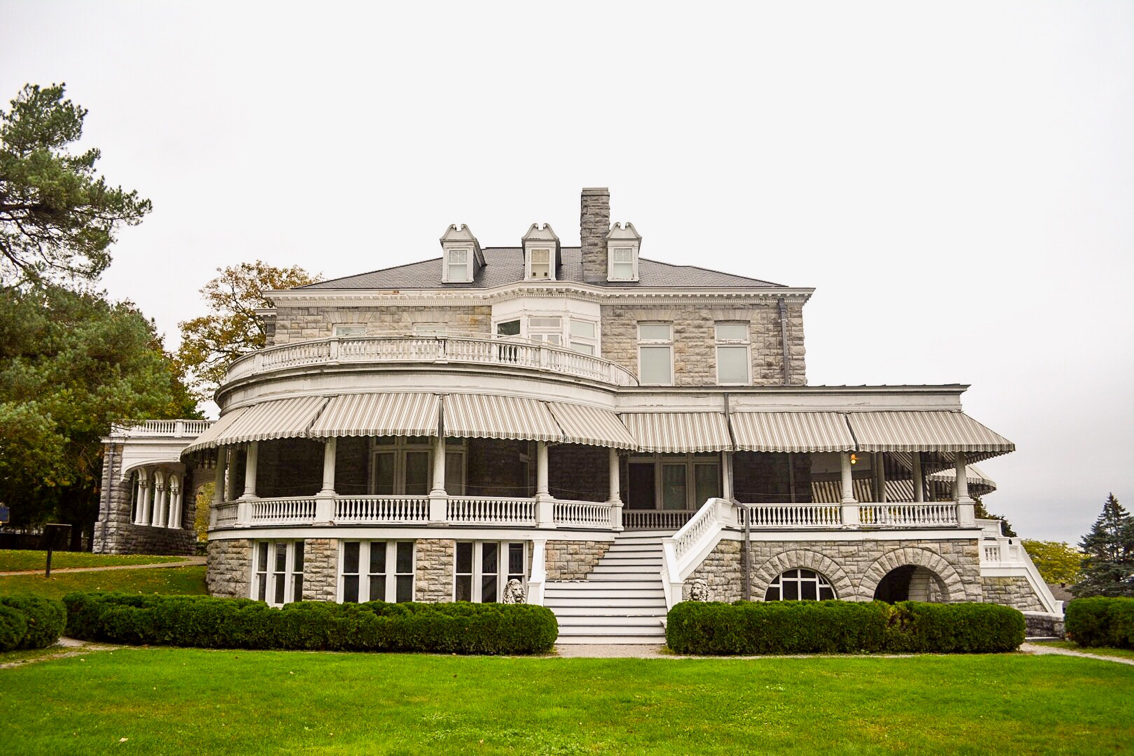
Fulford Place is an Edwardian building situated in Brockville, Ontario on the shore of the St Lawrence River.  Formerly known as Elizabethtown, Brockville is a city in Eastern Ontario. It was first settled by English speakers in 1785 when refugees from the American Revolution fled north.  William Buell Sr was the first loyalist to settle in the area, resulting in locals calling it Buell’s Bay.  As the area grew the town was renamed Elizabethtown by officials from Upper Canada.  In 1812 leading residents of the town suggested naming the town Brockville in honor of Major General Isaac Brock, widely recognised as the saviour of Upper Canada during the war with America.  

By the nineteenth century Brockville had developed into a local centre of industry with a foundry, shipbuilding, a tinsmith, tanneries and a brewery.  In 1854 Brockville and Morristown NY, situated across the Lawrence River, became centres for the patent medicine industry.  Such medicinal products as ‘Dr Morse’s Indian Root Pills’ And ‘Dr McKenzie’s Worm Tablets’ were made.  It was the patent and creation of ‘Dr William’s Pink Pills for Pale People’ that resulted in Fulford Place being built.  

George Taylor Fulford was the proprietor of a drug store and also famous for owning the patent for ‘Dr William’s Pink Pills for Pale People’.  The Pills claimed to cure cholera, nervous headaches, palpitations, sallow complexions and partial paralysis.  The medicine contained iron oxide and magnesium sulfate. G.T Fulford & Company aquired the exclusive patent and the product came to be advertised in over 80 countries around the world.  


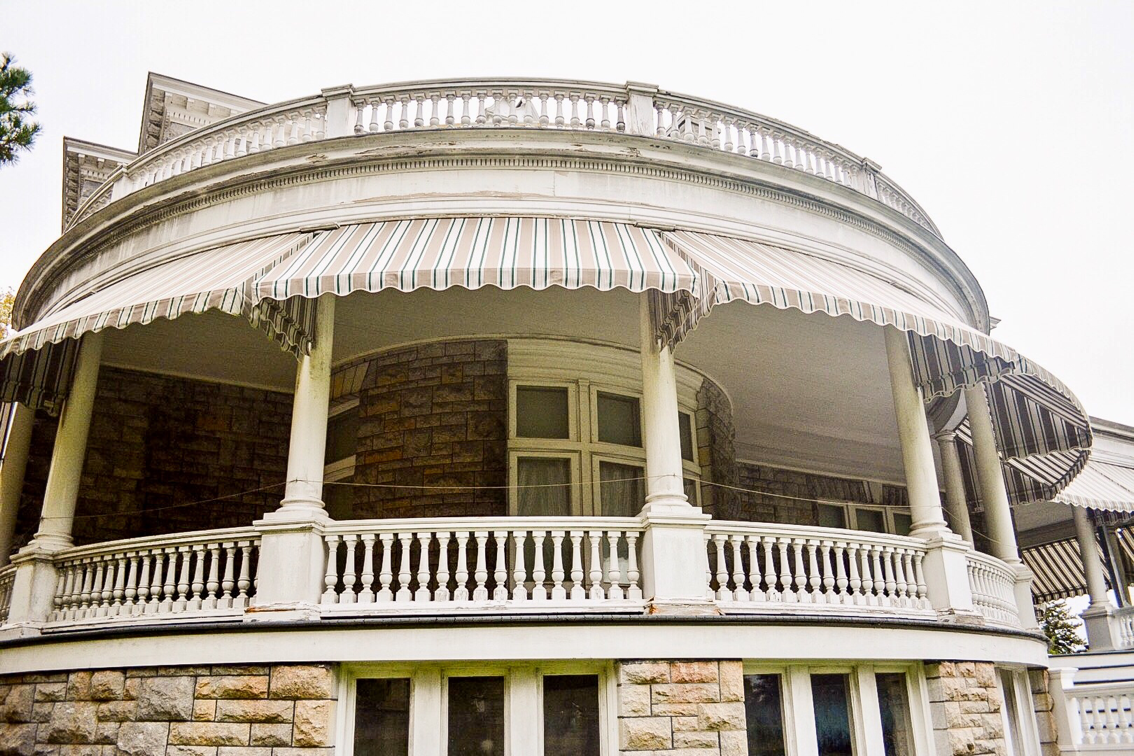
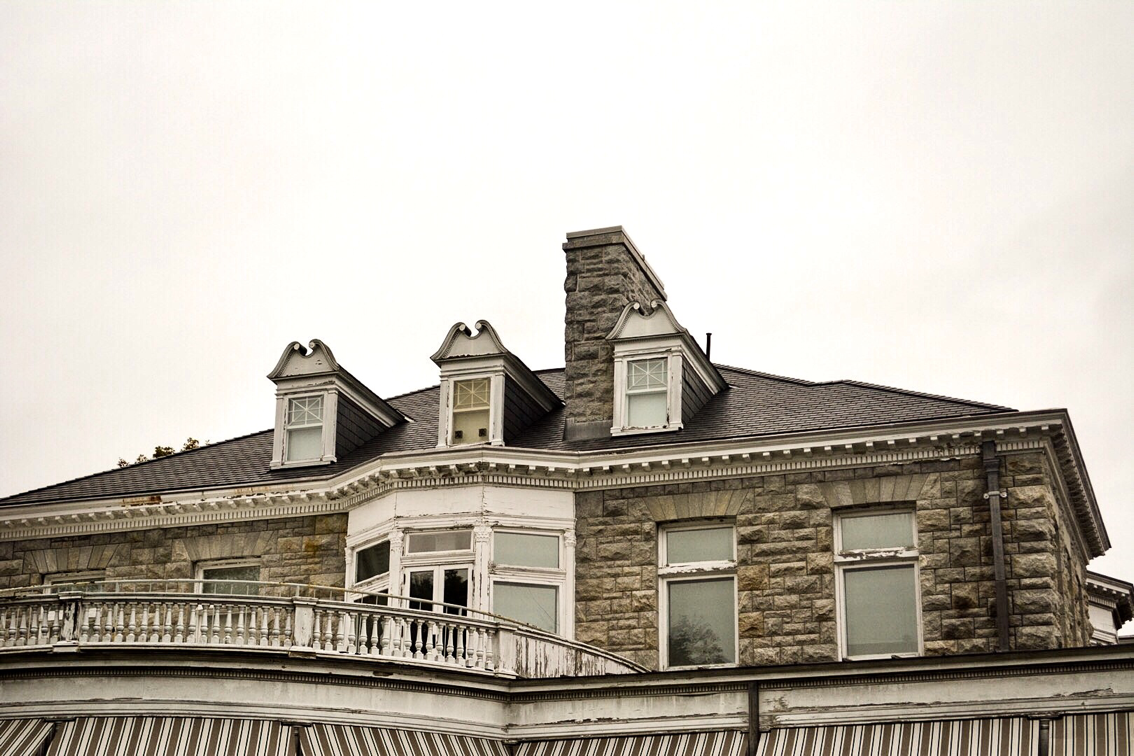
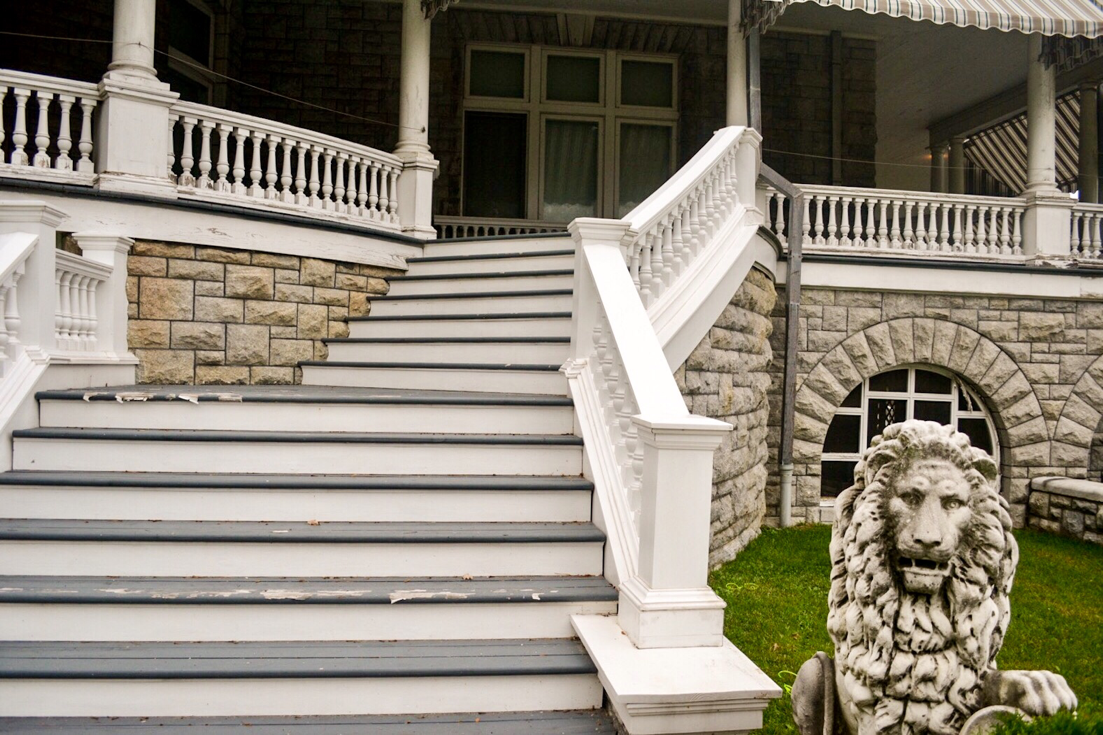
With his growing wealth Fulford commissioned NY architect Albert W. Fuller to design and build a summer home in Brockville.  The mansion was decorated in Beaux Arts style, characterised by French and Italian Baroque and Rococo formulas.  The building of the Edwardian mansion was begun in 1899 and finished in 1901 and the mansion was famous for its lavish design and decor.  The mansion has 35 rooms including a grand hall, huge verandah, a moorish smoking room and billiard room as well as a rococo style drawing room. The gardens, originally part of the ten acres of land on which Fulford Place was constructed, were designed by the Olmstead Brother.  The Olmstead Brother’s Company were an influential landscape architectural firm from the United States, established by brothers, John Charles Olmstead and Frederick Law Olmstead Jnr.  

At the age of 53 Fulford was the first person in Canada to die in an automobile accident. On October 8th 1905, Fulford was riding in a chauffeur driven open roadster in Newton, Massachusetts.  The car slammed into a streetcar, resulting in the death of the chauffeur and Fulford who died seven days after the accident.  Following his untimely death his socialite wife Mary Wilder White became fascinated with spiritualism and started to hold regular seances at the mansion.  Mary was close friends with the Prime Minister of Canada, William Lyon MacKenzie King, also an enthusiast of the occult.  In the 1930’s King met medium Henrietta Wreidt and it is reported that they attended a seance at the Fulford house and experienced Direct Voice Mediumship.  King was said to have participated in many seances held in Fulford Place.  He is even reported to have continued spending time in the house following Mary’s death.  While he was Prime Minister, King’s interests in the occult were kept secret.

Fulford Place is now a Museum, with the house and gardens preserved by the Ontario Heritage Foundation.  Mary White is said to haunt the mansion.  She was terribly afraid of thunderstorms and it is said that anytime there is a thunderstorm, loud and unexplained knocking occurs at the door as though someone is trying desperately to come in from the storm. 

When I went to photograph Fulford Place the Museum was closed.  The house has a strange feel about it and while I walked around alone taking pictures it was hard not to feel as though someone was watching from the empty house.  The garden also has some interesting statues.  This beautiful mansion is well worth a visit.  


Monday, October 16, 2017

McBurney Park, Kingston Ontario

Situated midway between Montreal and Toronto, Kingston Ontario is one of Canada's oldest towns.  Built on Lake Ontario and at the mouth of the St Lawrence River, Kingston began as a French trading post and fort called Cataraqui.  After the British conquered the French the town was renamed Kingston and became the first capital of the Province of Canada on 10th Feb 1841.  

McBurney Park, also known as Skeleton Park is situated in Kingston.  The park, which is surrounded by houses, has a wading pool, play equipment and a basketball court.  Also visible in some parts of the park are protruding parts of headstones that are indicative of the history of the land below the neighbourhood park. Around about 1813, the area that is now McBurney Park became established as a graveyard for the growing city of Kingston.  Formal burials began in 1816 with the graveyard becoming known as the Common or Upper Burial Grounds in 1825.  Primarily the graveyard accommodated the influx of Scottish and Irish immigrants who fell victim to several epidemics that struck the area.  The cemetery filled quickly, especially after an epidemic of typhus in the 1840s.  Due to the belief that diseases such as typhus were airborn, victims were buried quickly and evidence has come to light that many bodies were placed into mass graves that were not very deep.  

The graveyard was also a favourite haunt of the Ressurection Men.  In 1841, under a Royal Charter from Queen Victoria, Queens University was founded in Kingston.  The School of Medicine required students to obtain their own cadavers for research.  Students paid Ressurection Men or dug up bodies themselves.  The shallow burials and number of bodies made the graveyard a simple place to obtain cadavers.  Empty coffins and graves discovered in recent times further serve as evidence of such nefarious activities. 

In 1864 the graveyard was deemed full and was closed.  Over the next thirty years there were many complaints about foul odours, graves stones being knocked over, graves being desecrated and skeletal remains surfacing.  In 1893 the City of Kingston decided to make the graveyard into a park.  Relatives were informed they would have to pay to relocate the remains of loved ones.  When the American Consul heard that the City of Kingston were going to dig up the bodies of epidemic victims they threatened to close the port.  Only one hundred of over ten thousand bodies were relocated.  Headstones were bulldozed and the area was covered with grass to create a neighbourhood park.  Only one obelisk was left standing, that of the First Presbyterian Minister of Kingston.

In the 1950s McBurney Park became known as Skeleton Park, with children digging up human remains and playing with them, some even attaching them to their bikes as macabre trophies.  There has been many reports of paranormal phenomena associated with McBurney Park and the surrounding houses.  Several people have reported seeing a strange mist envelope the park and graves materialising before their eyes.  Strange dreams haunt the nights of some of the residents near the park. Two women actually reported having the same dream of an Irish man materialising in their home and strangling them, telling them to leave.  Disembodied voices and full apparitions have been reported at and near the park.  

I visited the park on a sunny autumn day and it seemed like a lovely place for people to enjoy however when you know what's just beneath your feet it's hard not to feel a chill. 


Monday, March 13, 2017

Half Way House Inn

The Half Way House Inn is a Georgian, two storey building that was constructed between 1847 and 1849 by Alexander Thompson and his wife Mary McClure.  The Inn was built on land that had originally belonged to Mary's great grandmother Sarah Ashbridge. The Ashbridge family were Quakers from Chester County in Pennsylvania.  Following the American Revolutionary War they left America and as United Empire Loyalists they were granted 600 acres (240 ha ) of land on Lake Ontario east of the Don River.  Sarah Ashbridge arrived in Canada with her two sons, three of her daughters and their families, following the death of her husband, Jonathan, in 1782. 

After their marriage, Alexander Thompson and his wife built the Half Way House Inn between four farms owned by Mary's siblings and one that belonged to her uncle.  The actual building was situated on a piece of land from William Hale's farm and a sliver of a farm belonging to Isaac Ashbridge.  It was constructed to serve as a resting place that would accomodate passengers travelling by stage coach between Dunbarton, Pickering and Toronto. Many of the travellers were taking their produce and goods to the St Lawrence Markets in Toronto.  Prior to the unification of the British Colonies of Canada, Nova Scotia and New Brunswick, these pre-confederation resting stops for travellers were popular places for liquor and entertainment.  They were cheaper to visit then the finer town hotels built after the mid century.  The Half Way House Inn offered relaxation and kegs of Mr O'Keefe's Brew or Gooderham's Whiskey.  

By 1865 a small village had risen around the Half Way House Inn.  The village, called Mortlake, had a post office that was located in the Half Way House Inn.  Following Alexander's death in 1867 Mary continued to get the tavern licence until the building was sold to Ignatius Galloway.  The new owner added a dining room and a kitchen to the building.  Galloway remodelled the second floor, using the Inn Keepers quarters and meeting rooms to create a ballroom.  As time passed the rooms in the building were used as classrooms, a church and for community meetings.  Eventually the main floor was leased out for retail purposes.  The Bluff Smoke Shop and the Midland Bargain Centre were long time tenants in the 1950s.  Albert Christensen TV, Radio and Appliance Repairs and a paint store also had tenancy within the building.  

In 1962 it was decided that the building would be carefully dismantled and reconstructed in Black Creek Pioneer Village.  The building was renovated, with the kitchen of the house being faithfully returned to its former glory using archival documents.  A more modern restaurant facility was added to the building.  

The Half Way House Inn is said to be haunted by a lady in blue.  The apparition has been sighted in the ballroom, on the balcony and standing on the stairs.  Knocking has been heard on the restaurant walls and the radio inexplicably turns off and on.  A wardrobe in the hallway has the door opened from time to time.  Some people believe that the woman in blue is Mary McClure, Thomas Alexander's wife.  There are those that feel she haunts the building because she was angered by the fact that Thomas had been married to a relative of hers, who had died young, prior to their marriage. This however seems strange as its believed Mary was well aware of Thomas' first marriage.  Perhaps she just loved the Inn and has decided to stay. 

I enjoyed visiting the Black Creek Pioneer Village and it's quite amazing to visit the Half Way House Inn and walk through it imagining the many people who must have at one time or another enjoyed its hospitality.  


Monday, January 23, 2017

Fairmont Royal York


The Fairmont Royal York Hotel is located in downtown Toronto.  The original site of the hotel consisted of four brick houses built by Captain Thomas Dick.  Born in Scotland, Thomas Dick went to sea at the age of fourteen and by the age of twenty three he was first mate and had travelled the world.  After getting married, he and his wife Christiana Bell, traveled to New York and on to the new city of Toronto. For a few year Thomas Dick worked in Niagara on the Lake with fellow Scots who pretty much controlled the ship building industry in the area.  Within five years he was part owner of a wooden paddle ship called the City of Toronto.  The ship primarily transported passengers between Kingston and Ontario.  Thomas Dick commissioned architect John Howard, Canada's official surveyor and civil engineer, to design and build a humble row of Georgian style houses. The four houses were built in 1838.

The row project was first occupied by Knox Theological College. The group arrived in Toronto from Kingston where after a Theological disagreement they had separated from Queen's College. The College remained until 1856 when refurbishments were made and the row were converted into Sword's Hotel.   Named after the hotel owner, Patrick Sword, the hotel was intended to cater for the surrounding parliament buildings.  When Sword moved to Quebec in 1859 he sold the hotel to B.J.B Riley who renamed the property Revere House.

In 1862 Captain Dick bought the property back and after some refurbishment opened the Queen's Hotel. With 210 rooms, a restaurant, a private garden and 17 private parlours, the Queen's Hotel offered a new level of luxury in the quickly growing city of Toronto. Growing in popularity the hotel was even said to be the site of Sir John A MacDonald's meeting with American Civil War sympathisers who were plotting retaliation.

Following the death of Captain Dick at the Queen's Hotel in November 1874 the hotel was sold to Thomas McGaw and Henry Winnett, hoteliers from Upper Canada who already owned Queen's Royal Hotel in Niagara on the Lake. Following McGaw's death, Winnett took over the hotel and after his death the hotel was sold to the Canadian Pacific Railway.

After purchasing the Queen's Hotel in 1927 The Canadian Pacific Railway announced they intended to demolition the beloved Toronto Hotel and build the biggest hotel in the British Commonwealth. The last guest to check out of the Queen's Hotel was long term guest Charles Bland.  The closing of the hotel was marked by an extravagant dinner with an orchestra playing Auld Lang Syne as the hotel doors closed for the last time.

Despite the shocked response of Toronto residents to the plans for the Queen's Hotel, the hotel was demolished and the Canadian Pacific Railway began construction on a new hotel situated conveniently across from Union Station.  On June 11th 1929 the hotel was officially opened as The Royal York. It was the tallest building in the British Commonwealth and set a new standard in luxurious hospitality.

There were 28 floors in the new Royal York, each beautifully designed and decorated in opulence.  The 1048 rooms each had a private shower, bath tub and a radio.  The hotel boasted a 12000 book library, a 12 bed hospital, and ten ornate passenger elavators.  Also spanning across the 1.5 acres of public rooms was a concert hall with a stage and elaborate pipe organ, a glass enclosed roof garden and a bakery that was able to bake 15000 French rolls a day.  For the further convenience of guests the hotel had its own band and a 66 ft long manned switchboard with 35 telephone operators.

It was decided that the hotel would also provide a golf course for guests that wanted to play some relaxing golf.  The golf club was established by Robert Home Smith, a friend of Edward Wentworth Beatty, the man leading the construction of the hotel.  Famed golf course designer, Stanley Thompson was asked to design the course.  The course opened in 1929 and under the name the Royal York hosted the Canadian Open in 1933. In 1946 the name of the course changed from The Royal York Golf Club to St George and Country Club.  It remains one of the most exclusive golf clubs in the world.

In 1956/57 the addition of rooms bought the hotels room count to 1600. From 1988 to 1993 a 100 million dollar renovation of the hotel took place. The rooms were refurbished, a skylit pool was added as well as a health club. The hotel created the first ever American Express Travel Service Centre. Three bee hives, with 350000 bees, were installed on the fourteenth floor roof in 2008. A rooftop garden provides the hotel with fresh vegetables, herbs and flowers.

The hotel is opulent and luxurious, with elevator 9 still carrying illustrious guests such as the Queen to their beautiful rooms.

The Fairmont Royal York has had many reports of paranormal activity. Children are heard running the hallways when there is no one visible while the noises from an unending ball, including music and laughter, can be heard coming from the empty ballroom. Cold spots and flickering lights are often reported. Guests and staff have heard screaming and loud footsteps in empty parts of the hotel. A full bodied apparition of a man has been seen on the eighth floor. He is said to be wearing a maroon jacket and slacks. He seems to float along the hallway. A former porter reportedly hung himself from a stairwell railing on the nineteenth floor. His ghost is said to make loud banging noises and is associated with equipment being used in the hotel failing.

I personally spoke to a porter at the hotel on my last visit who said that he had worked at the hotel since he was seventeen and he had personally experienced many unexplainable occurrences. One that he mentioned that baffled and frightened him happened in the basement and involved a large trolley, heavenly laden with laundry, moving inexplicably on its own.

The Fairmont Royal York Hotel is a beautiful place to stay. It's not hard to imagine that a ball goes on continuously in the opulent ballroom or that a ghost may wander along the beautiful hallways. Several times in the lift I personally heard a loud unexplainable knocking. It's a quirky, gorgeous place that is populated by an interesting and attentive staff, where you literally feel as though you have gone back in time.


Sunday, November 15, 2015

Belrock Mansion


The Bell Mansion, or Belrock Mansion as it became known, is in Sudbury, Ontario.  The largest city in Northern Ontario, Sudbury was founded in 1883 when Tom Flanagan, a Canadian Pacific Railway blacksmith, discovered nickel ore.  Flanagan noticed a rust-coloured patch of rock in an area where the railway crew had just blasted.

In 1896, William and Katherine Bell arrived in Sudbury from Pembroke, Ontario.  William Bell was born on July 29th 1858, in Pembroke.  His wife, Katherine, was the daughter of Senator James Skead and was born in Ottawa.  William, a lumberjack, was originally employed by the Hale and Booth Lumber Company, but soon moved to the Spanish River Lumber Company, where he became a manager.  By 1924, William had gained control of the Spanish River Lumber Company, and he remained president until 1932, when the company was sold.  

An entrepreneur, William's interests were not limited to the lumber industry, and he became president of Cochrane - Dunlop Hardware Company and the National Grocer Ltd.  He established mining operations along Lake Wanapitei, and named the community that housed the operations Skead, in honour of his wife and her family. 

Having become a prosperous couple, the Bells built the Bell Mansion in 1907 on 155 acres adjacent to Lake Ramsey.  Constructed from local stone, the mansion was 6000 square feet.  There was a detached servants' quarters that was reportedly linked to the main house by a tunnel.  There was also a greenhouse gazebo, stables and a coach house.  The gardens were crafted by a gardener that was employed throughout the entire residency of the Bells.  The architect of the building is unknown, but there has been conjecture that it was a Scottish architect. 

Bell died in 1945 and bequeathed 110 acres of the estate to Sudbury.  When Katherine died, childless, at the age of 90 in 1954, she left the Mansion and most of its contents to Memorial Hospital, which used the building as a staff residence.  On December 3rd 1955, the Bell Mansion was gutted by fire, with only the outer shell remaining.  It was rebuilt and purchased by The Nickel Lodge Masons.  Zoning issues resulted in the building being boarded up for nearly a decade.  In 1966, it was purchased by the Centennial Committee of the Chamber of Commerce.  It was then officially transferred to Laurentian University in 1968, which went on to lease the space to the Sudbury Art Gallery. 

There have been many reports of paranormal activity at the Bell Mansion.  There have been orbs photographed around the building.  A witness reportedly saw a woman in Edwardian dress walking along a corridor and through a door into Gallery 3.  Footsteps and crying children have been heard in the building when it was supposedly empty.  It's also said that, if you stand in the building and sing, Katherine will sing along with you.

I loved this building.  It is built from unique materials, and has a beautiful facade.