Showing posts with label Western Australia. Show all posts

Wednesday, August 7, 2019

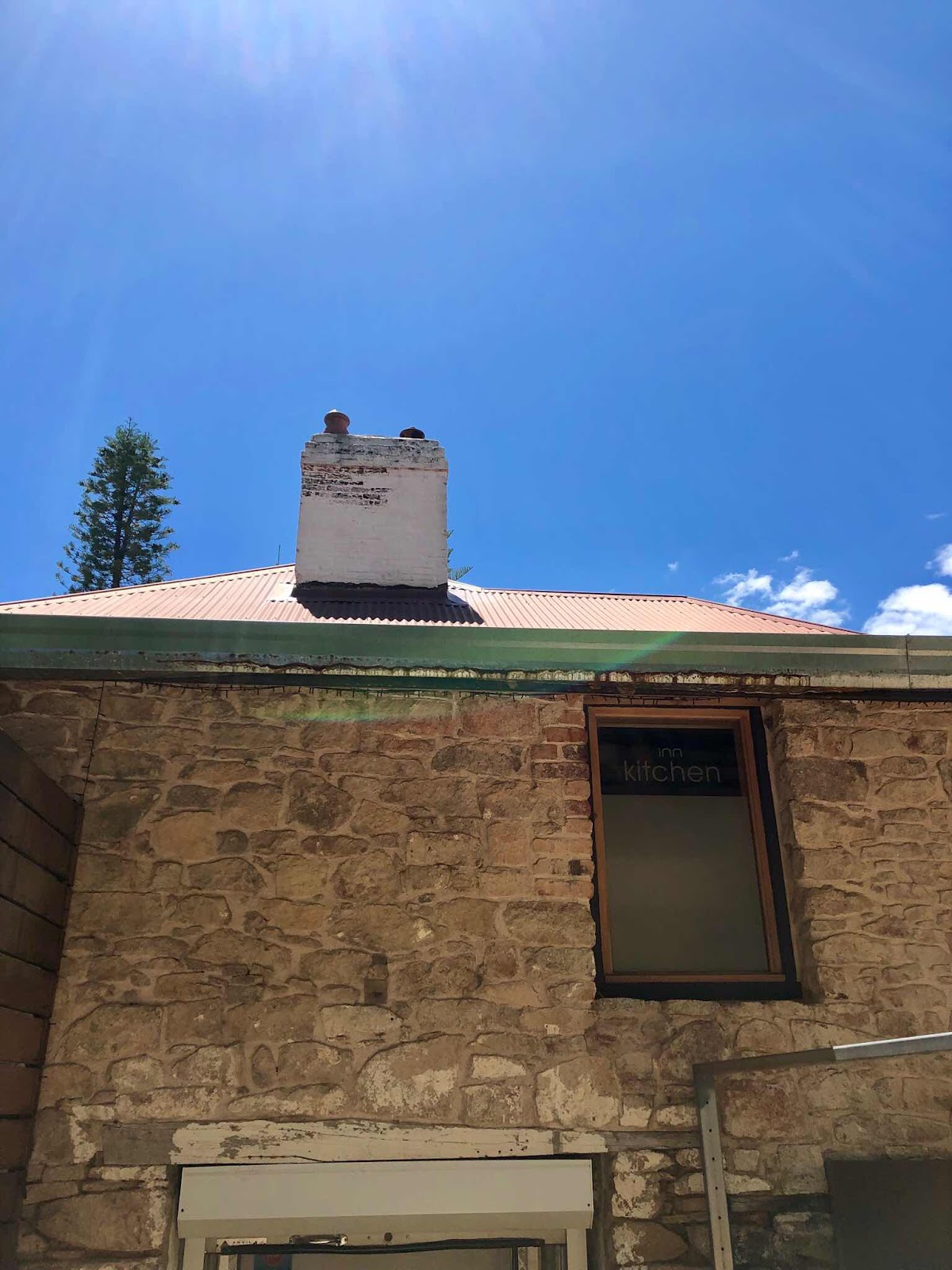
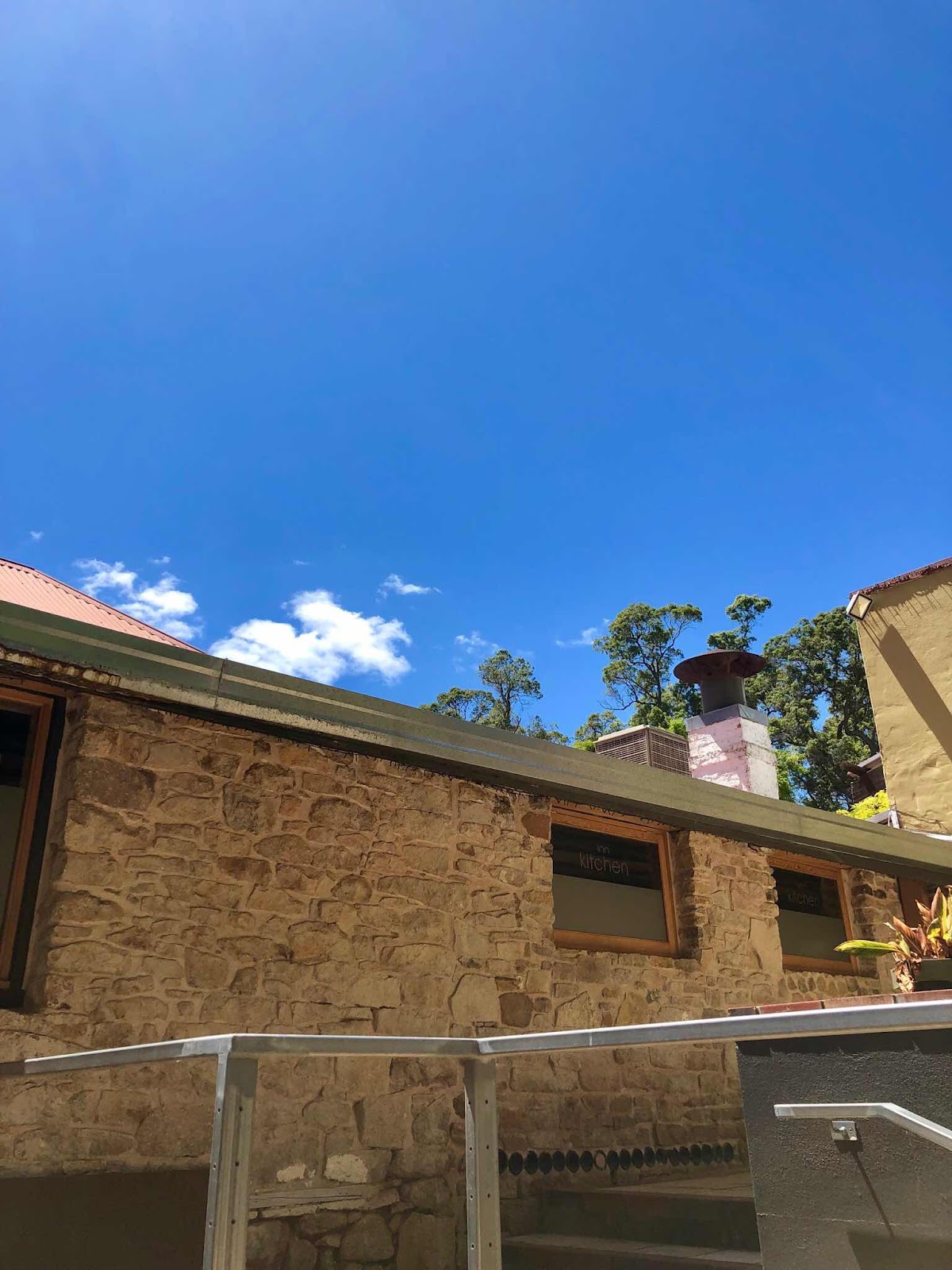
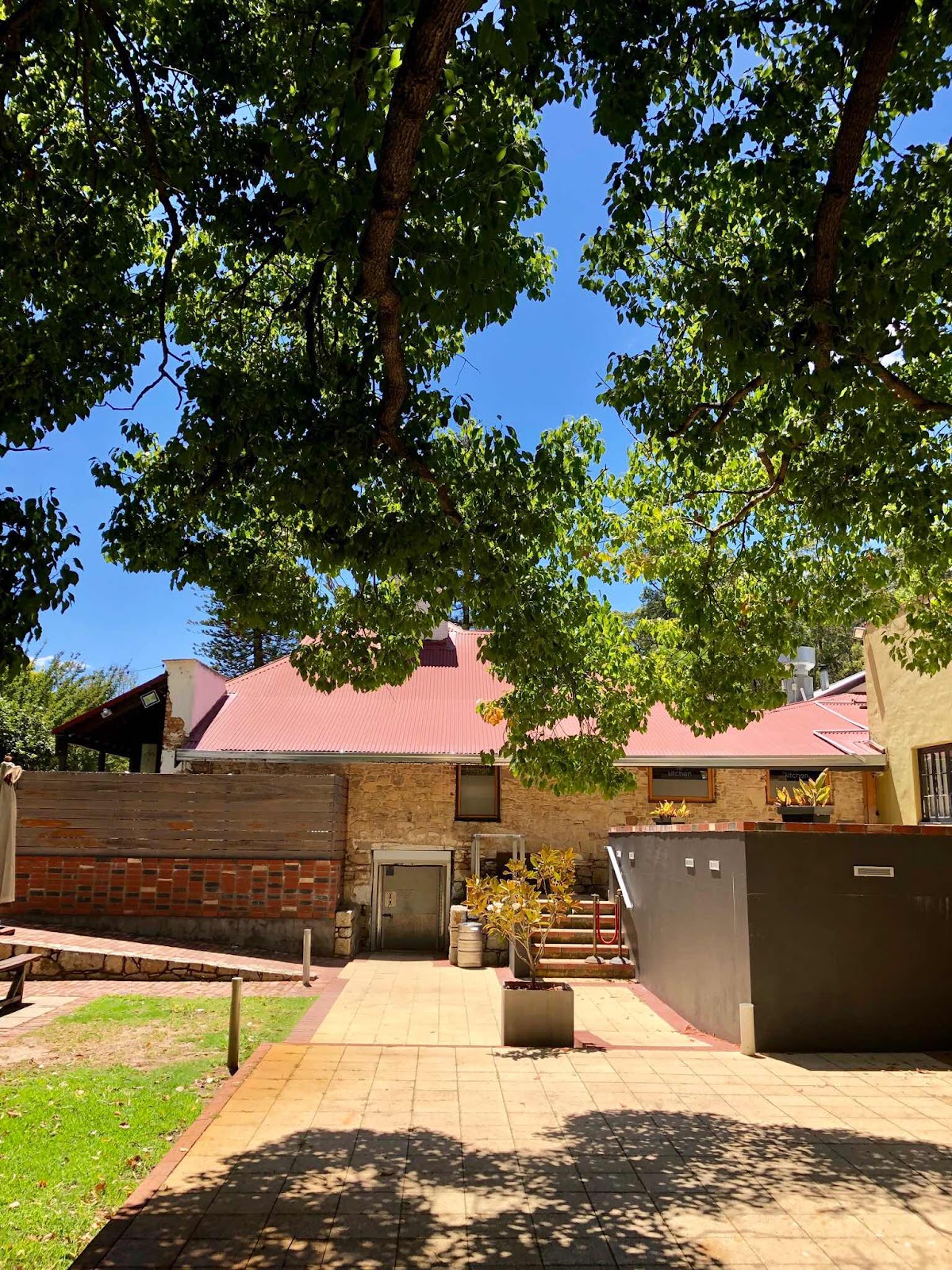
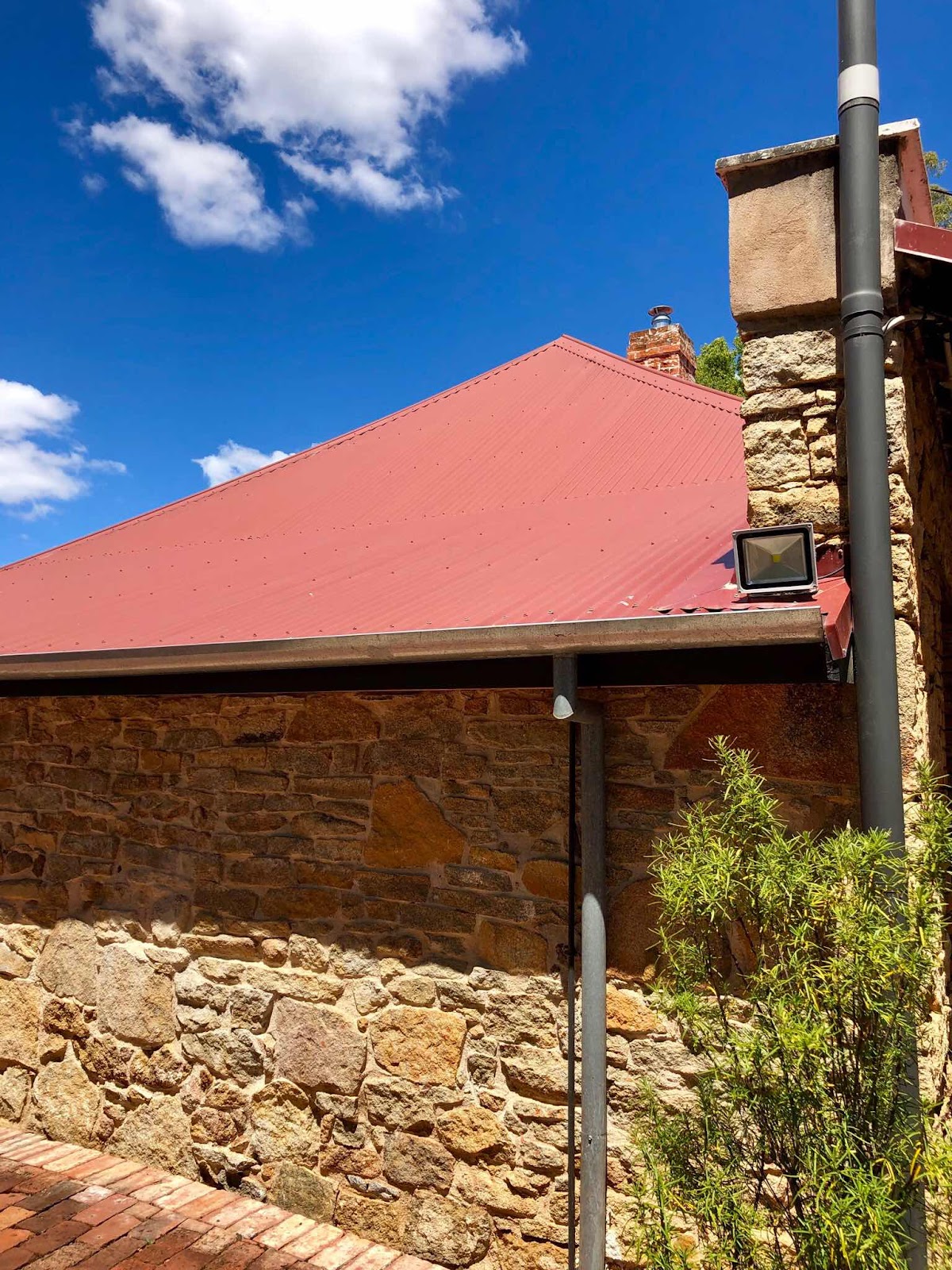
Mahogany Creek Inn


Mahogany Creek is a suburb of Perth, Western Australia and is located on the steepest section of Great Eastern Highway.  It is part of the Shire of Mundaring,  The name Mahogany Creek was first recorded by surveyor George Smythe when he was establishing the York Road in 1835.  He noted that there was a small valley of what he thought were English Mahogany Trees, though they were in fact Jarrah.  The creek from which the locality was named flows into Jane Brook which then flows through the John Forrest National Park into the Swan River. 

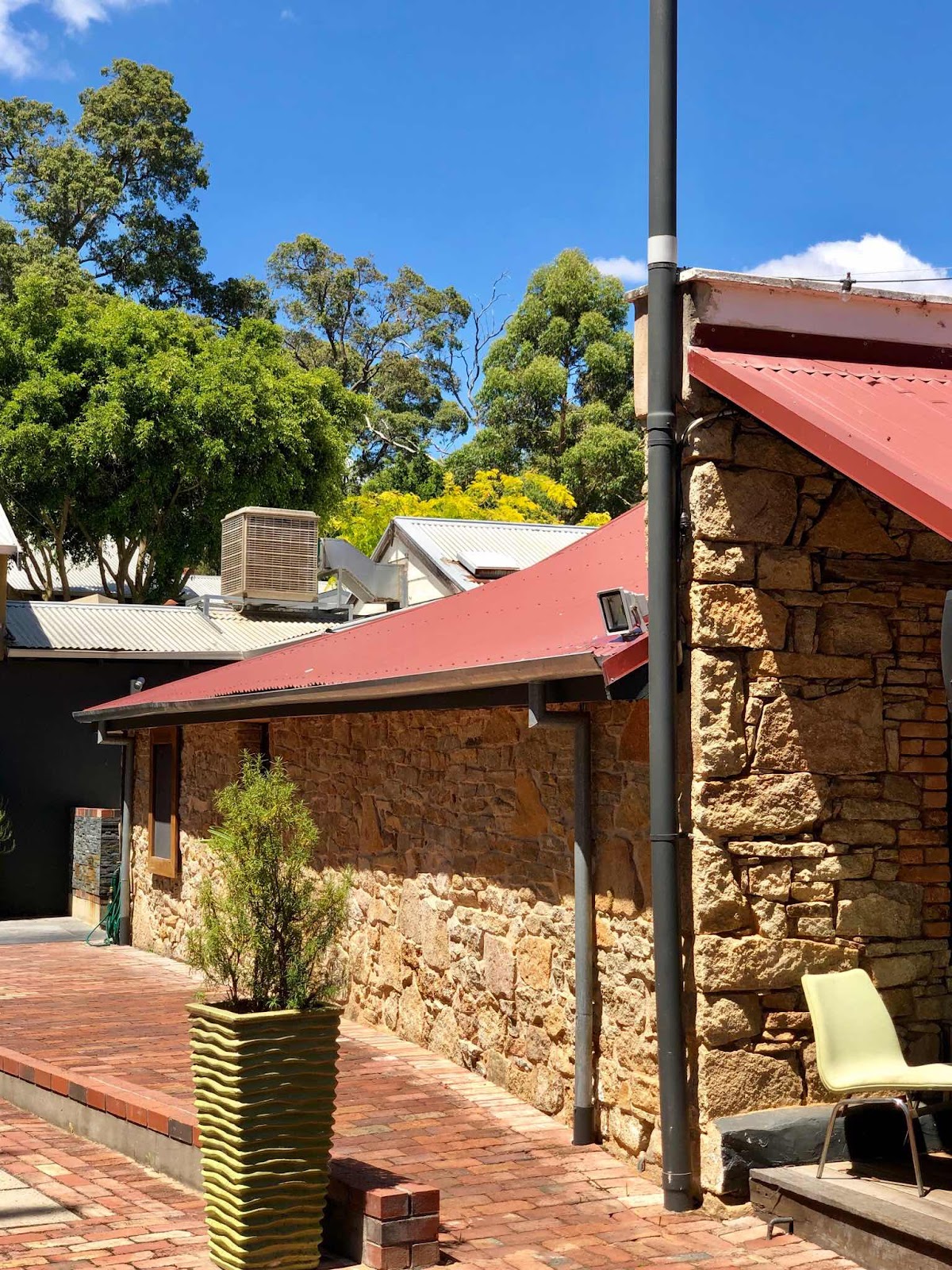
 The Mahogany Inn sits on the south side of Great Eastern Highway. The first building established at the site of the Mahogany Inn was a granite military barracks with a seperate kitchen and store.  Built around 1839 of local stone, the barracks were constructed to house patrols that could ensure the safety of travellers on the Guildford to York Road.  These military stations were built in the early formative years of the colony.    The site was also close to the road that branched off to the settlement of Northam. 

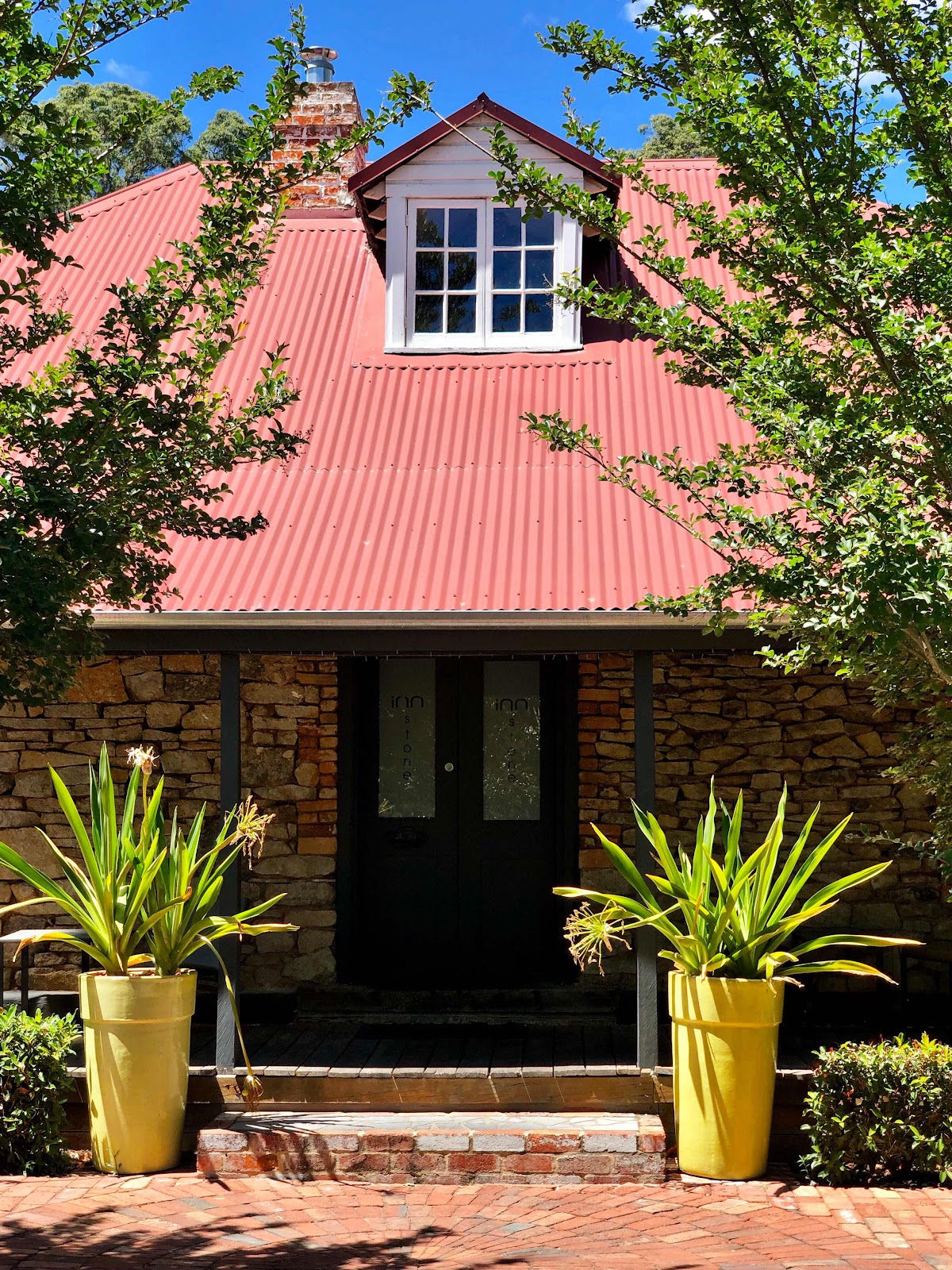
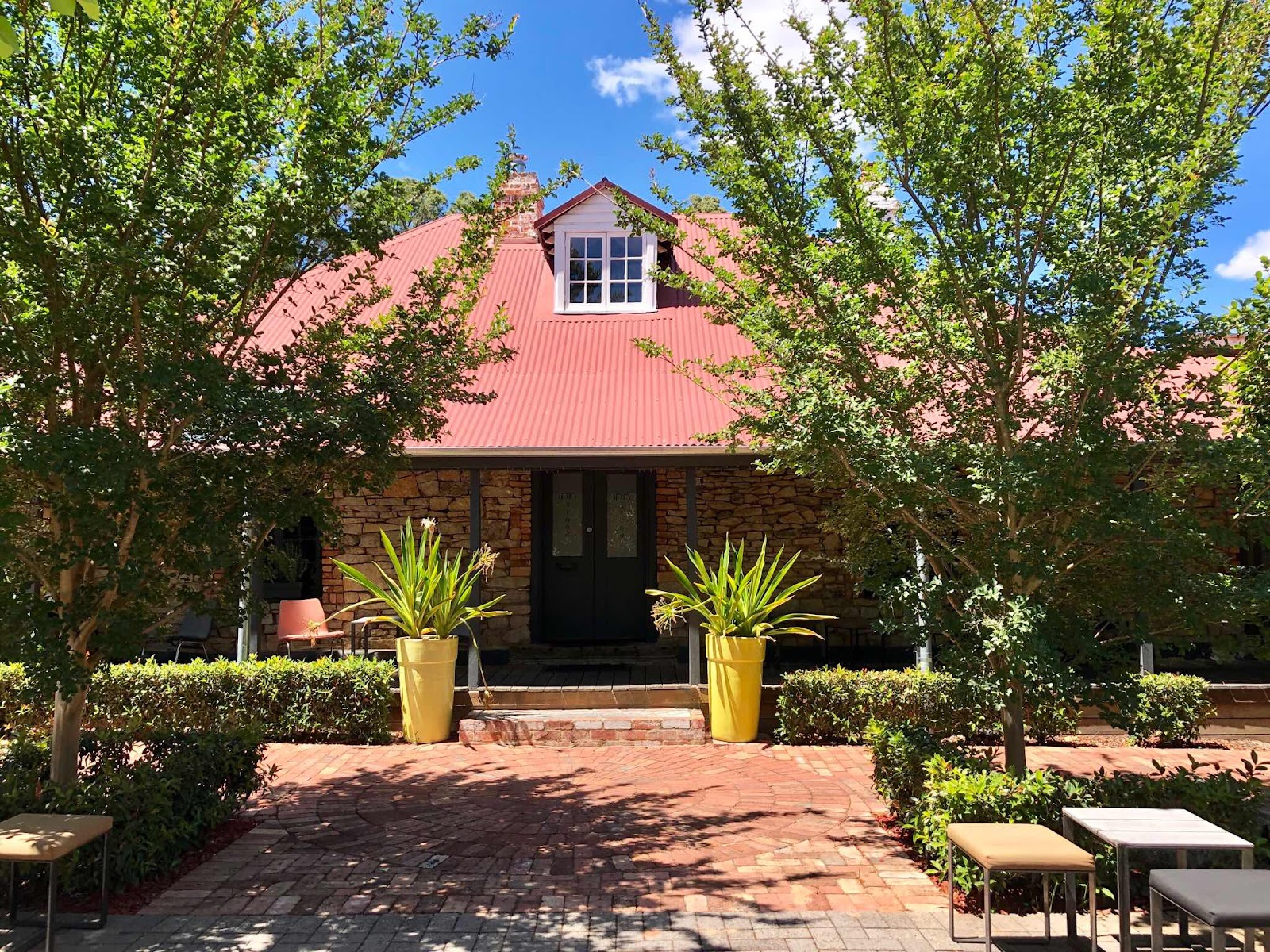
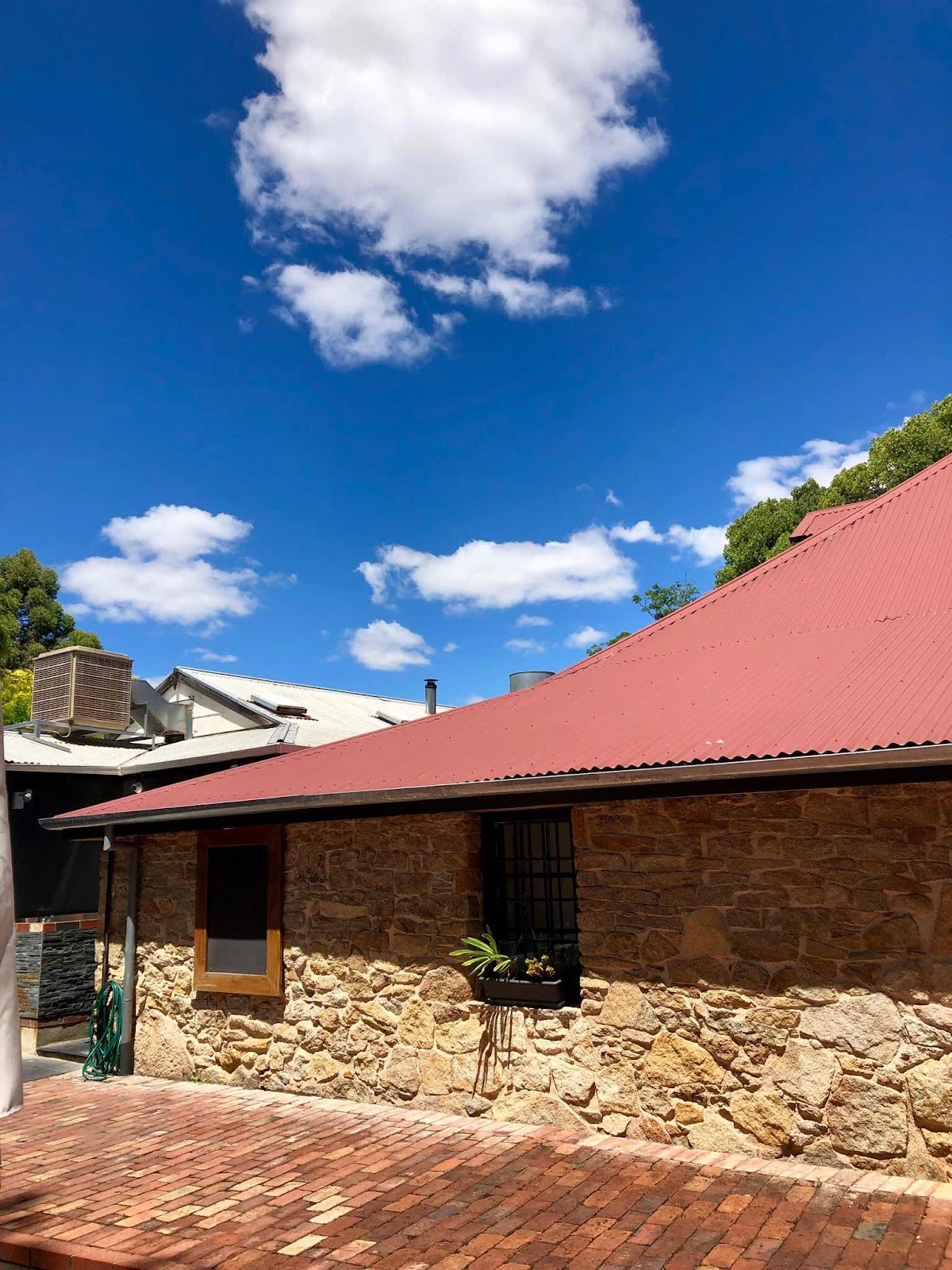
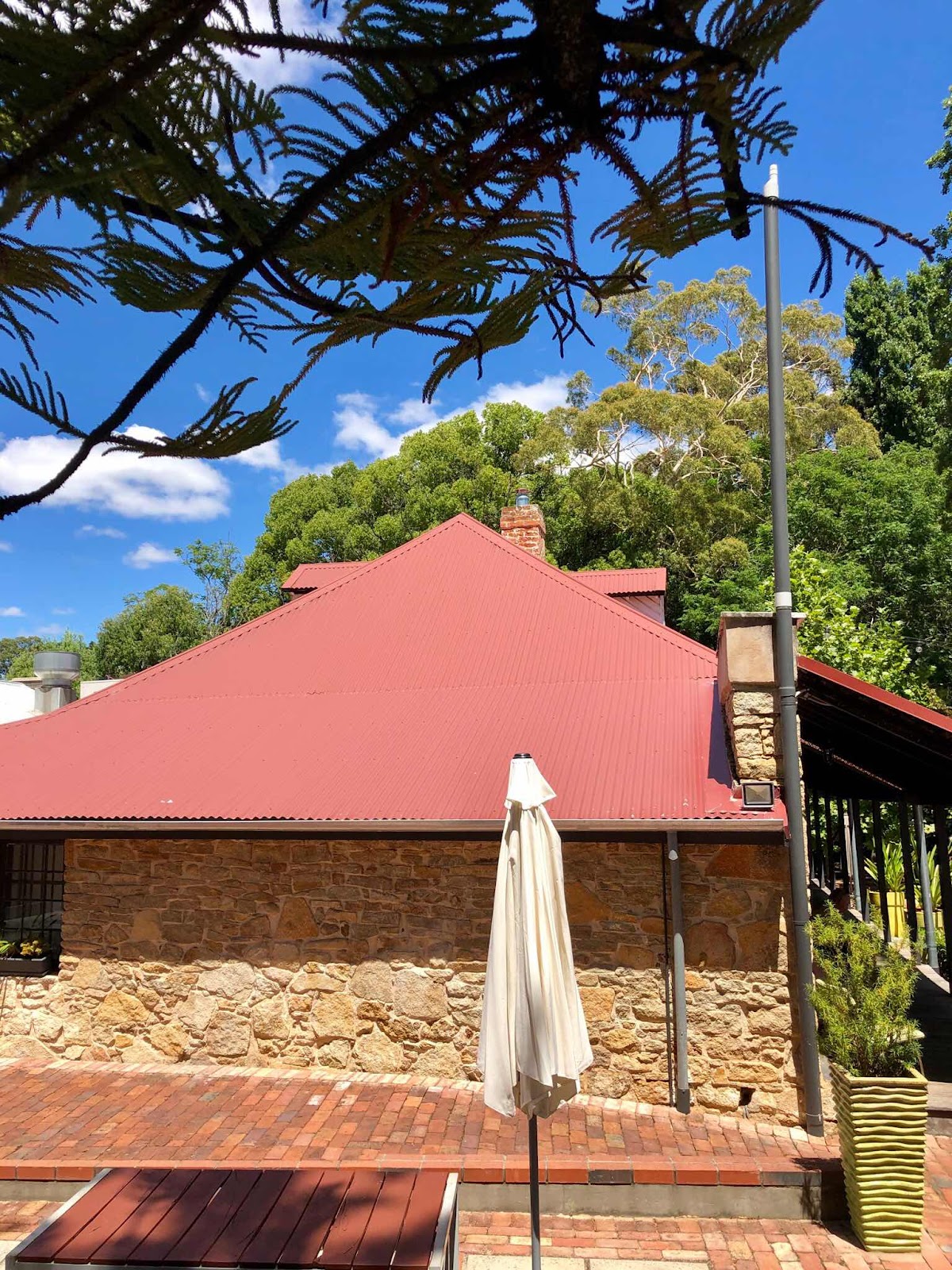
The Mahogany Inn is Victorian Colonial Georgian style, single storey with an attic, with a low red corrugated iron hipped roof and white washed rendered walls with vertical windows.   By September 1841 the Barracks had been abandoned by the military and by November 1842 the site had been sold to two Perth Merchants, William and Robert Habgood.  The Habgoods purchased 320 acres of land surrounding the former barracks and set up a ‘Road-Side Hotel’.  In October 1843 the brothers advertised to let the property which they described as 

“The well known Road-side House at Mahogany Creek, situated on the York Road, Inn miles from Guildford.  The house is surrounded by very superior timber and will be let on moderate terms.”

The advertisements ran until November 1843 when it was apparently taken up by Edward Byfield.  Edward John Harold Byfield arrived as part of thirty one passengers aboard the Westmoreland in 1840.  He married Jane Eliza Coates the following year.  Jane and her brother had been sent to the colony by The Society for the Encouragement of Juvenile Immigration.  Jane had been placed in the care of James Stirling, first Govener and Commander-In-Chief of Western Australia. She worked as a nursemaid to the Stirling children before marrying Edward.  Edward was the first publican/owner of Mahogany Creek Inn. He applied for a Publicans License at a sitting of the Guildford Magistrates Board.  By the 1850s the Byfields had established what they called a homey wayside inn for weary travellers to rest and dine and called it The Prince Of Wales Hotel.  By 1859 the business was so prosperous Edward Byfield was able to purchase the property from Robert Habgood for 200 pounds.  

Edward and Jane had nine children.  He died in 1863 leaving his property in equal shares with his children, his wife Jane and his brother in law William Coates.  Jane was unable to obtain a publicans license and as this was her families livelihood she married James Gregory not long after the death of her husband Edward.  In 1864 James Gregory was able to get a publicans licence for the Prince Of Wales Hotel. After having two more children with James Gregory, Jane died in August 1871.  Her sons evicted James Gregory from the hotel and their uncle William Coates took over the publicans licence.  He held the licence for the Prince of Wales Hotel until 1875.  

In June 1875 Benjamin Kenworthy took over the publican license for The Prince of Wales and held it until 1877 when former police constable Hennry Coppin took the license over until 1880.  In 1877 William, James and Thomas Byfield, Edward and Janes children, sold their eight shares in the Inn to Northam merchant George Throssell.  During the 1880s the the Byfield sons and Throssell advertised the Inn for sale, calling it ‘Mahogany Creek Inn’.  

Due to the prospect of the construction of a railway though the hills to York there was not much interest in purchasing the Inn.  February 1881 John Symonds announced that he intended to establish a Wayside House operating under the name The Oxford Inn. Symonds held the license until 1883 when he transferred the name and the license to a building in Chidlow.  

The York Road became a toll road administered by local lawman, Constable Henry Coppin.  In 1850 a convict depot was established beside the Prince of Wales Hotel.  Prisoners enroute to Perth were often detained in the cellar of the Mahogany Inn.  In fat the cellar under the Inn where prisoners were detained still has the original table where the prisoners ate their meals and the window still has bars on it.  

Several notorious Western Australian bushrangers were known to visit the Mahogany Inn regularly, including Moondyne Joe.  Joseph Bolitho Johns, known as Moondyne Joe was an English convict and Western Australia’s  most famous bush ranger.  On one particular occasion Moondyne Joe was hiding from the police in the attic of the Inn and he carved a dog chasing a kangaroo on the floor.  The carving still remains.  It was believed that Moondyne Joe liked one of the waitresses that worked at the Inn.  Moondyne Joe was apprehended by the police jumping from the roof of Mahogany Inn

The Inn had several subsequent high profile owners including politician and Chief Justice of the Supreme Court of Western Australia, Sir Stephen Parker.  
In the 1960s additions were made to the Inn, with several other add on and renovations to follow over the years.  The Mahogany Creek Inn now boasts rooms with all the modern comforts

It is believed that Mahogany Creek Inn is haunted by Moondyne Joe, despite the fact that he actually died of senile dementia in the Fremantle Lunatic Asylum and is buried in Fremantle Cemetary with the welsh word “rhyddid”, meaning “freedom” on his gravestone.  Both staff and visitors to the Inn have reported hearing ghostly noises and experiences.

Monday, February 13, 2017

Shipwreck Galleries

Located in Cliff Street in Fremantle, The Western Australian Shipwreck Museum is considered one of the most prestigious maritime museums in the Southern Hemisphere.  The Shipwreck Galleries within the museum are filled with hundreds of relics from ships that were wrecked along the treacherous Western Australian coastline.

The centrepiece of the Museum is the Batavia Gallery. The Dutch East Indies Ship, the Batavia was built in 1628 and commenced her maiden voyage from Texel to the Dutch East Indies in search of spice, under the command of Francisco Pelsaert and skipper Ariaen Jacobsz.  Unknown to Pelsaert, Jacobsz and Jeronimius Cornelisz, an apothercary in fear of arrest for heresay, had decided to commit mutiny and commandeer the ship.  Before their plan of inciting Pelsaert to an act of violence against the crew following a planned attack on one of the female passengers, the Batavia struck Morning Reef near Beacon Island on the Western Australian coast. Of the 322 onboard the Batavia 40 drowned before passengers and crew could make it to the small uninhabited atolls. 

As Western Australian had yet to be settled by Europeans and unfamiliar with the land Palseart took Jacobsz and a few of the crew and decided to row to Batavia for help.  He left Cornelisz in charge.  The would be mutineer knew that he would have to be ready to fend off any rescue ship before it arrived and so started the systematic torture, rape and murder of the remaining passengers and crew of the Batavia by Cornelisz and his followers.  Among the survivors were a group of soldiers Cornelisz sent to find drinking water on one of the other small islands who got wise to his plans and what was happening.

When Pelsaert returned from Batavia with a rescue ship, Cornelisz and his band were bought to justice.  The worst had their hands chopped off and were hung. The two youngest culprits were marooned on the shore and never heard from again. 

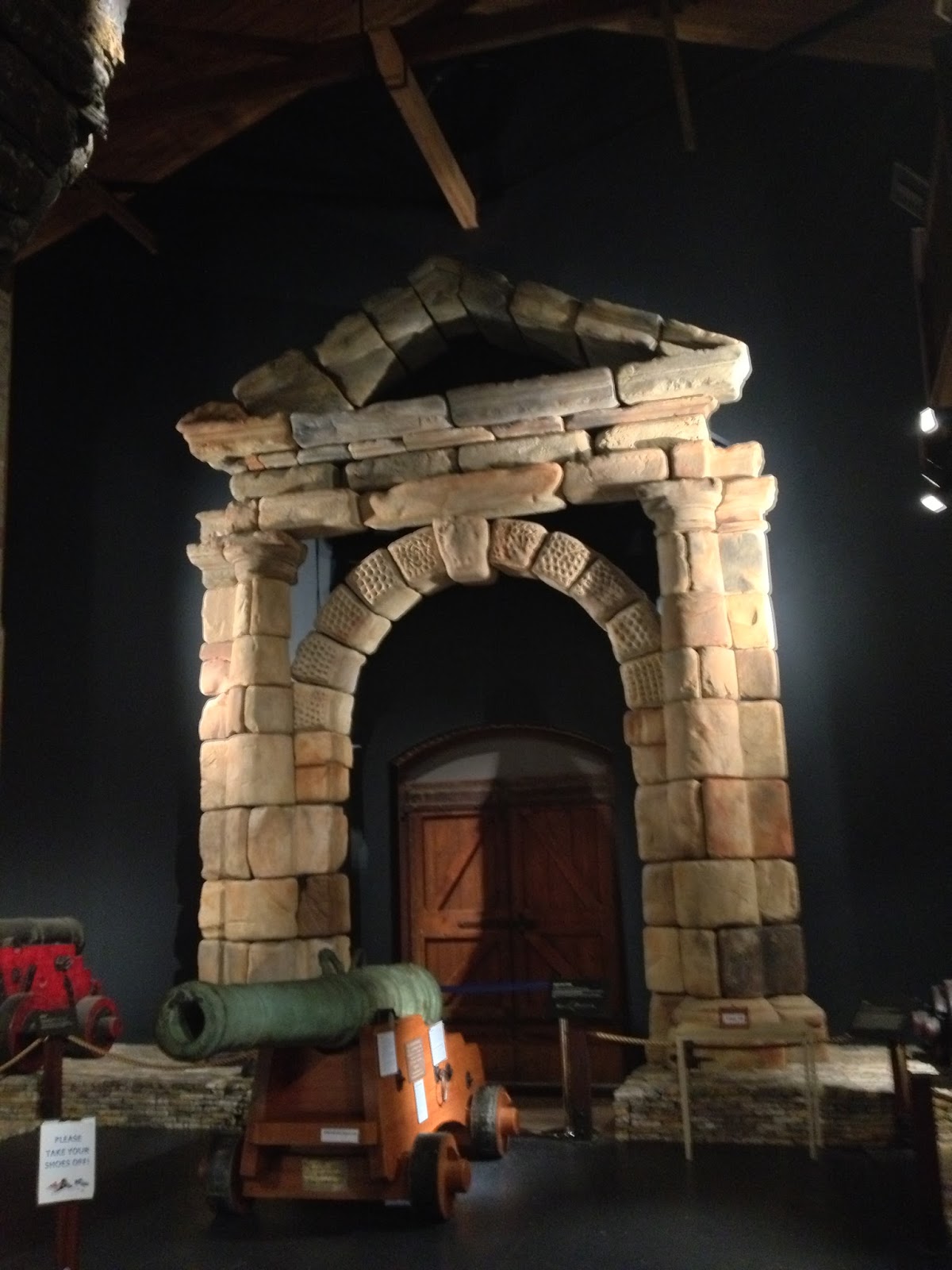
The Batavia Gallery in the Western Australian Shipwreck Museum houses the reconstructed remains of the Batavia that were reclaimed from the wreck site following its discovery in the 1970s.  In the gallery Captain Palseart's cabin has been faithfully reconstructed and the skeleton of one of the murder victims is on display.   The huge portico that the Batavia was transporting to be the entrance to the city of Batavia has also been faithfully restored and is on display in the gallery.  

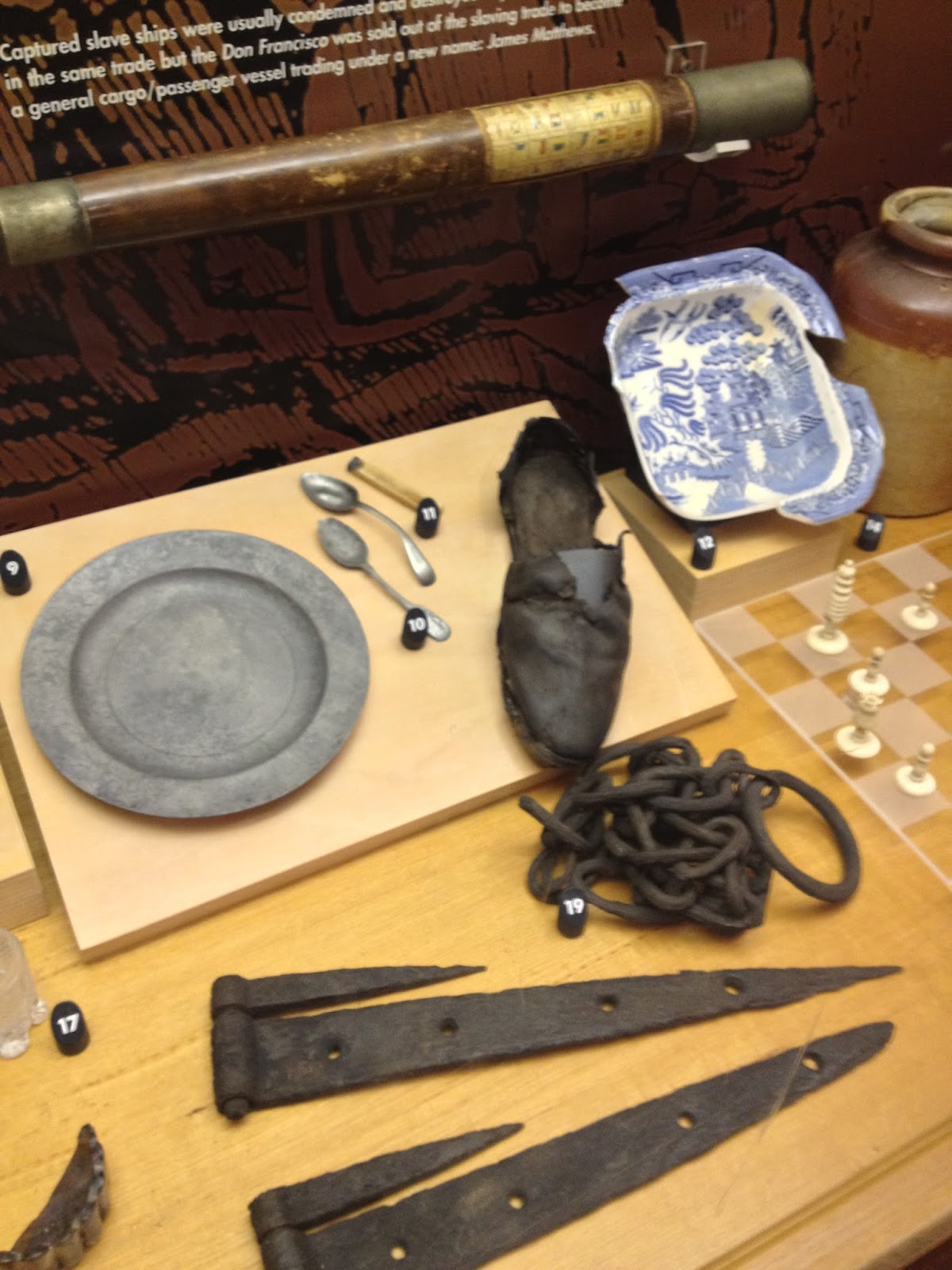
The other galleries of the Shipwreck museum house all sorts of relics recovered from shipwrecks such as the Zurydorp, Zeewijk and the Vergulde Dragon.  Anchors and a steam engine from the iron steamer SS Xanthos are on display as well as the de Vlamingh plate.  

The Western Australia Shipwreck Musuem is housed in an 1850s Commissariat building.  It was one of the first buildings constructed using convict labour in the Swan River Colony.  The first convicts who arrived in Fremantle had arrived unexpectedly as their ship out sailed the ship that was suppose to announce their arrival.  The convicts arrived on June 1st 1850 and they were put to work almost immediately.  In 1851 James Manning designed the building that would become the Commissariat.  The construction was placed under the supervision of Captain Henderson, Royal Engineer and Comptroller of Convicts for Western Australia.  As a Royal Engineer, Henderson belonged to one of the most elite corps of the British Army.  Also called the Sappers, this corp which still exists, is renowned for performing engineeering and constructions tasks that facilitate the movement, defence or survival of the allied forces.

The site for the Commissariat building was close to the sea and the south jetty so ships could easily load and unload cargo.  The first wing of the building was called  A-Store.  Delays occurred due to the roof of the warehouse and despite it having no roof initially goods were already stored in its walls. In 1852 the building of seperate offices commenced.  
The original design of the Commissariat building showed a structure with scope to add a middle and end wing, instead a free standing store was constructed in 1856 just behind it.  The final stages of the building were never completed and this may be a direct result of the transportation of convicts stopping in 1868. 

The buildings were used by the colonial government as a warehouse and Post and telegraph office from 1879.  The 1890's saw a gold boom in Western Australia that increased the traffic in the port resulting in the construction of a drum store. 

From the 1930's the Commissariat building were used as offices for the Child Welfare Department. It wasn't until 1972 that in response to the discovery and what proved to be the notorious excavation of the Batavia Shipwreck, that the decision to convert the stores to house the relics was made. The museum was officially opened in 1979. 

There have been many strange occurrences at the Western Australian Shipwreck Museum.  People have reported hearing strange noises in the gallery as well as visitors reportedly seeing things moving just out the corner of their eye.  It's is said that perhaps the gallery is haunted by the ghost of fifteen year old John Gavin who was hung in front of the Round House.  Gavin was the first European executed in Western Australia and he was so light his body had to be weighted to ensure he would die from hanging.  He was sent to the colonies as a juvenile and was accused of murdering his employers eighteen year old son.  He admitted to the crime but seemed confused and may have no infact killed the victim.  He is said to haunt the Round House, but his body was buried in an unmarked grave between the Round House and the current Shipwreck Museum.  With all the relics, including personal artifacts from so many disastrous sea voyages, it seems little wonder that perhaps there would be some strange occurrences within the walls of the museum. 

I love the Shipwreck Museum and go as often as I can.  I have always been fascinated by all things to do with Maritime archaeology and the gallery has so many interesting reclaimed artefacts.  None of the wreck relics are quite as daunting as those housed on the Batavia Gallery.  The restored looming hull and the skeleton of one of the murder victims is quite a sobering exhibition. This museum is well worth a visit.