Showing posts with label ghosts. Show all posts

Friday, September 16, 2022

York Hospital, Western Australia

York is the oldest inland town in Western Australia.  It is situated on the Avon River about 97km east of the capital of Western Australia, Perth.  During the winter months of 1830, Ensign Robert Dale, Officer of the 63rd Regiment was asked to lead a small party over the Darling Ranges where he reported discovering “park like lands with scattered trees.  The name of the Region was suggested by JS Clark during the expedition because he believed the area resembled his own home in England, Yorkshire.   Following a second expedition Lieutenant-Governer Stirling explained that there appeared to be 1000 square miles of what he described as “the finest imaginable sheep land“.  By December 1830, 250000 acres had been allotted with a further 80000 acres in Jan 1831 and 6030 small lots at the end of 1831.  

September 1831 the first party of settlers, led by Ensign Robert  Dale reached what had become known as the Avon Valley.  Land cultivation, construction of huts and preparation for stock took place and in Spetember 1833 a garrison of 8 troops of the 21st North British Fusiliers were stationed in the town of York.  By July 1835 allotments in the town were gazetted  and advertised.  In 1840 the York Agriculture Society was established.  The York Agriculture Society became very powerful and in 1851, following a request from the society,  convicts were transported to the area to help with a labour shortage.  Many of the buildings in York were then constructed by the convicts.  

After the construction of a railway to York gold was discovered in Yilgarn in 1887 and York became the place for the miners to alight before the long walk to the  goldfields.  With the growing population of miners and the harsh conditions on the mine fields the town was inundated with ill and wounded men.  The  lack of fresh water and inadequate hygiene as well as the lack of vegetables and fruit led to diseases like dysentery, typhoid fever, scurvy and other diet deficiency diseases amongst the transient population as well as the townsfolk.  

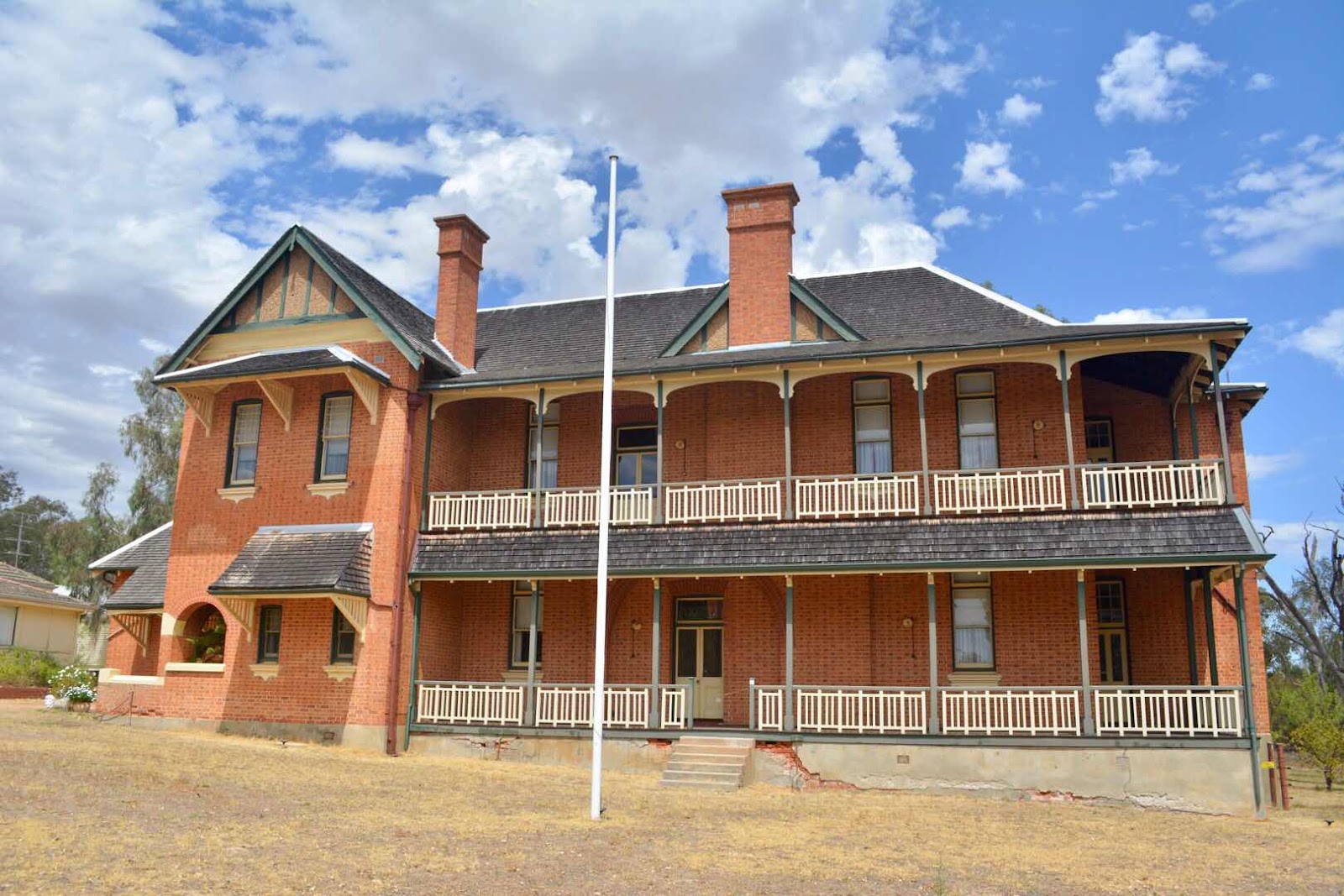
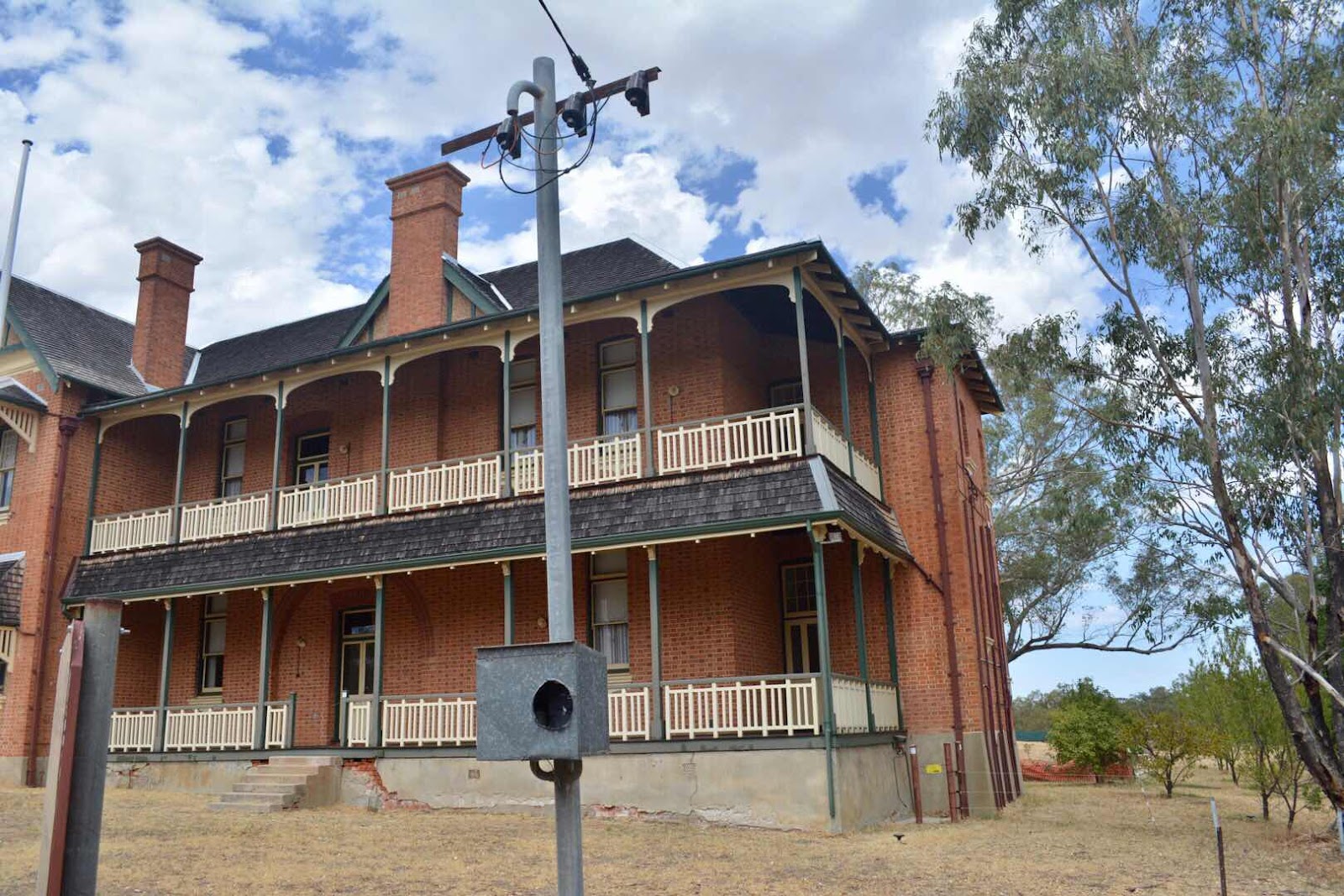
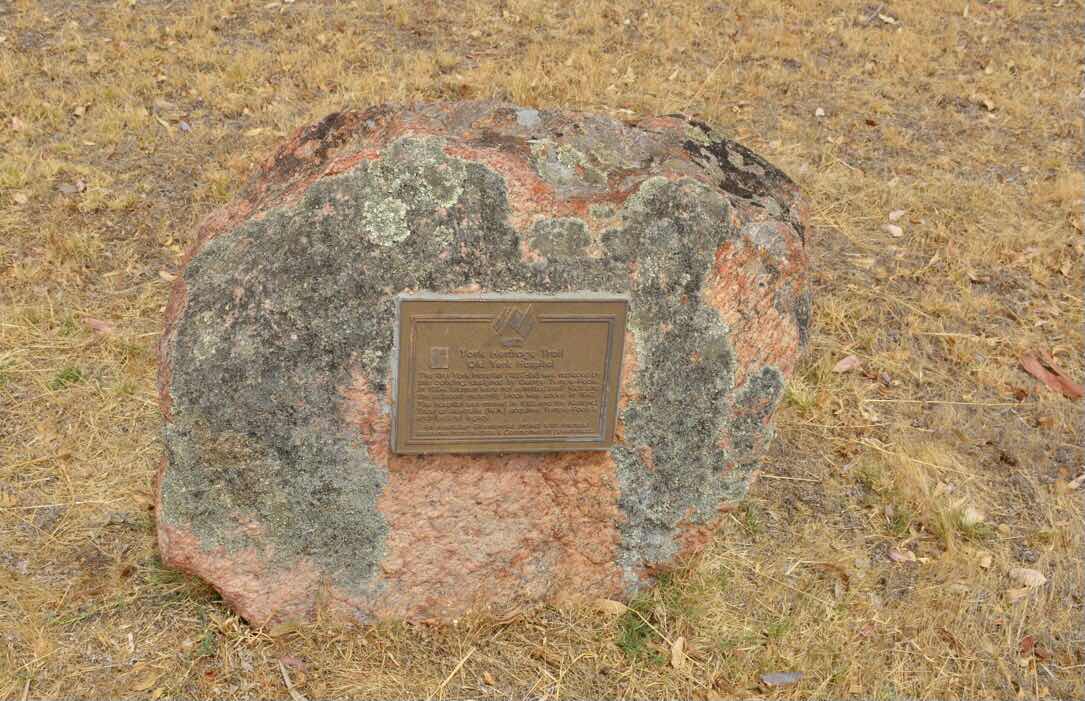
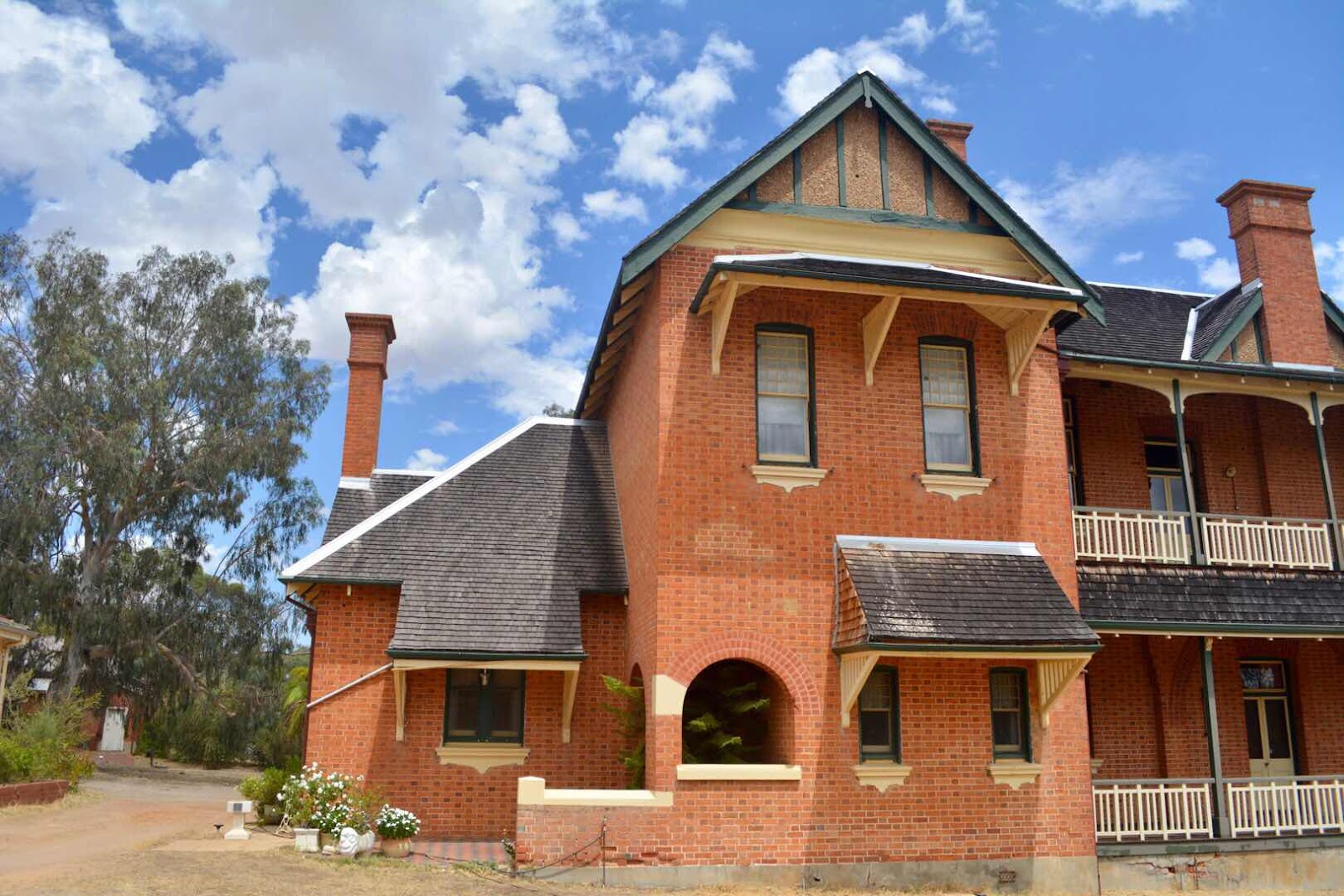
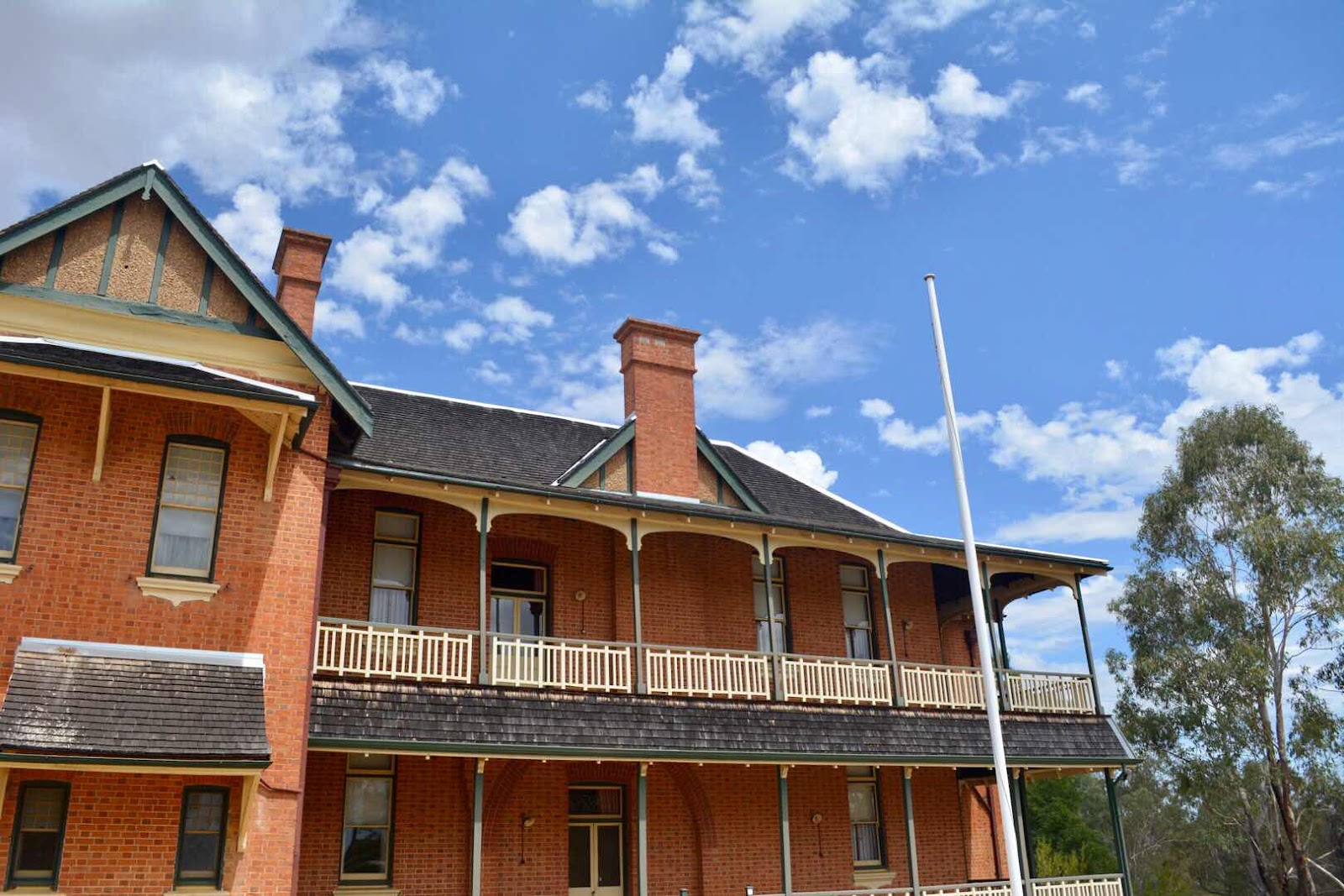
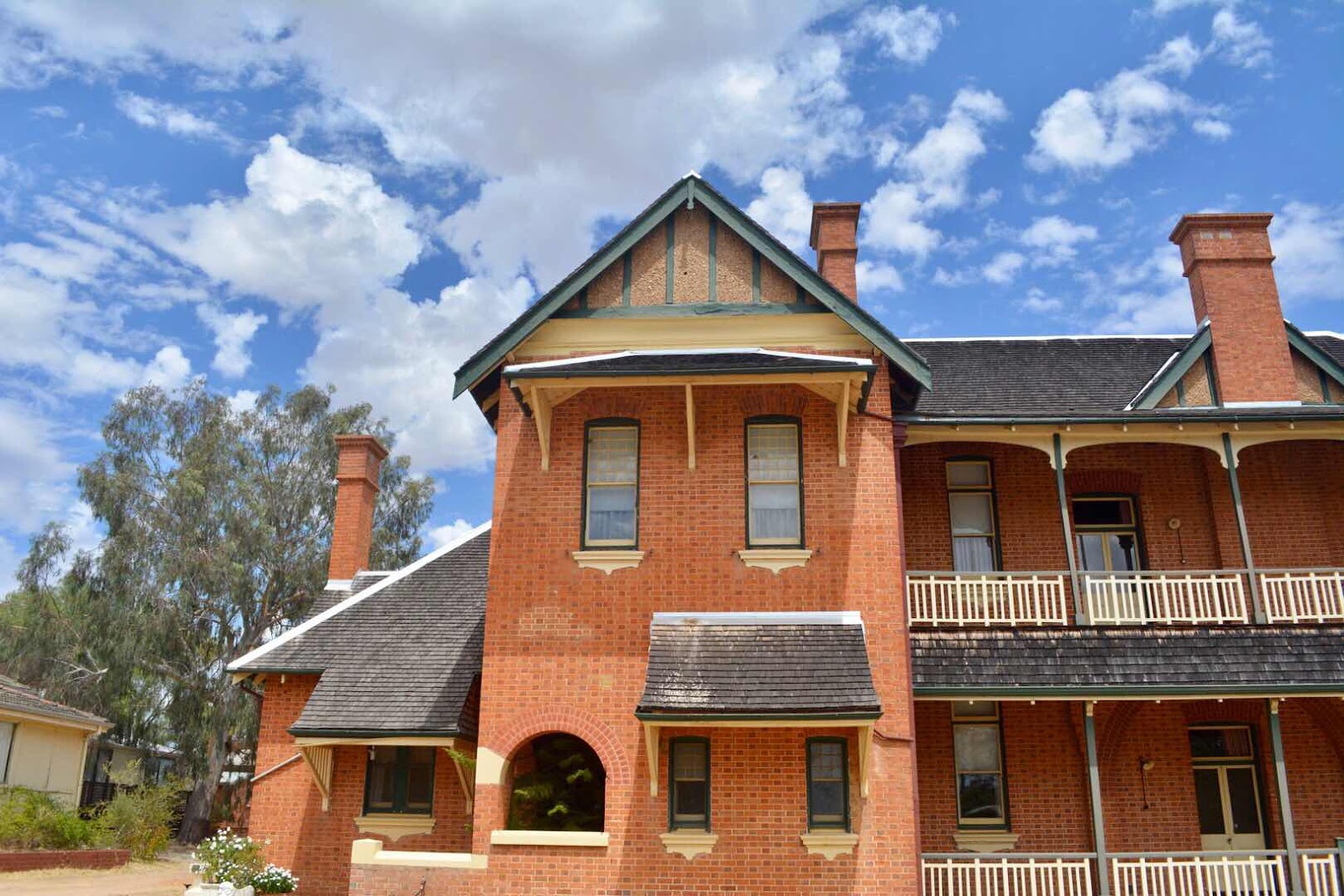
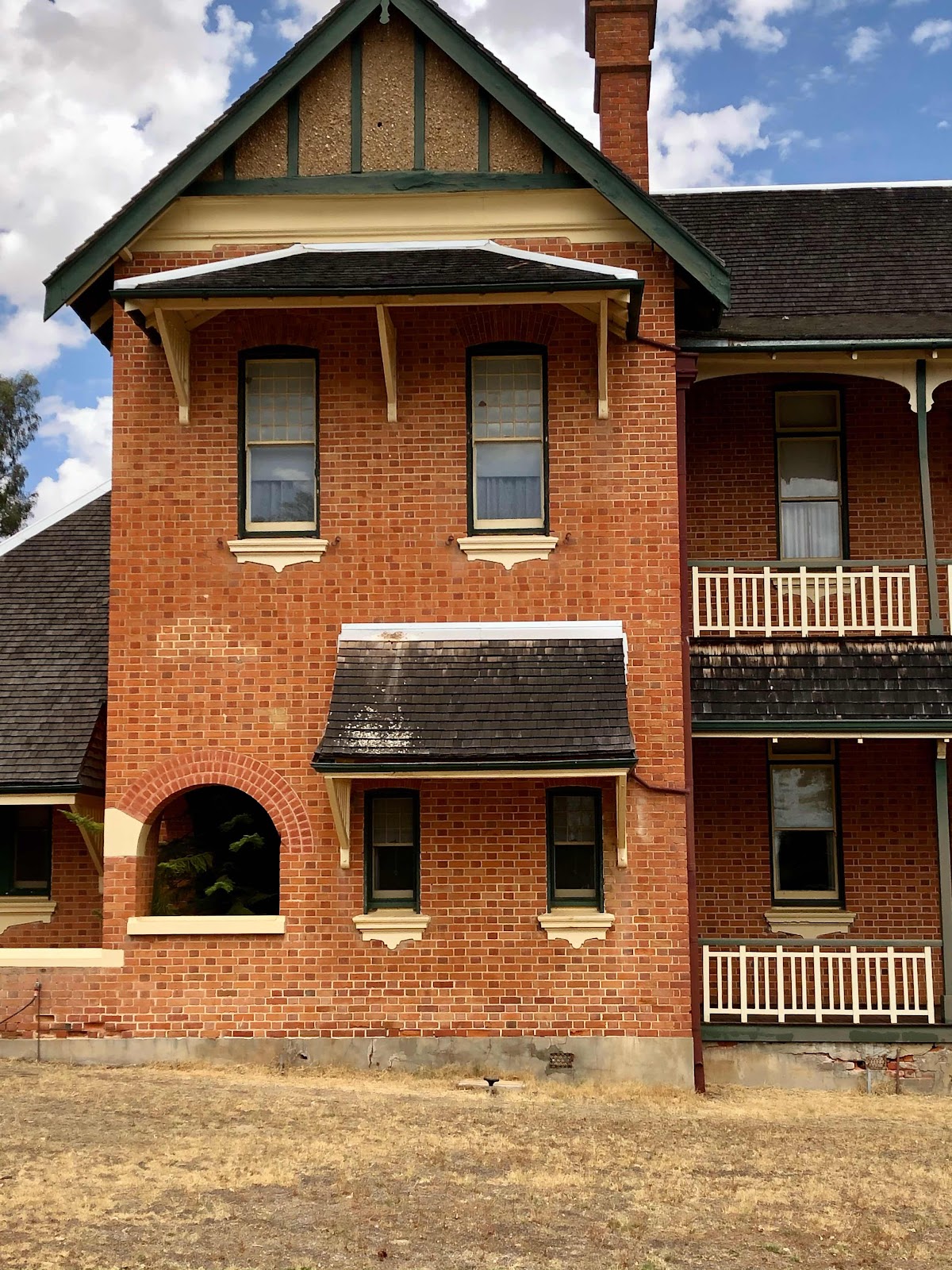
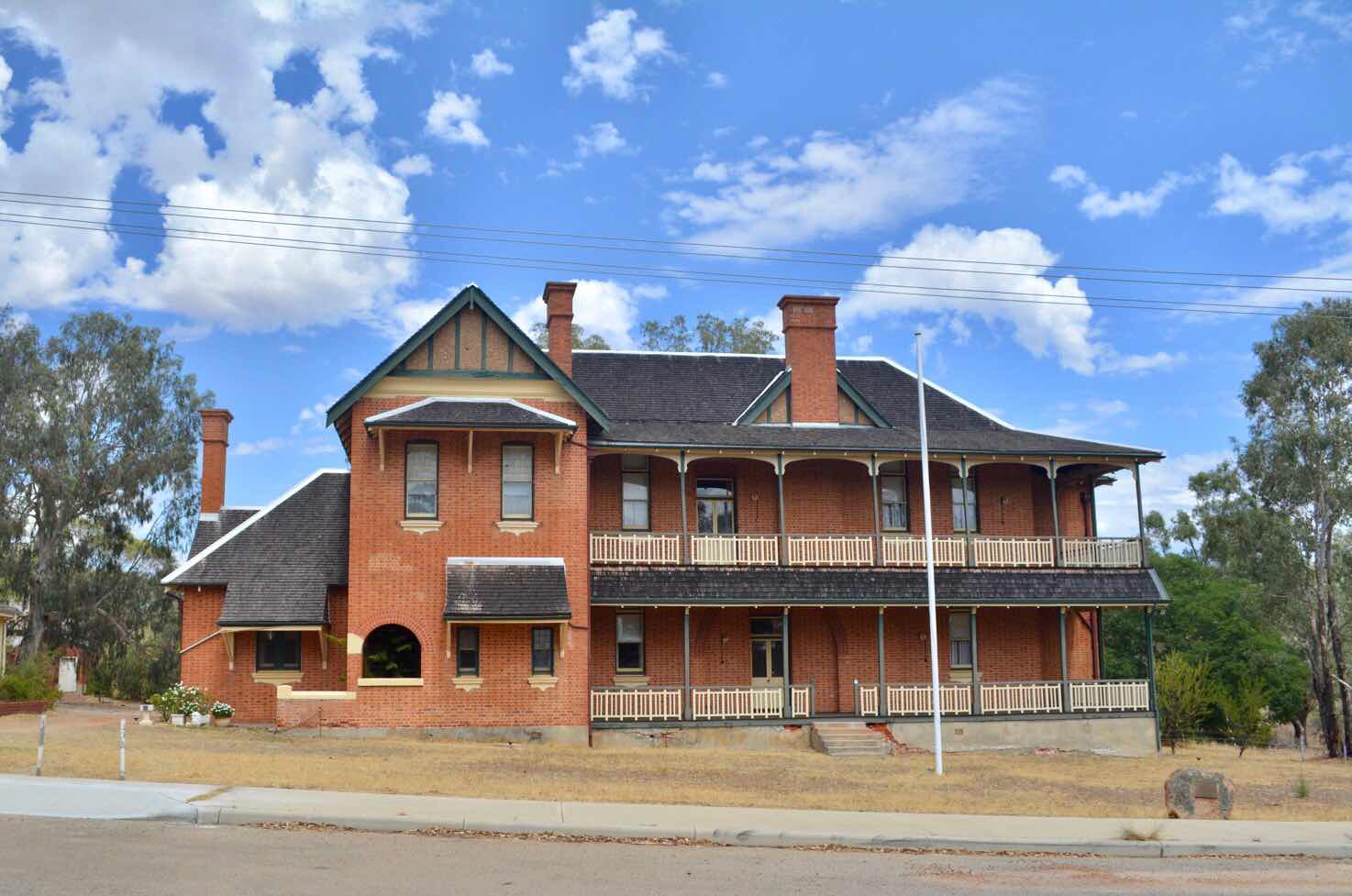
By 1852 York had a small hospital in the York Convict Hiring Depot which only saw male patients.  With the growing need for a larger hospital that could treat men and women George Temple-Pool , Principal Architect for Western Australia designed what has become known as the Old York Hospital.  The structure was built by Christie and Company and opened in June 1896.  Giving the impression of a Victorian  gentleman’s mansion rather than a government institution Old York Hospital is a great example of Federation Arts and Crafts design.  This style of architecture originated in England and was created in response to the impersonal architecture that emerged during the Industrial Revolution.  The two storey building has high pitched gables with a steeply pitched roof and tall chimneys.  The bricks  were sourced locally and in a nod to the Australian climate the building features wide verandahs spanning across both storeys at the front and the back of the building.  Over the years other buildings were added including a nurses quarters in 1925, a maternity ward in 1941, a morgue and a laundry in 1942.  

The first matron of the hospital was Mary Ann Nichols, a former matron of the Perth Colonial Hospital.  She had a staff consisting of a nurse, cook, orderly and wardsmaid.  In the first year 65 patients were admitted and at times surgery was carried out on the kitchen table.  

Paranormal stories about the Old York Hospital go back to the 1920s and seemed to centre around the second floor of the building and a room called ‘The Dying Room“.  Eyewitnesses have seen a figure they describe as being dressed as an old fashioned matron.  

In 1963 The Old York Hospital closed and it was abandoned until 1976 and then was converted into a YHA hostel.  It was while it was a YHA hostel in 1980 that a well known haunting occurred that was witnessed by five adults and twenty eight children.  A Little Athletics Club  had visited York to stay in the YHA Hostel.  They however had to rush away from the building after hearing moaning, saw crockery floating and crashing in midair, watched blood trickle down the staircase and watched as an eight year old girl being pushed by unseen forces through a pane of glass resulting in her needing fifteen stitches in her arm.  
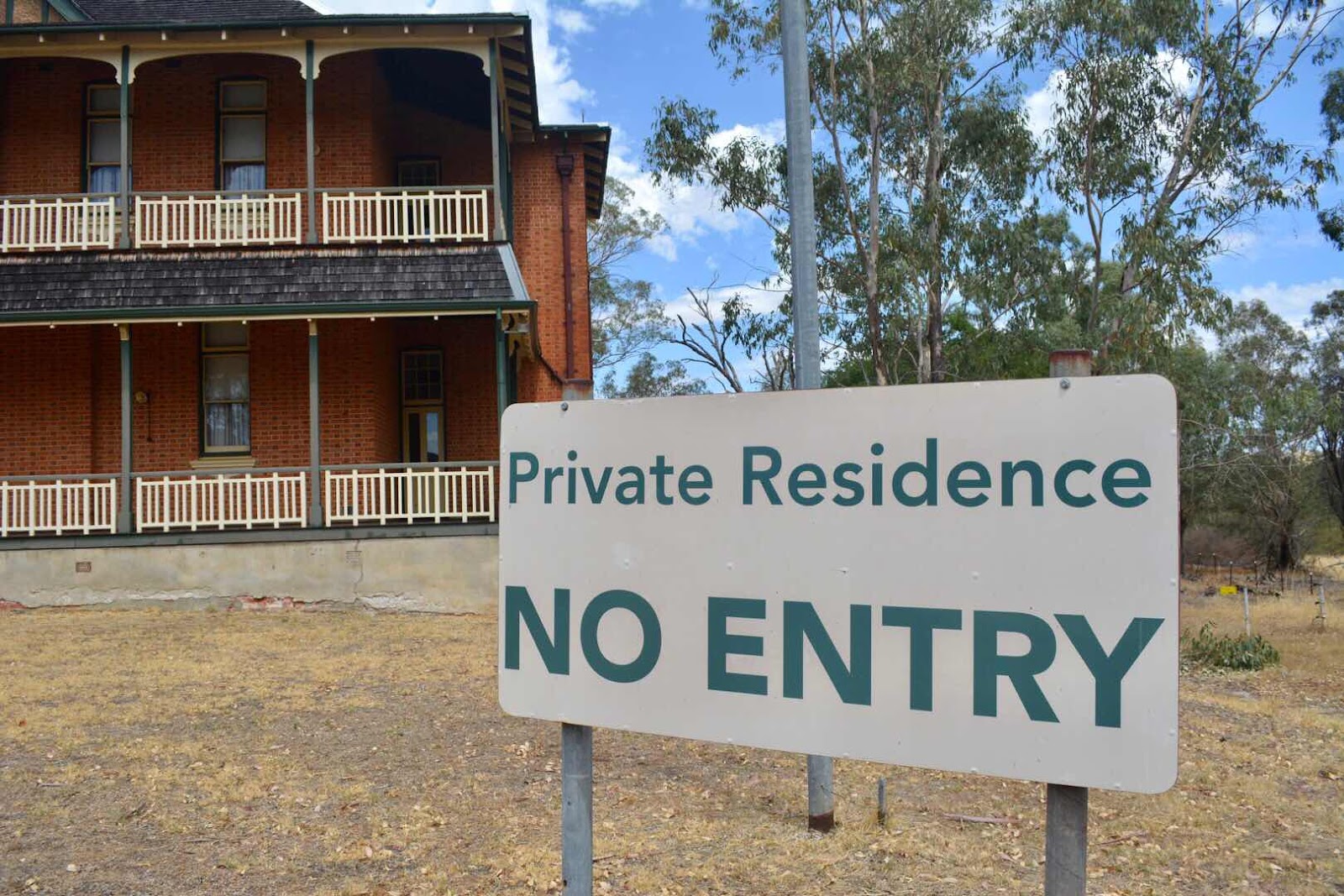
The continuing stories of a violent haunting resulted in the building being put up for sale and it became a private residence.  In 2022 a decision was made to create apartments in the building.  

This story has always been of interest to me as I knew some of the people that were there at the Little Athletics stay.  It terrified the people involved and despite the many doubters they have always stuck to their story of what occurred in the Old York Hospital to them. As an avid reader of Meridian you will know I travel and photograph and explore supposedly haunted places all over the world but this building was one of the most challenging.  From the minute I drove into the street where the building stands I felt uncomfortable.  It was a 40C+ degree day and the building just gave off a feeling of being malicious.  Despite the bright sunshine and heat I felt cold walking towards the building and it’s one of the only times I felt something was really wrong with the building.  The windows had curtains but several of them seemed to twitch while I was watching the building and photographing it despite the building being empty that day.    I always have “feelings“ about places but this building felt “wrong“. 


Monday, August 10, 2020

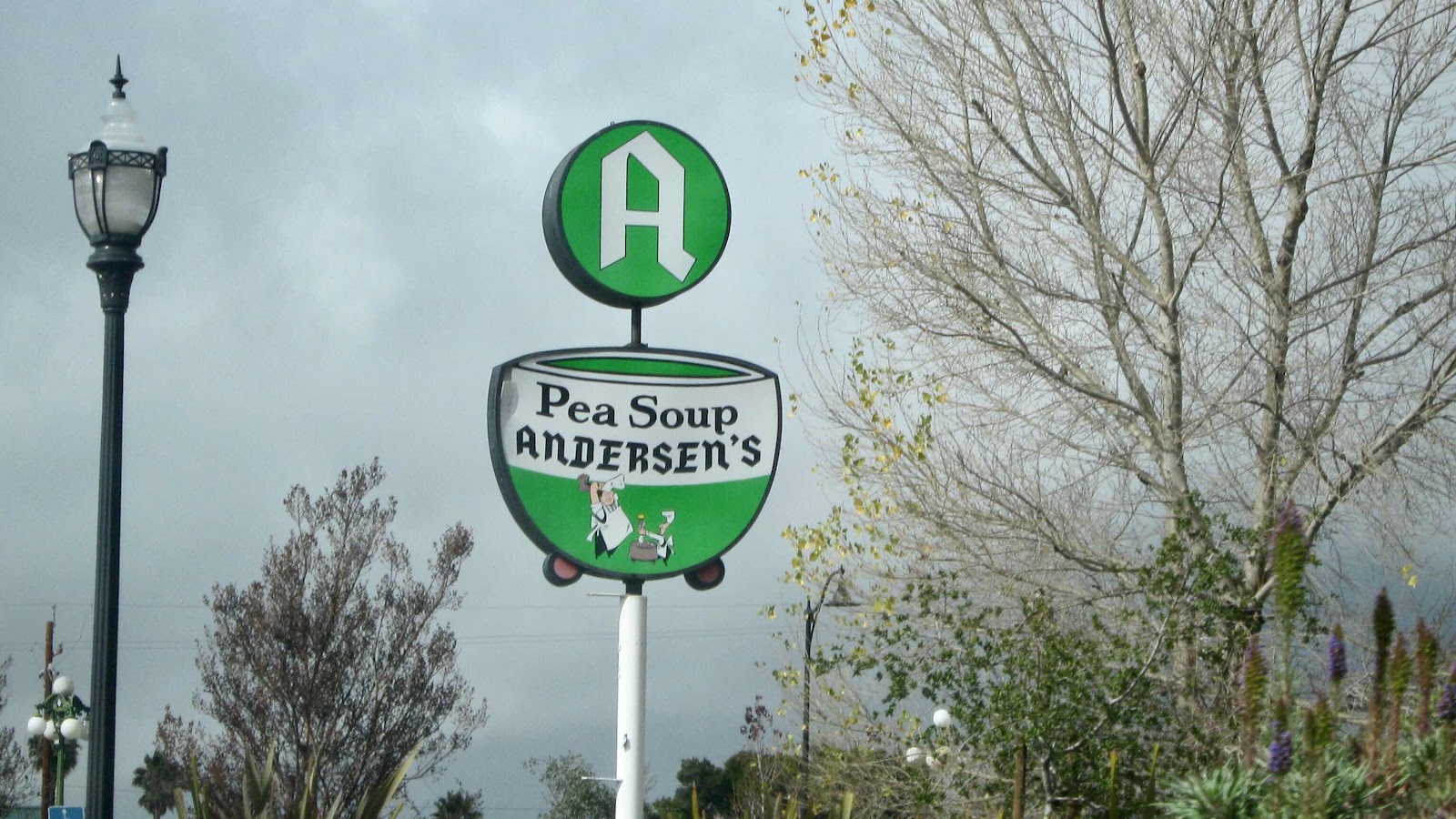
Pea Soup Andersen’s

Pea Soup Andersen's is a restaurant chain in California.  It was founded in 1924 by Anton Andersen and his wife Juliette.  Born in Denmark, Anton Andersen had trained as a chef in Europe and New York, also helping with the opening of the Biltmore Hotel.  He and his wife purchased a property in the small town of Buellton, California in Santa Barbara County, neighbouring Solvang, a Danish community of recent immigrants.  
The land in Buellton had previously been part of a Mexican Land Grant owned by Jose Maria Corarrubias and Joaquin Carillo of Santa Barbara.  The land was purchased by the Buell Brothers in 1865.  R.T Buell turned the land into a prosperous horse and cattle ranch and a dairy farm called Ranch San Carlos de Jonata.  Buell married Miss Emily Budd in 1892 and they had five children.  When Buell died in 1905 he was buried in the family plot which would later become the car park for Pea Soup Andersen's.  His body was later moved to Oak Hill Cemetery in Ballard.

The area of Buellton, located in the Santa Ynez Valley, changed rapidly and by 1911 Danish immigrants, attracted to the area, were settling there opening businesses and farms.  When the highway was diverted through Buellton and electricity was bought to the valley the Andersen's saw an opportunity.  They opened a small restaurant called Andersen's Electrical Cafe.  The name was in honour of their prized new electric stove.   

With a menu of simple foods including hotcakes, ice-creams, sodas and coffee, the café was created cater to the people that travelled the highway.  Initially the customers were mostly people that were travelling between Los Angeles and San Francisco.  The café also happened to be on the road to Hearst Castle at San Simeon. This was the heyday of the Hearst Media empire and writers and journalists such as Arthur Brisbane, one of the best known newspaper editors of the 20th Century and O.O McIntyre, a newspaper columnist of the 20s and 30s, stopped to eat at Andersen's. In this way praise for the establishment and the food it served was sent all across the country.

What would become the famous pea soup, a family recipe belonging to Juliette, Anton Andersen's French wife, was first added to the restaurant's menu three months after it was opened. Juliette was a fabulous cook and was responsible for preparing many of the popular recipes on the menu. As the establishment became more popular in 1928 the Andersen's built a hotel and dining room as well as sinking a well.  the Andersen's called the new establishment The Bueltmore, a play on the name of the Biltmore Hotel.  As Anton had worked in many well known restaurants, many famous chefs stopped by the Bueltmore.

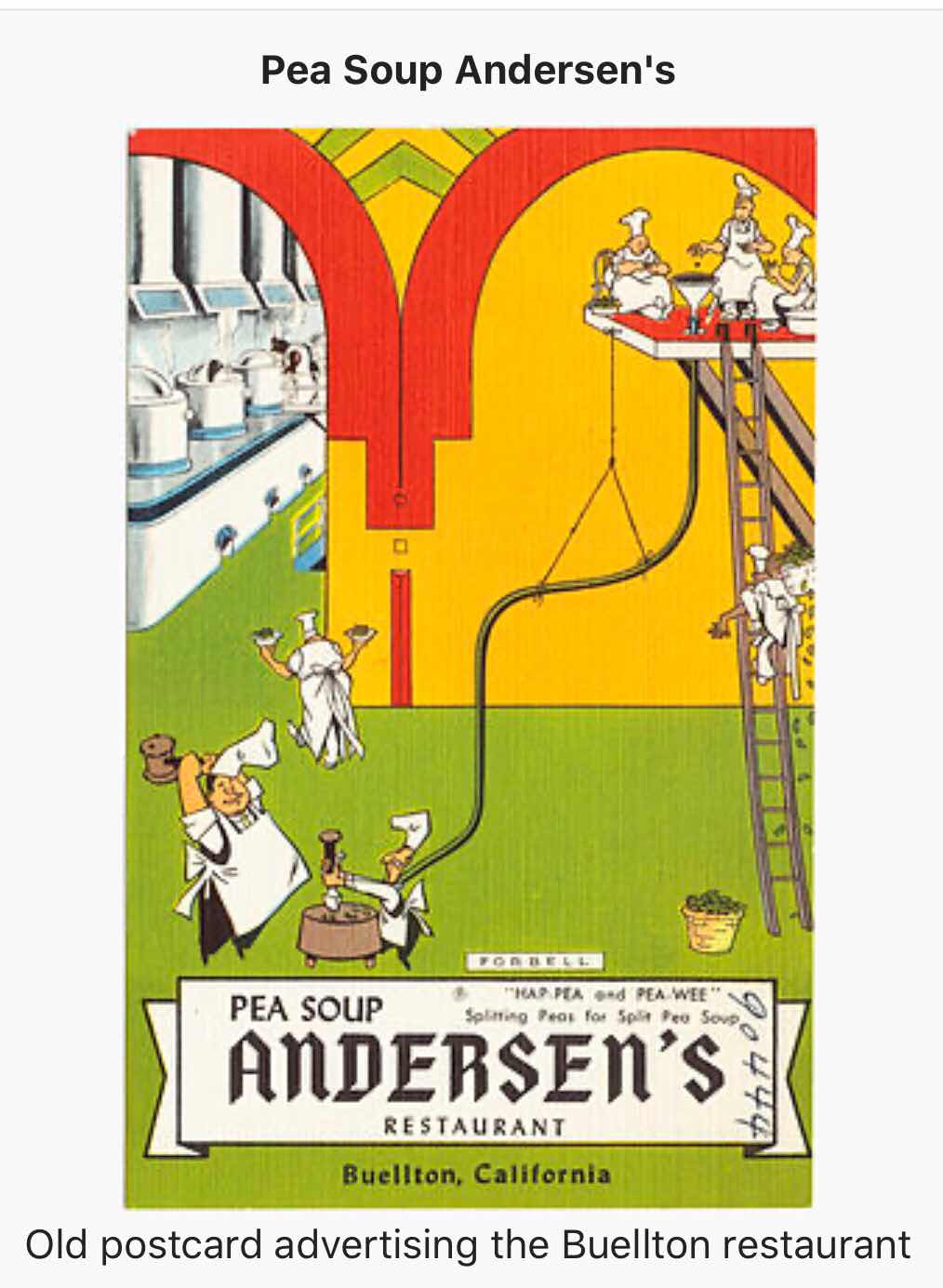
In the 1930s Robert, Anton and Juliette's son, returned from Stanford University.  Robert became instrumental in the marketing aspect of the restaurant.   He discovered a cartoonist called Forbell who created a cartoon entitled "Little Known Occupations" for a magazine called Judge.  The illustration depicted two chefs creating split pea soup using a chisel to split the peas.  Andersen obtained the rights to the image.  Robert famously used billboards as part of his marketing strategy.

Robert Andersen married Rosemary Mohan who opened a gift shop attached to the restaurant.  the couple had a son called Robert in 1942.

During WWII the restaurant was closed to the public and  instead served as a place that military personnel and their family were served meals.  When the war was over Pea Soup Andersen's reopened.  Robert commissioned a Disney trained artist to draw the two mascots for the restaurant Hap-Pea and Pea-Wee, whose names were chosen through a competition.

In 1947 the new coast road was rerouted through the centre of Buellton.  That year the name of the restaurant became Pea Soup Andersen's. In 1965 Vince Evans, a successful business man and leader in the Santa Ynez Valley, purchased the restaurant.  He was said to have bought Pea Soup Andersen's on a whim because he enjoyed the soup. He promoted the restaurant like it was a Hollywood film putting huge billboards up and hiring new chefs.   Thriving under Evans management, the restaurant was said to be producing three quarters of a million bowls of soup a year.  Evans added a small wild animal park and aviary filled with parrots as well as a miniature train to further attract customers.  By the 1970s this was all demolished to make way for a Danish themed hotel.  In 1967 a second location was established in Santa Nella, California in Merced County.  The property had a restaurant, hotel, gas station and a gift shop as well as a working windmill.

Two short-lived restaurants were opened in Carlsbad and Mammoth Lakes.  Following the death of the Evans family in 1980 the restaurants passed through several owners.  Buellton and Santa Nella are now owned by Milt Guggia, a central coast restauranteur.

The Buellton Pea Soup Andersen's is said to be haunted by former owner Juliette Andersen.  Strange sounds, unexplained music and doors opening and closing have all been reported.  Furniture is also said to move on its own accord.

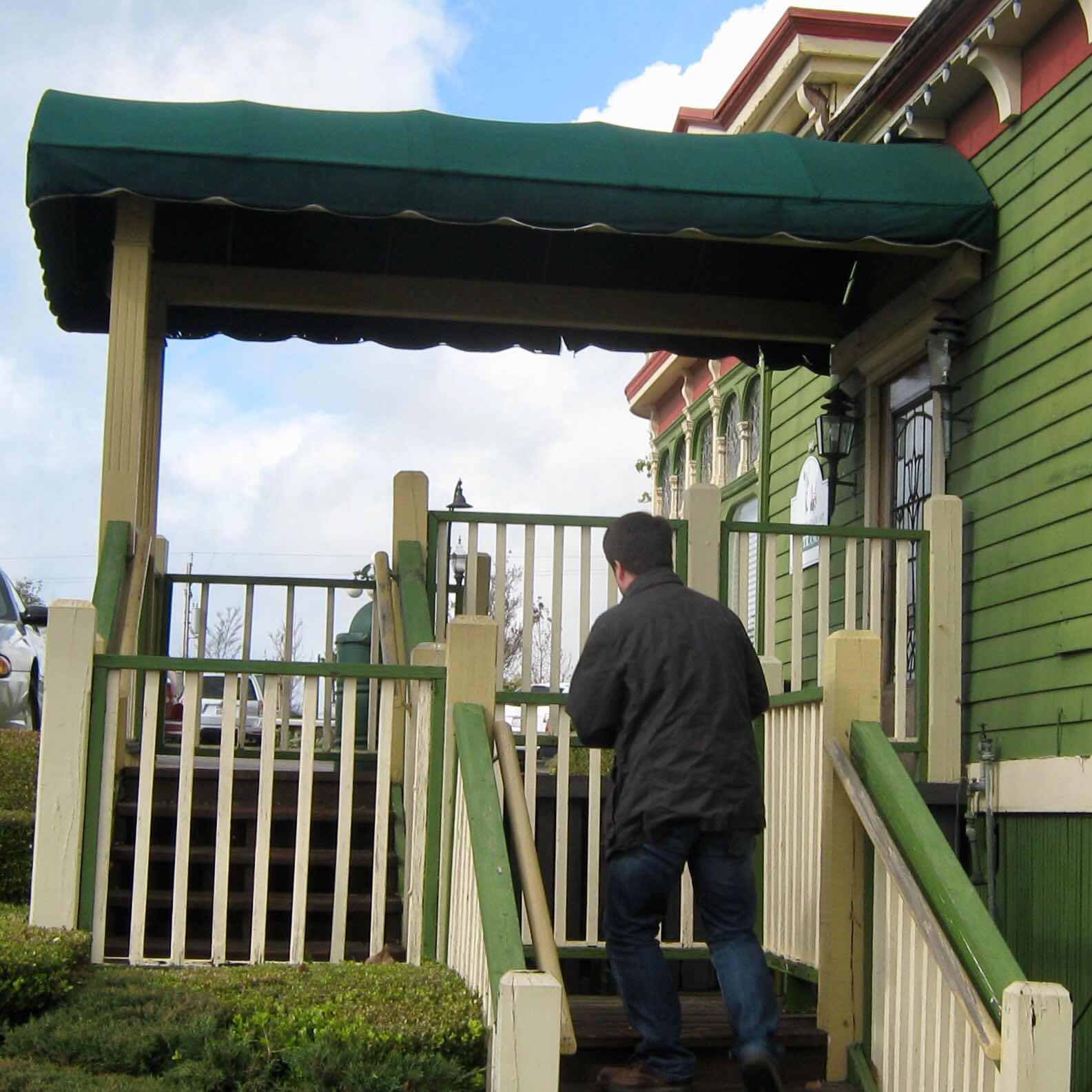
I have been to Pea Soup Andersen's several times on various trips to California and I always find it charming.  The soup is very delicious and the gift shop always has unique and interesting wares. 


Sunday, January 19, 2020

Fort George


Fort George is an historic military structure at Niagara-On-The-Lake, Ontario in Canada.  The fort was built by the British Army between 1796 and 1799 following the Jay Treaty.  Designed by Alexander Hamilton and supported by President George Washington the Jay Treaty was negotiated by American statesman and Diplomat, John Jay.  Brokered between the United States and Great Britain, the Jay Treaty was created to avoid war and resolve issues that remained following the Treaty of Paris in 1783 which ended the American Revolutionary War.  As part of the Jay Treaty the British Troops withdrew from Fort Niagara which stands opposite in New York and is visible from the Fort George ramparts.  The newly constructed Fort George became the western most of British fortified posts and served as the regional headquarters for both the British Army and the Canadian Militia.  

Fort George was built using earthworks and palisades or stakewalls, a wall made of wooden or iron stakes.  The fort internal structures including an Officer’s quarters and a stone powder magazine where ammunition and other explosives could be stored.  Also within the fort a blockhouse was constructed to house the ranks and also accomodate their families.  

During the War of 1812 to 1815, a conflict between the United States and the British Army plus their respective allies, several battles were fought in the area of Fort George.  In 1813, just after dawn on May 27th clearing fog revealed an American vessel off the shore.  Military Commander, Scott Winfield was tasked with leading the first landing party for the American assault.  Starting west of the mouth of the Niagara River Scott landed on the British territory while American Naval Commander Oliver Hazard Perry and his men directed a schooner to silence nearby squadrons that were supporting Fort George.  The American landing parties were charged by bayonet wielding men from the Glengarry Light Infantry as they waded ashore.  The Glengarry men were outnumbered and after loosing half their men retreated.  The schooners in Lake Niagara, using grapeshot, a non-solid projectile made up of an arrangement of round shot  packed into a canvas bag, attacked a company of The Royal Newfoundland resulting in them sustaining heavy casualties.  

After landing, Military Commander Scott advanced up the beach only to meet with British Troops.  Between Scott’s landing party and further fire from Commander Perry’s schooner the British Army sustained heavy losses.  The commanding officer of the Niagara Peninsula in Upper Canada, General John Vincent, realised that his troops were out-numbered and ordered an immediate retreat to Queenston.  Before their retreat General Vincent ordered the Fort guns of Fort George to be spiked and the magazines blown up.  Despite this Commander Scott was able to secure Fort George with little damage.  After inflicting heavy casualties on the British Army the Americans were able to secure several heavily fortified positions, including Fort George.  

The Americans remained in a small military enclave around and within Fort George.  In June 1813 an American column marched from Fort George to attempt to surprise a British outpost at Beaver Dams.  The American troops stopped in the town of Queenston overnight.  A resident of Queenston, Laura Secord walked 32kms (20 miles) through American occupied territory to warn the British Troops that the Americans were coming.  When the Americans resumed their march they were ambushed by Native warriors and surrendered.  About 500 Americans including their commander were taken prisoner.  The Americans abandoned Fort George following this defeat as it was on the British side of the river.  Fort George was then left to fall into ruin.  In the 1930s the site was reconstructed.  

During the First and Second World War Fort George was used as a military training base under the name of Camp Niagara.  In 1966 the military left the fort.   Fort George was then staffed by costumed characters and maintained by Parks Canada as a living museum with re-enactments.  It has hosted such events as the 1955 World Scout Jamboree.  

Fort George is considered one of the most haunted places in Niagara.  One commonly sighted apparition is refered to as the “Woman in the Mirror”.  She is a young curly haired woman that haunts the officer’s quarters and is dressed in a white dress.  Two men dressed in red uniforms are also seen in the officers quarters.  On occasion soldiers dressed in white are seen laying in the bunks in the officers quarters.  Staff have also reported an apparition in an area of the fort closed to the public.  The ghost is fondly referred to as Irving and he haunts the upper level of the barracks.  

One area of the fort that is considered extremely haunted was only actually built in the 1960s.  A tunnel built of stone and wood stretches seventy feet from inside the walls of the fort to the blockhouse.  Despite it being built well after the battles Fort George endured, both during the day and night, the tunnel been the scene of paranormal phenomena both visual and auditory.  

One of the most well known ghosts in Fort George is a seven year old girl known as Sarah Ann. She is believed to have been the daughter of one of the soldiers and to have died of a disease. The apparition has been seen and heard by staff and visitors to the fort.  The apparition of Sarah Ann has been known to tap people on the shoulder.  

Like all haunting there is much controversy about the phenomena at Fort George.  While staying in Niagara-On-The-Lake I would often walk to the fort. Fort George has a somber feel especially in the snow.


Wednesday, August 7, 2019

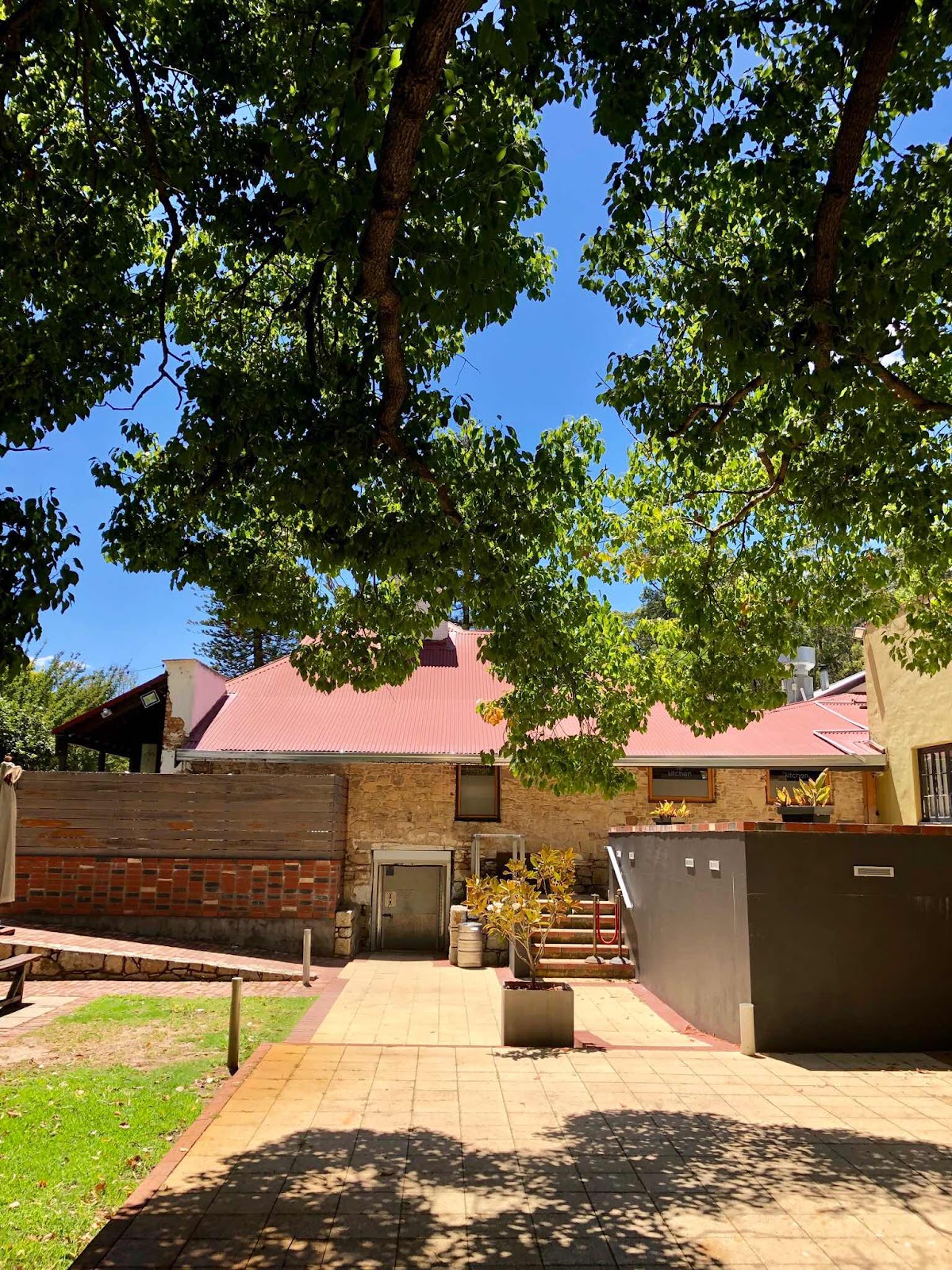
Mahogany Creek Inn


Mahogany Creek is a suburb of Perth, Western Australia and is located on the steepest section of Great Eastern Highway.  It is part of the Shire of Mundaring,  The name Mahogany Creek was first recorded by surveyor George Smythe when he was establishing the York Road in 1835.  He noted that there was a small valley of what he thought were English Mahogany Trees, though they were in fact Jarrah.  The creek from which the locality was named flows into Jane Brook which then flows through the John Forrest National Park into the Swan River. 

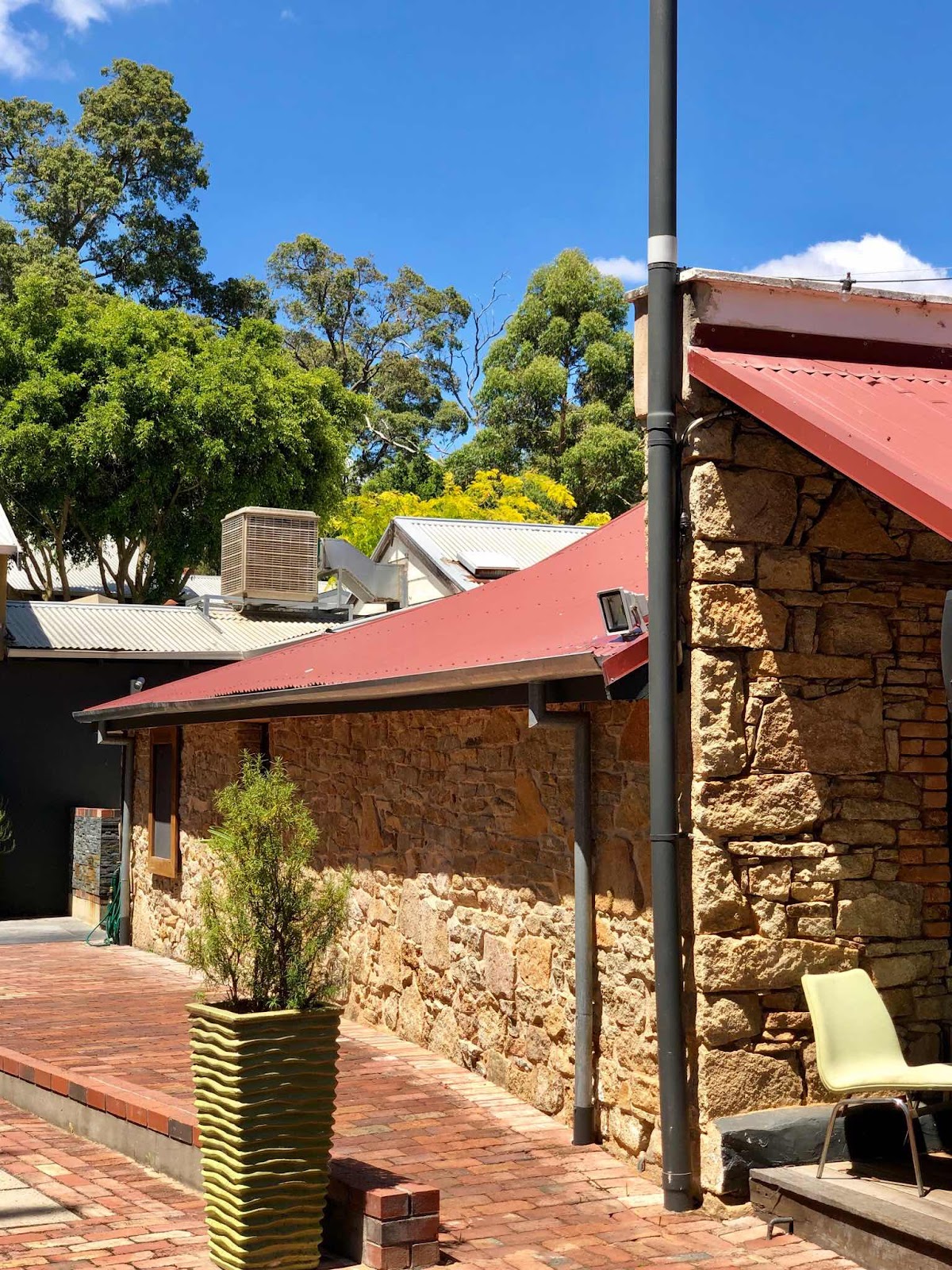
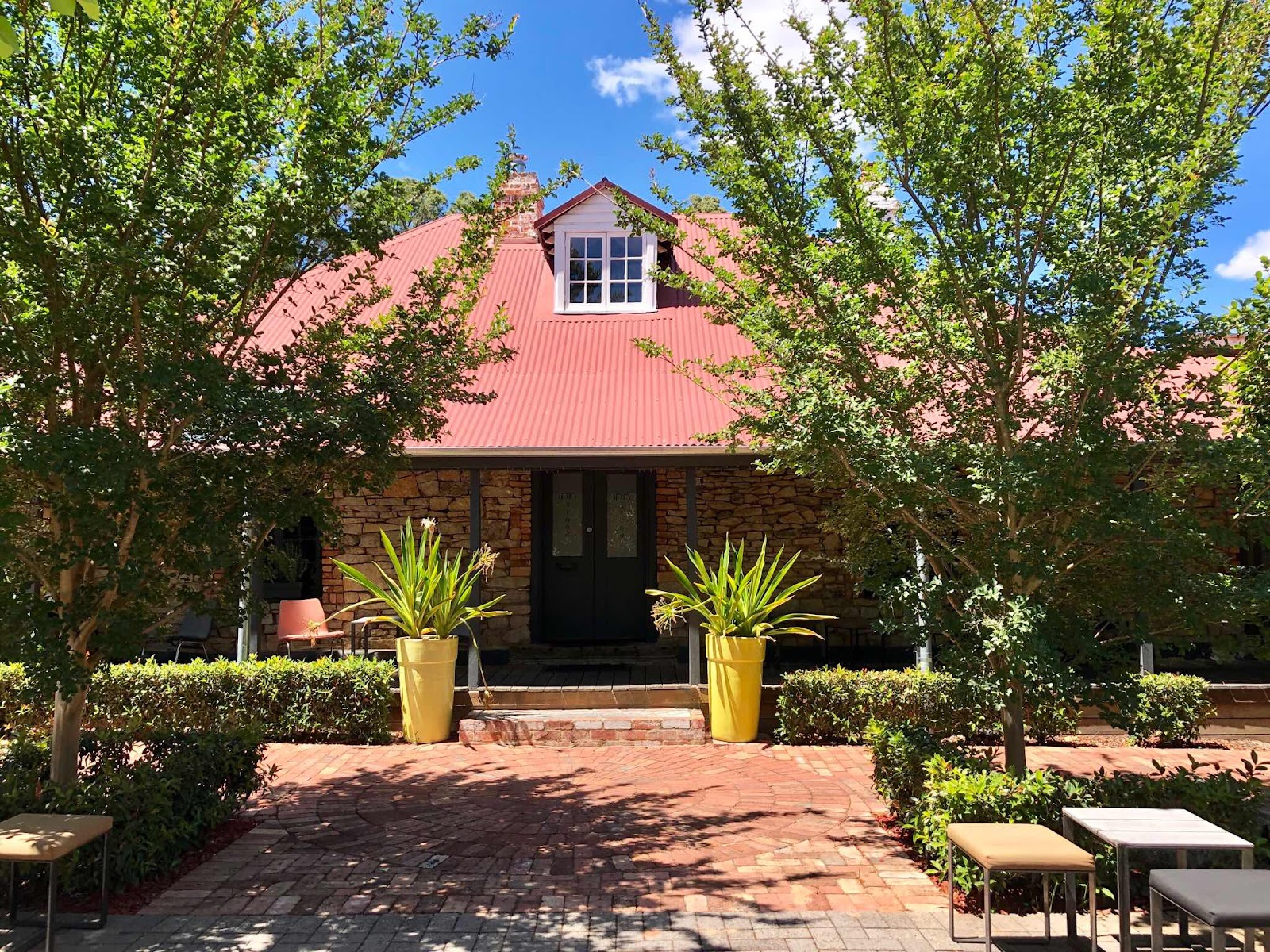
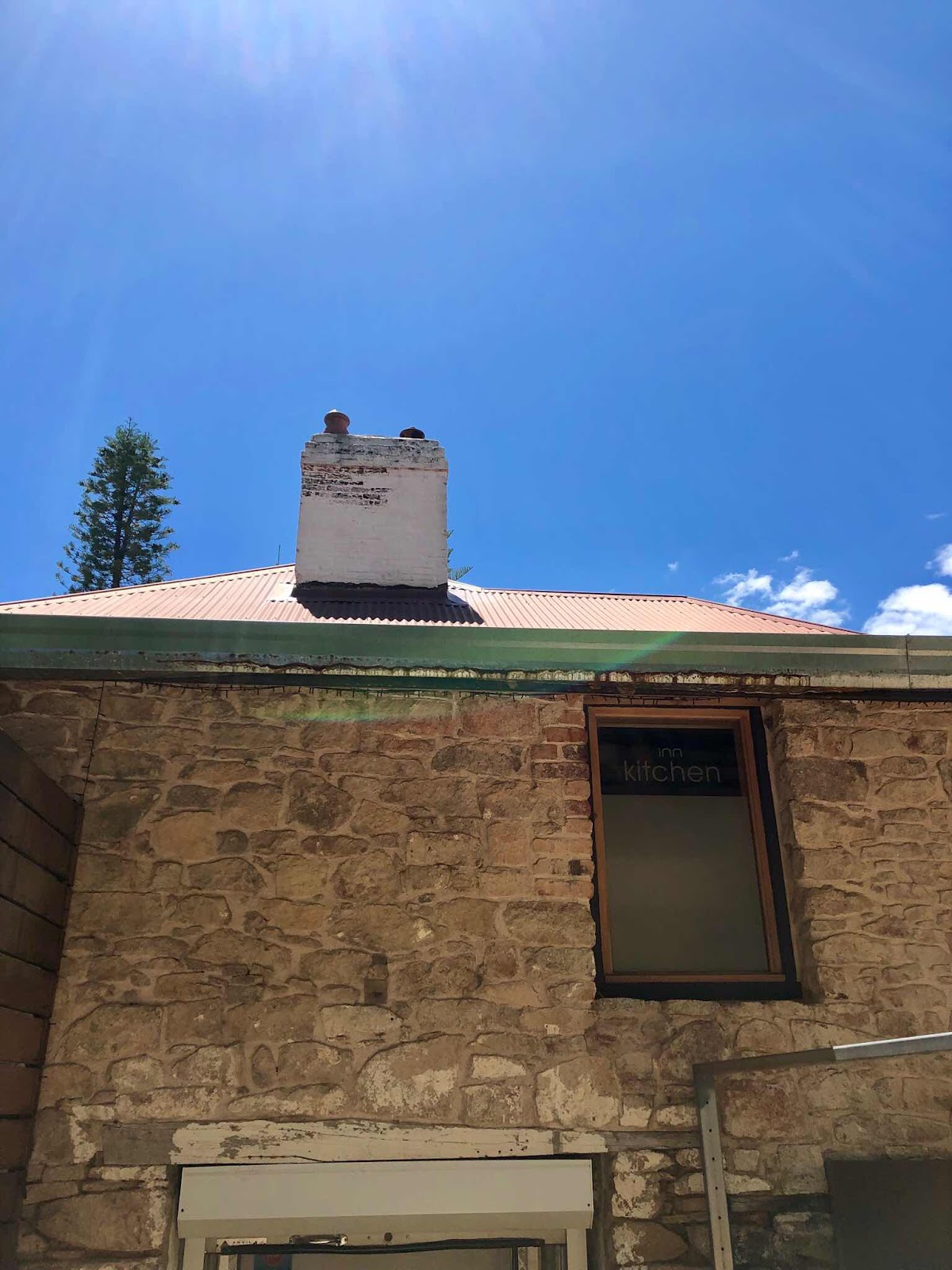
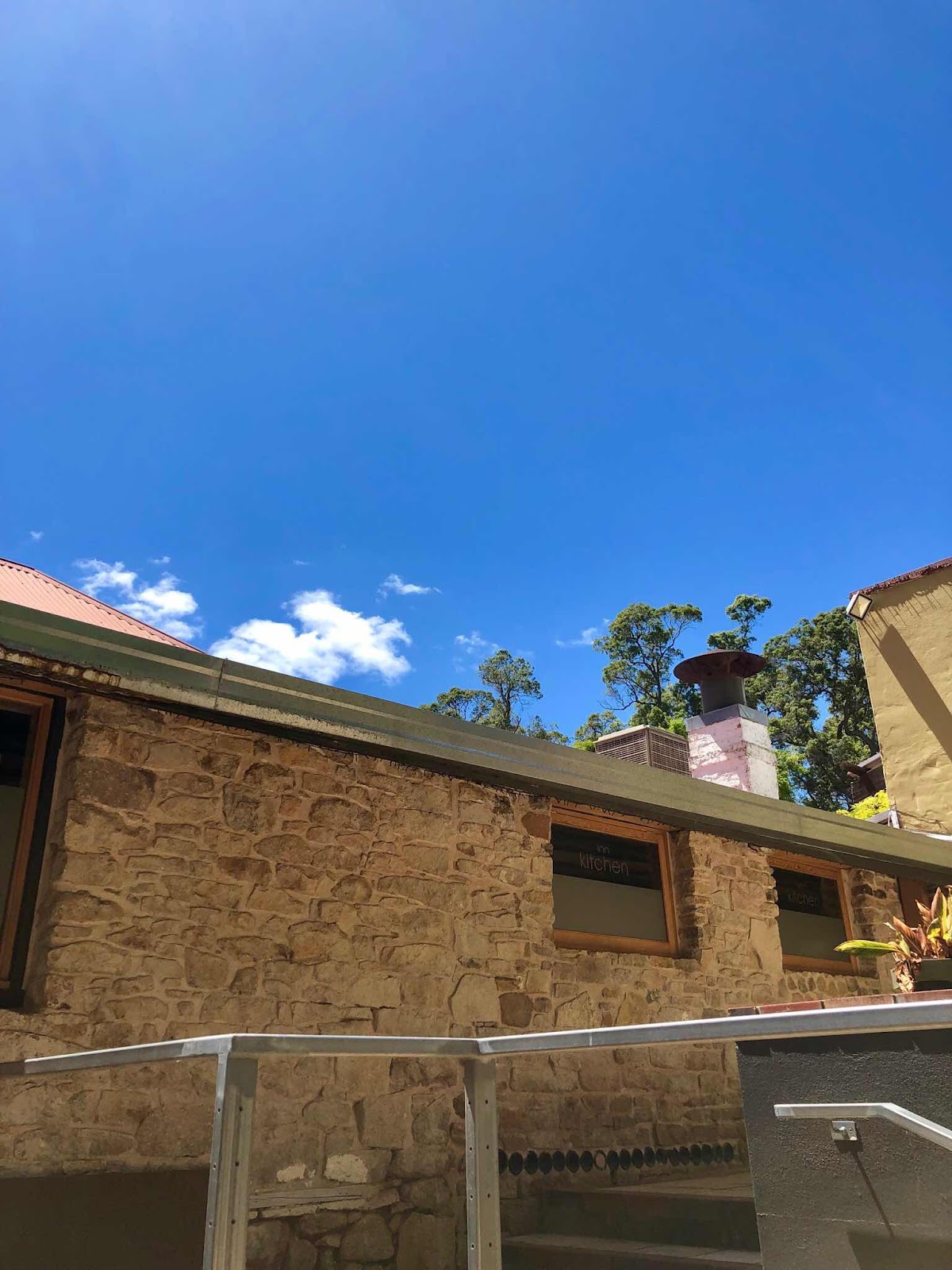
 The Mahogany Inn sits on the south side of Great Eastern Highway. The first building established at the site of the Mahogany Inn was a granite military barracks with a seperate kitchen and store.  Built around 1839 of local stone, the barracks were constructed to house patrols that could ensure the safety of travellers on the Guildford to York Road.  These military stations were built in the early formative years of the colony.    The site was also close to the road that branched off to the settlement of Northam. 

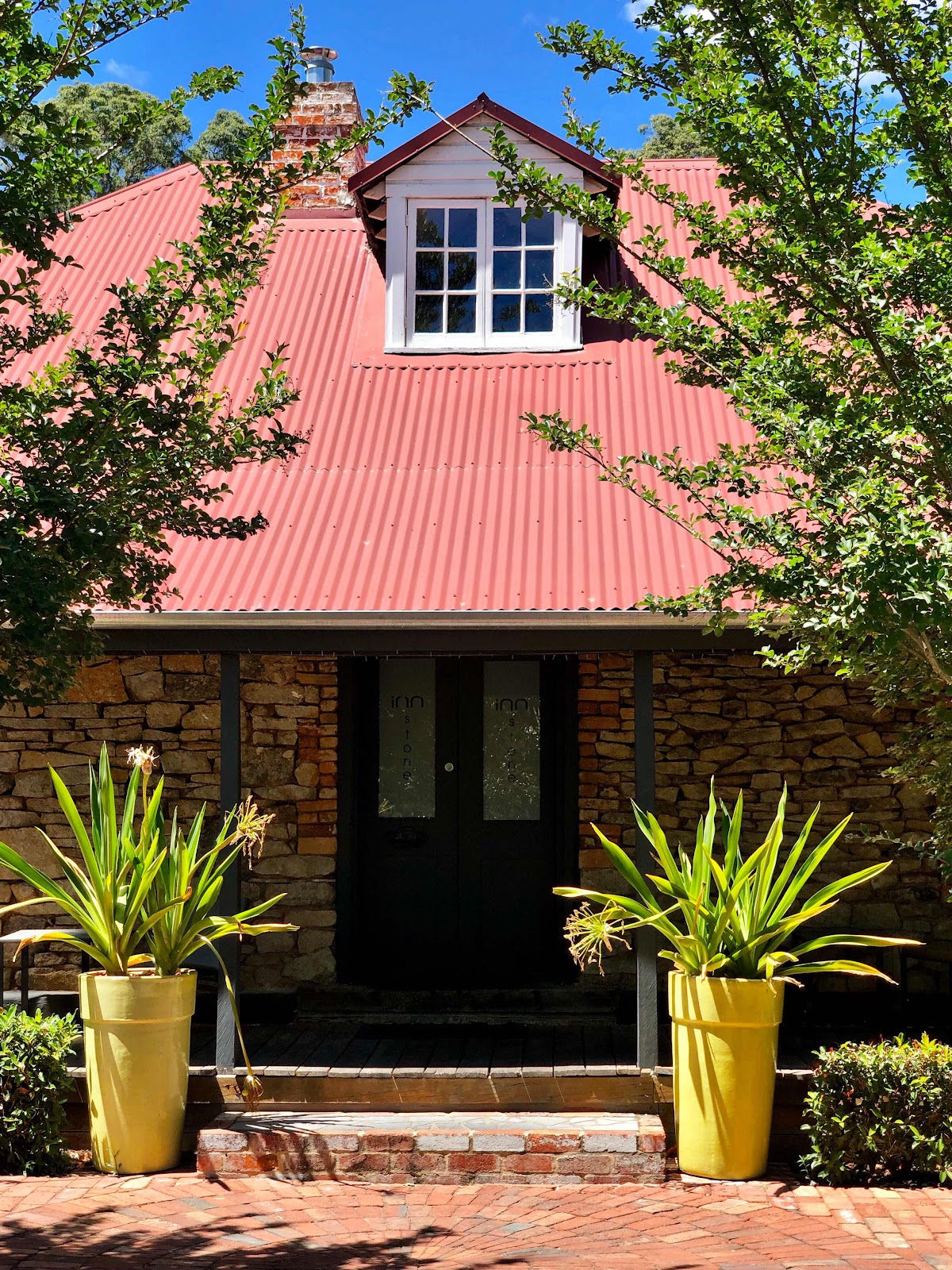
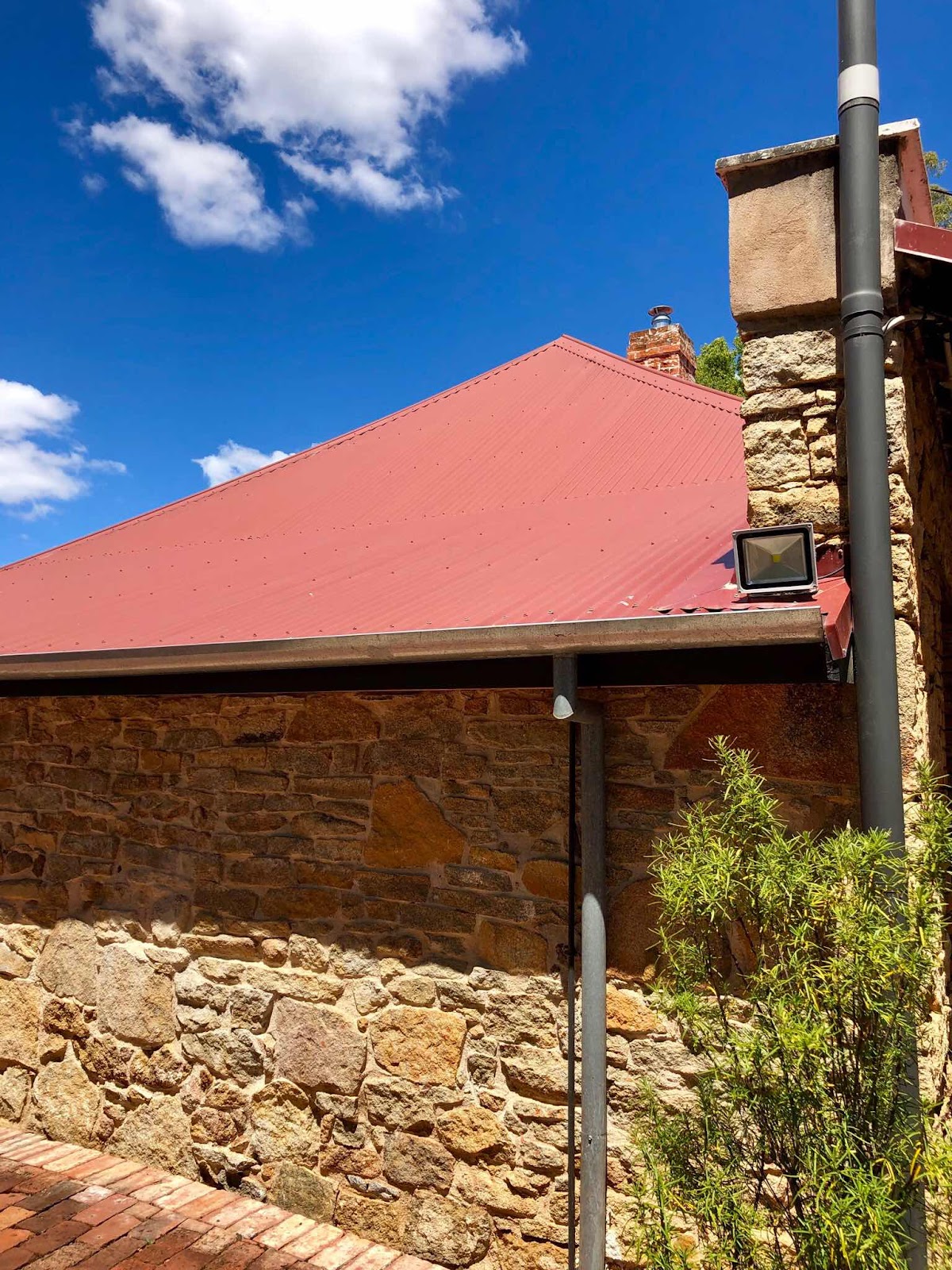
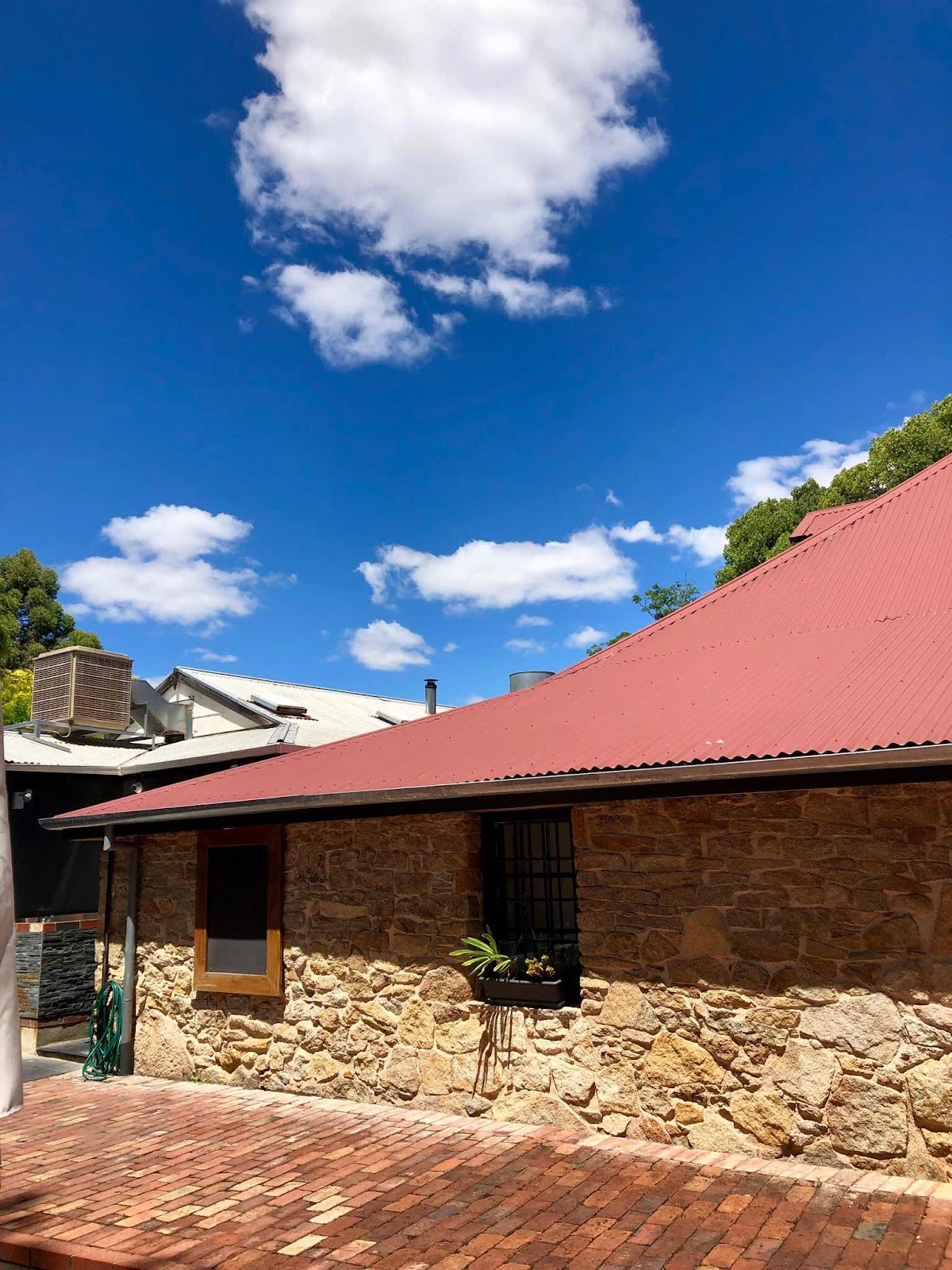
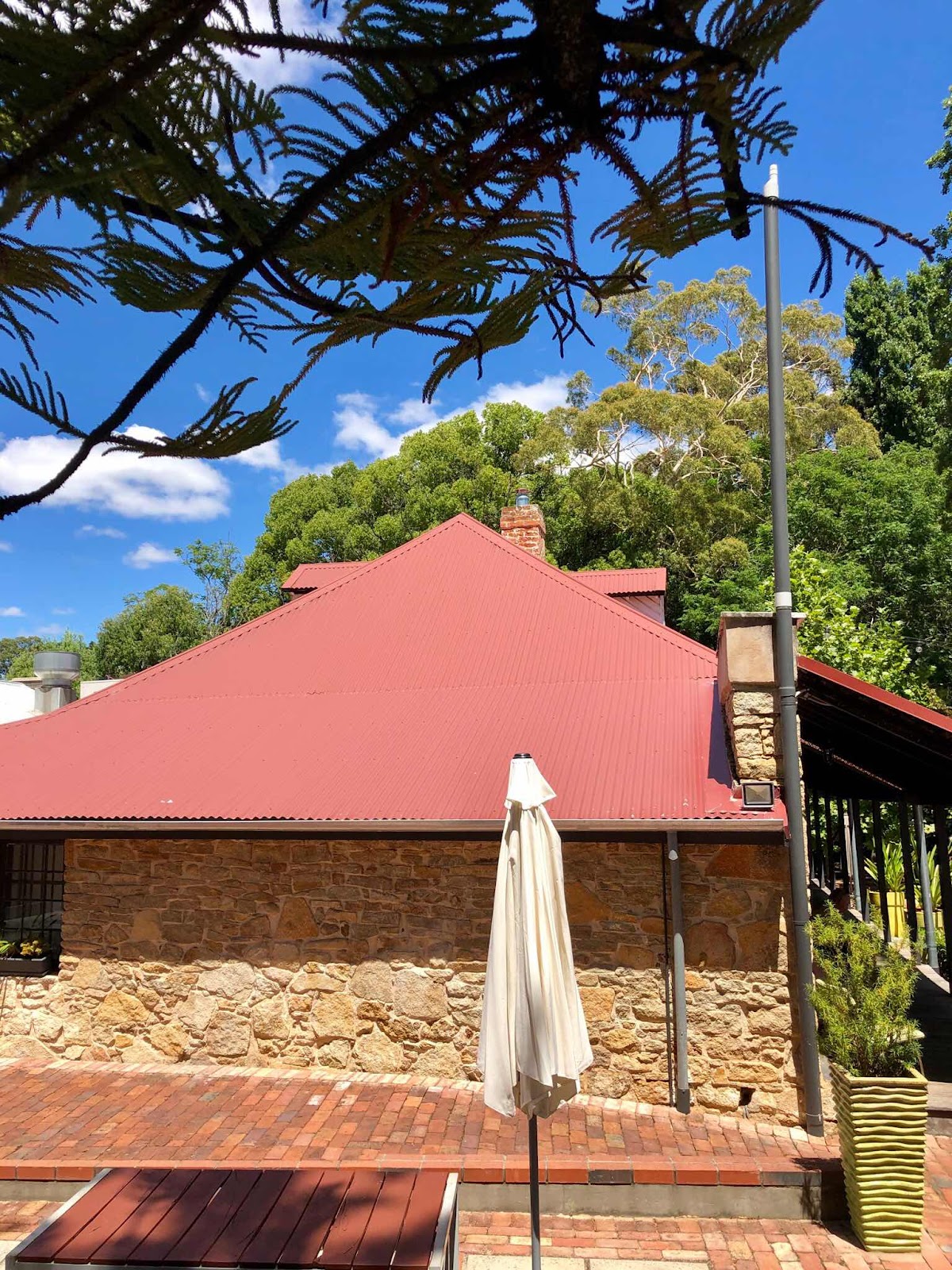
The Mahogany Inn is Victorian Colonial Georgian style, single storey with an attic, with a low red corrugated iron hipped roof and white washed rendered walls with vertical windows.   By September 1841 the Barracks had been abandoned by the military and by November 1842 the site had been sold to two Perth Merchants, William and Robert Habgood.  The Habgoods purchased 320 acres of land surrounding the former barracks and set up a ‘Road-Side Hotel’.  In October 1843 the brothers advertised to let the property which they described as 

“The well known Road-side House at Mahogany Creek, situated on the York Road, Inn miles from Guildford.  The house is surrounded by very superior timber and will be let on moderate terms.”

The advertisements ran until November 1843 when it was apparently taken up by Edward Byfield.  Edward John Harold Byfield arrived as part of thirty one passengers aboard the Westmoreland in 1840.  He married Jane Eliza Coates the following year.  Jane and her brother had been sent to the colony by The Society for the Encouragement of Juvenile Immigration.  Jane had been placed in the care of James Stirling, first Govener and Commander-In-Chief of Western Australia. She worked as a nursemaid to the Stirling children before marrying Edward.  Edward was the first publican/owner of Mahogany Creek Inn. He applied for a Publicans License at a sitting of the Guildford Magistrates Board.  By the 1850s the Byfields had established what they called a homey wayside inn for weary travellers to rest and dine and called it The Prince Of Wales Hotel.  By 1859 the business was so prosperous Edward Byfield was able to purchase the property from Robert Habgood for 200 pounds.  

Edward and Jane had nine children.  He died in 1863 leaving his property in equal shares with his children, his wife Jane and his brother in law William Coates.  Jane was unable to obtain a publicans license and as this was her families livelihood she married James Gregory not long after the death of her husband Edward.  In 1864 James Gregory was able to get a publicans licence for the Prince Of Wales Hotel. After having two more children with James Gregory, Jane died in August 1871.  Her sons evicted James Gregory from the hotel and their uncle William Coates took over the publicans licence.  He held the licence for the Prince of Wales Hotel until 1875.  

In June 1875 Benjamin Kenworthy took over the publican license for The Prince of Wales and held it until 1877 when former police constable Hennry Coppin took the license over until 1880.  In 1877 William, James and Thomas Byfield, Edward and Janes children, sold their eight shares in the Inn to Northam merchant George Throssell.  During the 1880s the the Byfield sons and Throssell advertised the Inn for sale, calling it ‘Mahogany Creek Inn’.  

Due to the prospect of the construction of a railway though the hills to York there was not much interest in purchasing the Inn.  February 1881 John Symonds announced that he intended to establish a Wayside House operating under the name The Oxford Inn. Symonds held the license until 1883 when he transferred the name and the license to a building in Chidlow.  

The York Road became a toll road administered by local lawman, Constable Henry Coppin.  In 1850 a convict depot was established beside the Prince of Wales Hotel.  Prisoners enroute to Perth were often detained in the cellar of the Mahogany Inn.  In fat the cellar under the Inn where prisoners were detained still has the original table where the prisoners ate their meals and the window still has bars on it.  

Several notorious Western Australian bushrangers were known to visit the Mahogany Inn regularly, including Moondyne Joe.  Joseph Bolitho Johns, known as Moondyne Joe was an English convict and Western Australia’s  most famous bush ranger.  On one particular occasion Moondyne Joe was hiding from the police in the attic of the Inn and he carved a dog chasing a kangaroo on the floor.  The carving still remains.  It was believed that Moondyne Joe liked one of the waitresses that worked at the Inn.  Moondyne Joe was apprehended by the police jumping from the roof of Mahogany Inn

The Inn had several subsequent high profile owners including politician and Chief Justice of the Supreme Court of Western Australia, Sir Stephen Parker.  
In the 1960s additions were made to the Inn, with several other add on and renovations to follow over the years.  The Mahogany Creek Inn now boasts rooms with all the modern comforts

It is believed that Mahogany Creek Inn is haunted by Moondyne Joe, despite the fact that he actually died of senile dementia in the Fremantle Lunatic Asylum and is buried in Fremantle Cemetary with the welsh word “rhyddid”, meaning “freedom” on his gravestone.  Both staff and visitors to the Inn have reported hearing ghostly noises and experiences.

Tuesday, March 13, 2018

Château Ramezay


In 1705 Claude de Ramezay, the then Governer of Montreal acquired a large estate to build a home. An important figure in New France, de Ramezay commissioned architect and mason, Pierre Couturier to design and build his new home.  

The Chateau was built of field stone with three storeys, including a vaulted cellar and attic. Built on a large piece of land the Chateau was surrounded by a garden divided into three equal parts. The garden had an orchard, an ornamental garden and a kitchen garden.  The entire garden was surrounded by aromatic and medicinal herbs. A fountain was the centrepiece of the garden.  

Following the death of Claude de Ramezay in 1724 his widow leased the property to the government.  The house remained in the de Ramezay family until 1745 when it was purchased by Compagnie des Indes Occidentales, a French trading company.  Major expansions of the building were undertaken by the Compaigne des Indes Occidentales.

In 1775 the Chateau Ramezay was used by the Continental Army as its headquarters when it seized Montreal.  The Continental Army had been created to coordinate the military efforts of the thirteen colonies who were in a revolt against Great Britain.  While trying to raise troops to fight with the Americans in the American Revolution, Benjamin Franklin stayed at the Chateau in 1776. 

Following the British conquest of New France the Chateau Ramezay was again used as the Governor’s residence, this time for the British Governer.  In 1878 the building was used to house the Universite de Montreals first Faculty of Medicine.

By 1893 the Quebec Government no longer required the building and it was abandoned.  The Chateau Ramezay was rescued from demolition by The Antiquarian and Numismatic Society of Montreal.  By 1894 the Society had converted the Chateau into an historical museum and portrait gallery.  The Museum and gallery officially opened on May 1st 1895.  In 1895 Sir Andrew Taylor, architect and councillor, was commissioned to design alterations to the Chateau.  In 1902 to 1904 decorative turrets were added to the building.  

The Chateau Ramezay underwent further renovations inside and outside the building between 1997 and 2002, including restorations of the Governor’s Garden.  Today the Chateau houses over 30000 objects donated by private citizens of Montreal.  The collection includes manuscripts, printed materials, numismatic items, ethnological items, artworks, furniture and prints.  

Apart from also housing the first public library in Montreal, the Chateau was the first building to be classified as an historic monument in Montreal in 1929.  In 1949 the Chateau Ramezay was recognised as a National Historic Site of Canada and in 2003 it earned the National Award of Excellence from the Landscape Architects of Canada.  

The Château Ramezay has been the site of much paranormal phenomenon.  Visitors and staff at the Chateau have reported hearing whispers and unexplained footsteps.  Staff have found exhibits changed, books knocked from shelves and have smelt sulphur.  Some believe that the Château Ramezay is haunted by Anna O’Dowd, a live-in caretaker who died in the Château in 1985.

The Chateau Ramezay is a charming building and represents a portal to Montreal’s past. 


Friday, November 24, 2017

Omni King Edward Hotel

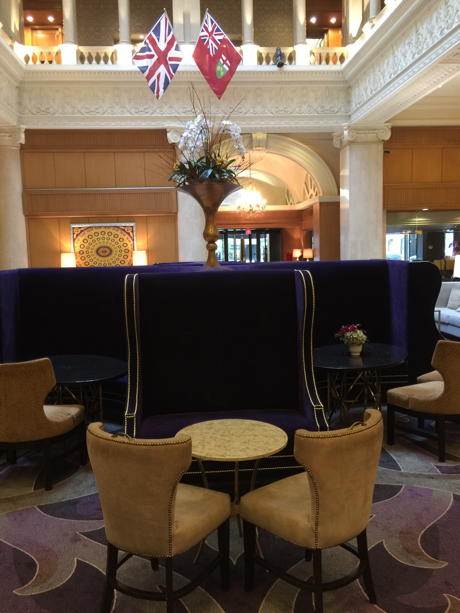
The Omni King Edward Hotel is located on an entire block that is bounded by King Street, Victoria Street, Colborne Street and Leader Lane in downtown Toronto, Ontario.  The King Edward was designed by Chicago architect Henry Ives Cobb, known for his Richardsonian, Romanesque and Victorian Gothic styles and Toronto architect E.J Lennox, who was responsible for the design of many prominent buildings in Toronto.   The building was commissioned by developer, businessman and politician, George Gooderham for his Toronto Hotel Company.  The hotel cost $6 million to build. When the hotel opened it was billed as the most luxurious hotel in Toronto, equipped with electricity, telephones and all the modern facilities in each room for guests to enjoy.  All guests rooms had private bathrooms and showers and were beautifully carpeted and decorated with rich colours and soft furnishings.  

The hotel was named in honour of King Edward VII and opened in 1903 boasting 400 hundred rooms and 300 baths.  The hotel claimed to be fireproof. In 1922 an18 storey tower was added with 530 additional rooms.  The top two floors of the tower contain the Crystal Ballroom, the most lavish in the city. High above the city with floor to ceiling windows the Crystal Ballroom boasted the best views in the city. When stricter fire codes were introduced in the 1950s in Toronto the Crystal Ballroom didn’t comply and was closed.  As part of the luxurious style of the time four large murals depicting Canadian history, painted by American artist William de Leftwiche Dodge were commissioned for the hotel.  The four murals depicted the French fur traders, First Nations People, exploration of North America by John Cabot and General Wolfe’s victory at the Plains of Abraham.  The fourth of the mural depicting Wolfe and the Plains of Abraham was not to the liking of architect Lennox, and following a court ruling in favour of the artist, Lennox replaced the mural anyway with a work by Canadian artist Frederick Challener.  The mural painted by Challener was titled Trading at Fort Rouille.  Sadly these murals disappeared during the renovations of the hotel in the 1980s.

 The hotel became an exclusive destination for gentlemen to smoke cigars and women who sipped tea in the hotel's elegant sitting rooms.  In  accordance with the strict gender role expectations of the time, the King Edward was sensitive to females travelling alone and had a seperate entrance for such women for the check in process.  This entrance was known as the Ladies Booking Room and served as a place that women could use the telephone, make bookings for events and even receive guests.  A Ladies Parlour on the second floor was a place women could relax and look down at the going on at the hotel.  The Palour was furnished with beautiful soft furnishings and artworks, including an ivory jewel box owned by a French Noble woman during the renaissance in the 16th century, Diane de Poitiers. For men the hotel boasted a mahogany newsstand and cigar store, that was situated in the main lobby.  The Bar and Gentlemen’s Cafe, located on the main floor of the hotel was strictly for men only.  The Grill Room was a place that men could have the finest grilled meats and like the male only Billiard Room was located in the basement of the hotel.  A well equipped and modern barber shop was also located in the hotel for the use of its male patrons.

The artwork in the hotel is worth over $75 million.  When the hotel opened, the art installations in the hotel included, paintings, carvings, metalwork and pottery.  Some of the art work was purchased from the Clemenceau collection of Paris. Clemenceau was a physician, the Prime Minister of France  and reportedly a good friend of Monet.  Some of the artwork was purchased from a church in Bruges, Brussels. Other rare pieces include the terracotta statue of Venus dating back to 300BC and the Japanese Bronze Temple Lantern from the 15th century.  Paintings by John Constable, Jean Baptiste Regnault, Charles-Francois Daubigny, Adolphe-Joseph Thomas Monticelli and Caspar Netscher adorn the walls of the hotel.  

The Omni King Edward was also famous for housing one of the first radio stations in Toronto. CKGW, a Toronto based station, was owned by Gooderham and Worts Ltd, the local distillery that belonged to George Gooderham.  With Radio stations becoming a popular source of promotion, Gooderham and Worts set up offices and studios in the King Edward Hotel.  CKGW began broadcasting from the hotel on March 5th 1928.  Having the lasted equipment the station shared its wavelength and broadcast only six hours every other day.  

The hotel passed through a number of hands in the following years.  In 1933 the Metropolitan Life Insurance Company became the owners of the hotel.  Between 1941 and 1950 the hotel was owned by C.A Ripley and Vernon Cardy. The Mount Royal Hotel in Montreal, the Royal ConnaughtHotel in Hamilton, the General Brock in Niagara Falls, the Prince Edward in Windsor and the Alpine Inn in Sainte Adele Quebec were all owned by the Cardy's hotel chain.  In 1950s Sheraton bought the Cardy Hotel chain.  Following several years of decline the King Edward Hotel was bought by Trans Inc in 1979.  They paid 6.3 million dollars for the establishment.  The hotel was closed for a 30 million dollar restoration completed by Stanford Downey Architects Inc. The property reopened in 1981 as part of the Trusthouse Forte Hotels, after Forte had acquired the Meridien Hotels from Air France.  In 1994 the King Edward was renamed Le Meridien King Edward.  

On the hotel's 100th anniversary Ontario Heritage Trust unveiled a commemorative plaque.  The Crystal Ballroom was also renovated with a $6.5 million dollar makeover. In 2005 Starwood Hotels purchased the property.  A huge restoration ensued and Omni Hotel assumed the management in 2013.  The hotel was renamed Omni King Edward Hotel buying it outright in 2015.  


Many notable people have stayed at the hotel including Mark Twain, Rudolph Valentino, Louis Armstrong, Elvis Presley and Ernest Hemingway, who lived there for a period of time.  The Beatles stayed in the hotel,.  Richard Burton and Elizabeth Taylor carried on a notorious affair in the hotel.  Leonard Cohen wrote a musical set in the hotel called "I am a Hotel".


The Omni King Edward is a source of many paranormal reports. The service elevator to the Crystal Ballroom behaves erratically, stopping for no reason.  Chandeliers have been known to swing with vigour for no apparent reason.  Guests staying in rooms below the deserted Crystal Ballroom have reportedly heard music and the sounds of celebration and people talking. 

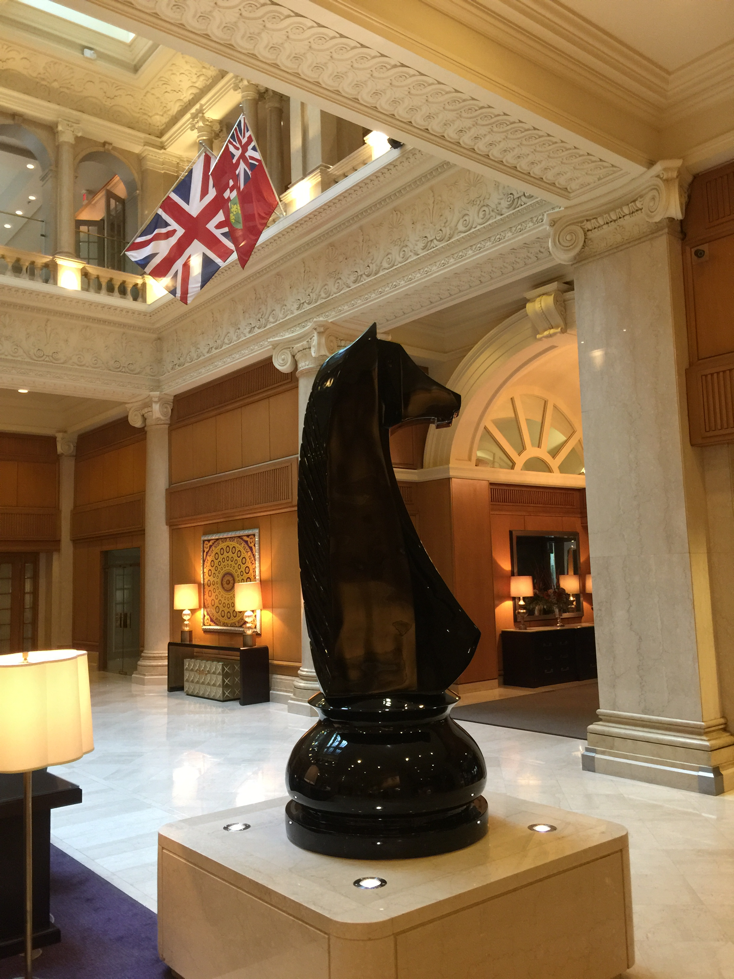
I thought that the Omni King Edward Hotel was a beautiful place to stay.  My suite was huge and opulent with gorgeous views of Toronto.  The breakfast was served in an opulent room that was adorned with magnificent art and tapestries.  The foyer of the hotel is grand and luxurious.  I would definitely recommend this gorgeous hotel.